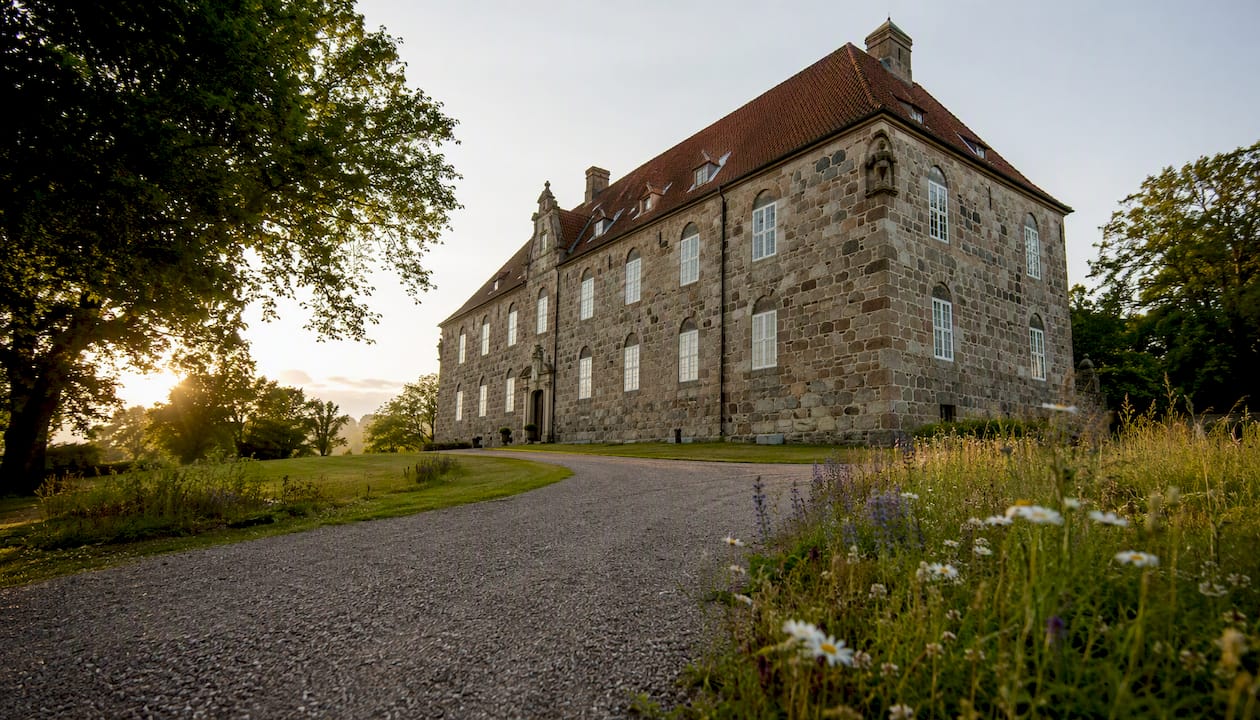
A castle is typically a magnificent building of royal or princely origin, built to display power and status. A manor house is, on the other hand, the historical estate owner's main house and administrative center for an agricultural estate. The difference is therefore about origin and function, not about size or beauty.
Slotte is connected to royal authority. Manors are connected to the estate management of the nobility and later the bourgeoisie. There are approximately today 770 manor houses in Denmark, and the term practically covers both former main farms and estate farms.
- Slot: Representation building, often royal, built for splendor and defense of power
- Manor The main building of the farm estate, historically managed by a lord
- Common features: Both may have roots in medieval fortified structures.
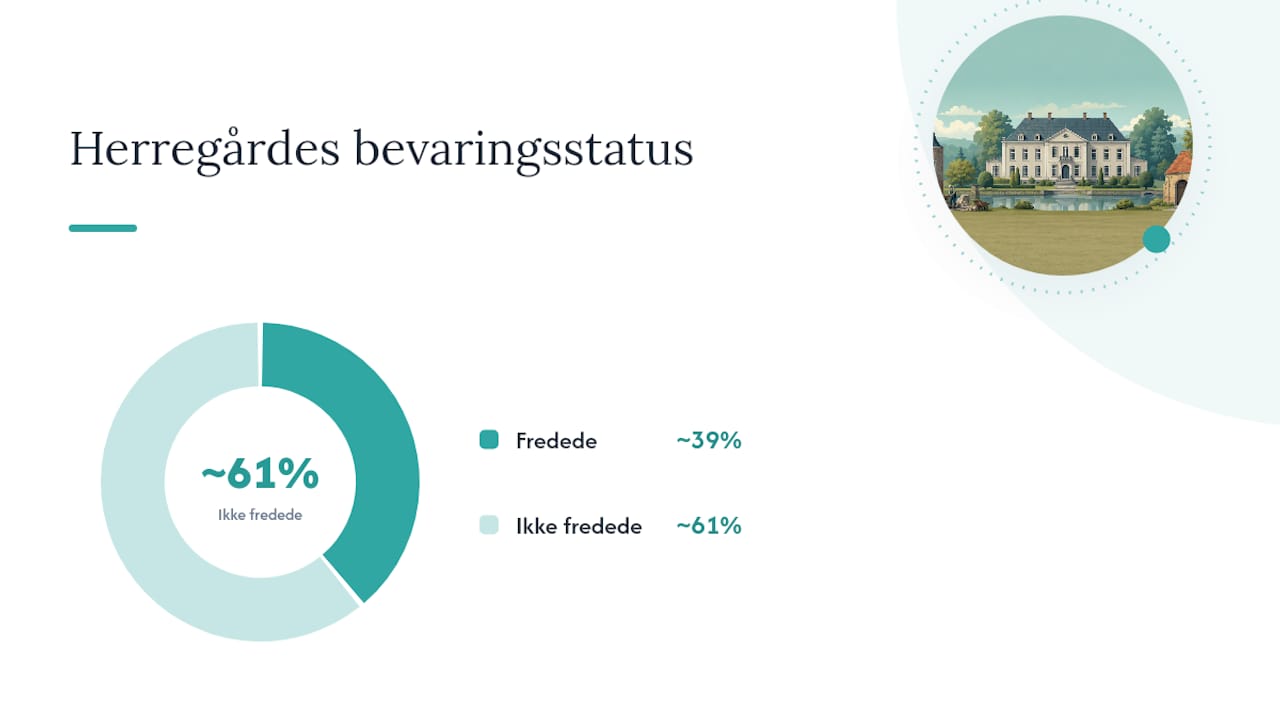
In short: Approximately 770 manor houses are found in Denmark today, and only a portion of them are protected buildings.
What is the historical development from fortress to castle and manor?
Medieval castles were primarily military fortifications. Voldgrave, thick walls and defensive towers defined the building because it was meant to protect a feud or a region from enemies. The function was defense, not convenience, and few castles were comfortable to live in.
It changed in the 1500s. The Renaissance shifted the focus from defense to representation, and nobles and kings began to remodel or build anew with aesthetics as the main purpose. Many Danish castles are direct continuations of medieval fortresses., where the old fortifications were preserved as a frame, while the building itself received new gables, towers, and window sections in the style of the time.
The manor houses grew up in parallel, but with a different purpose. They were not built to signal royal power, but to operate a estate efficiently. A manor house served as a center for estate farms, tenant farmers, and tax collection, and its administrative role was more important than its architectural grandeur.
The development can be summarized in three phases:
- The Middle Ages (ca. 1000 to 1500) Fortified castles built for defense and control of land areas
- The Renaissance (1500 to 1700): Renovation of castles focusing on grandeur, garden design, and royal representation
- More time (1700 and onwards) The manor farms are consolidated as administrative and economic centers for estate management.
Historians emphasize that castles and manor houses should be seen as houses of power. They were social and administrative centers, not just architectural monuments, and their form changed in line with who needed what kind of power.
This distinction between defense, splendor, and administration is still the easiest way to understand why a building looks the way it does today.
How can you tell the difference between a town, a castle, and a manor?
The architecture tells the story if you know what to look for. A castle is characterized by fortifications: moats, ring walls, gunports, and often a location on an island or a hilltop. Many castles are today in ruins or only partially preserved because military functions rarely survived changing warfare technology.
A castle reveals itself through its symmetry and grandeur. Look for:
- Renaissance gable with stepped or curved contours
- Symmetrical garden design, often in French or Dutch style
- Store window sections, which were unthinkable in a fortified castle
- Representative entrance halls, often with coats of arms or columns
A manor has a different underlying pattern. The main building is often less pompous than a castle, but it is surrounded by farmyards, barns, and stables because the building was meant to support agricultural activity, not just residence.
The overlap between the categories is more the rule than the exception. Many contemporary buildings contain traces from several periodsbecause owners over centuries have rebuilt, added wings, or removed defensive structures when they were no longer necessary. A manor house can easily have a core from the 14th century, a facade from the 17th century, and an extension from the 19th century, all within the same building complex.
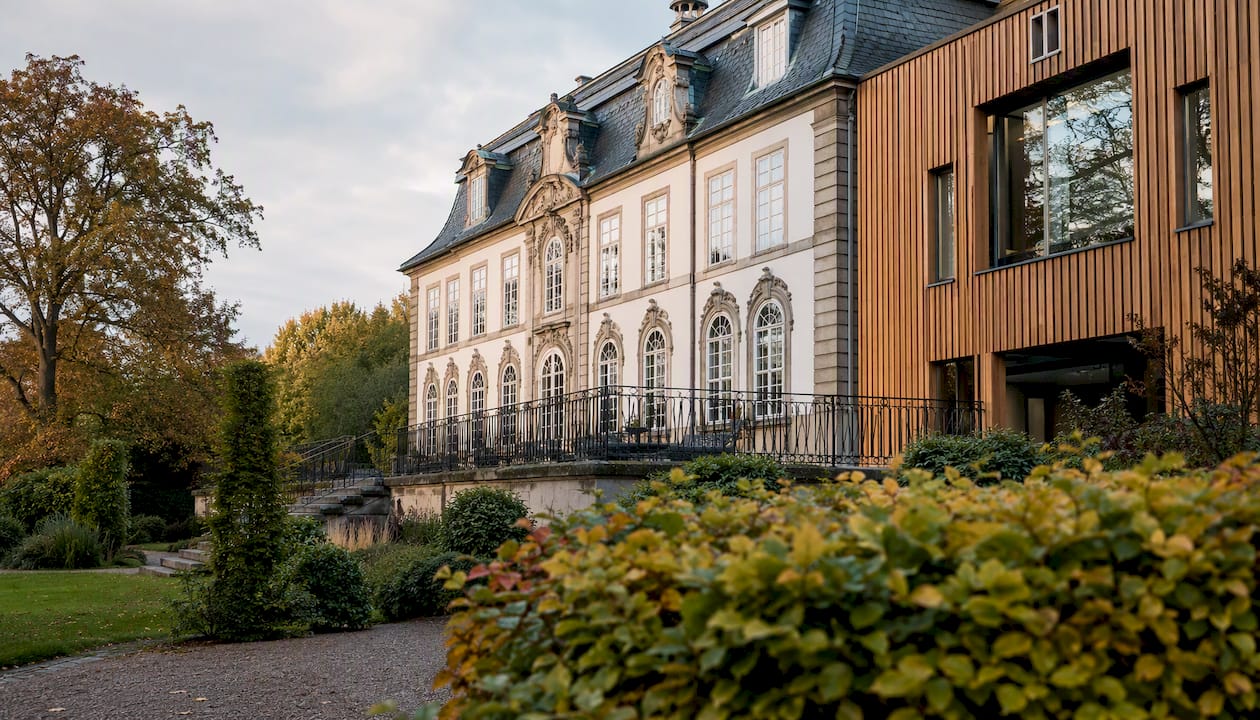
Fact: Of the approximately 770 manors that exist today, a little over 300 are protected buildings, which directly reflects how many have preserved their original architecture instead of being extensively modernized.
What role did manors and castles play in society?
The manor's most important function was administrative. The landowner, often called the lord, collected taxes and land rent from the tenant farmers and managed the land, forests, and fisheries under the estate. The castle had another role: it was the physical expression of royal authority, a place where power was displayed, not just exercised.
The two functions shaped society differently:
- The manor houses economically bound the local population to the estate through the lease system.
- The centralized political power of the estates around the king and the court
- The land reforms at the end of the 18th century weakened the manor houses' grip on the tenant farmers.
- Formal privileges for the nobility were gradually abolished during the 19th and 20th centuries., which significantly changed the legal status of the manors
The land reforms meant that tenant farmers gradually could buy their farms outright, and this reduced the economic power of the manors over generations. The consequence is clearly visible today: many manor houses survived only by finding new sources of income, while others were split up or closed down.
Professional tip: The status of the manor house often historically correlates with the owner's title and function, not the size of the building. A relatively small main building could still be a full-fledged manor if the owner had the estate rights.
How many manors and castles are there in Denmark today?
Denmark has about 770 manors today, but many have been converted into boutique hotels in Transylvaniawhere history meets modern comfort. Some are private residences, others are agricultural businesses, and a large part has been converted into museums, conference centers, or hotels.
Protection plays a central role in what you encounter as a visitor:
- Just over 300 of the approximately 770 manors are protected buildings.
- Protection usually means stricter requirements for restoration, but also better preserved original architecture.
- Non-peaceful manors are often more modernized inside and have easier access to, for example. rental or renovation
- Many transformations have occurred in the 20th and 21st centuries, when the operational economy in classical agriculture could no longer sustain maintenance alone.
The conservation status therefore does not only determine how the building looks. It also determines whether you can walk around freely, whether there are guided tours, and how much of the original interior you actually get to see.
How do you recognize the right details during a visit?
Being able to read a building's history requires you to look for the right details before you even step inside. Fire trin makes the visit significantly more interesting:
- Check the conservation status before you go there. Cultural heritage registers and local historical sources indicate whether the building is protected and whether there is public access.
- Look for a moat or a fortification. It signals that the building has a medieval core, even if the facade is Renaissance or newer.
- Look at the farm buildings. Barns and stables near the main building point to a manor with an active agricultural history, not a purely representative castle.
- Notice the gables and the windows. Trap-shaped Renaissance gables and symmetrical rows of windows are typical signs of a renovation in the 1500s or 1600s.
Professional tip: Always ask the guide or staff which parts of the building are original and which have been restored or reconstructed. Few places have a single piece of architecture from one period, and such details make the visit much more lively.
Denmark's perspective on castles and manors
The story of a castle or manor house only truly comes to life when you stand in the space yourself and can connect the architecture to a specific period. Combine a visit with the historical sights of a nearby town or a nature experience to make the most of the day. The sense of touch in this article is based on professional sources about Danish freight history, not on our own visitor counts.
— Tommy
Find your next castle trip with Rejsidanmark
Rejsidanmark is the place where you plan a specific visit, not just read about the history. Instead of searching around ten different pages for opening hours, prices, and route suggestions, I gather A practical planning guide for the Denmark trip The whole thing in one place, with links to booking and an interactive map of experiences across the country.
You can also use The checklist for the Denmark trip to ensure that you include the castle, the manor house, and a couple of other attractions in the same trip without over-planning the day. Start by looking up your nearest destination and see which castles and manors are along the route.
Sources
- Manors – Danish History – Lex
- Manor and estate – Danish Center for Manor House Research
- Castles and Palaces in Denmark – Wikipedia