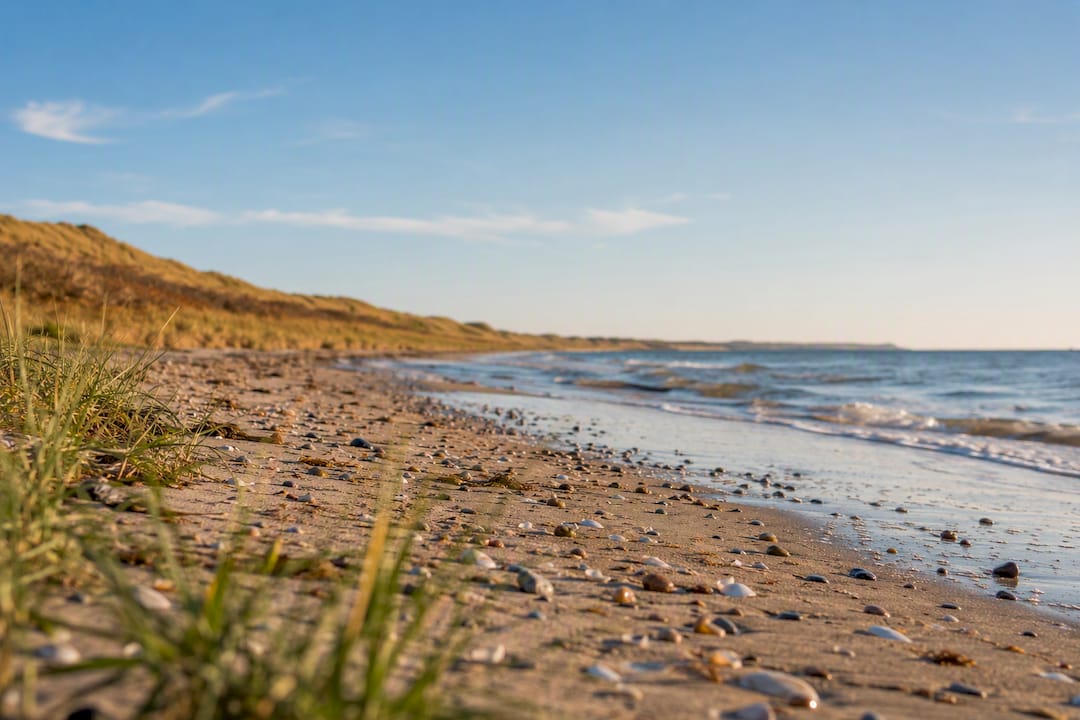
Choose a coastal holiday to experience nearby nature, tranquility, and concrete opportunities for sustainable holiday behavior. Coastal and nature tourism is already the largest part of Danish tourism, with 44.2 million overnight stays in 2023and the choice hits something deeper than just sun and bathing water. It's about:
- Direct access to the beach, water, and open landscapes without long travel time
- An increasing number of Danes actively choosing holidays with a lower environmental impact
- Local community that lives off and invests in the tourism created by the guests
A seaside holiday is therefore not just a break from everyday life. It is a concrete choice that affects nature and the local community, depending on how you plan it.
Why choose a coastal holiday: the benefits of nature, beach, and recreation
What distinguishes a seaside holiday from other types of holidays is the space. The views between the dune and the sea provide a kind of tranquility that city vacations rarely can match, and the soundscape—waves, wind, seagulls—feels to most like a natural wind-down after a workweek. It is no coincidence that relaxation and nature experiences top the list of reasons why Danes take holidays in Denmark, according to an analysis by Epinion for Danish Coastal and Nature Tourism.
Beach holidays are not just about lying on a towel. The typical activities range widely:
- Hiking along coastal cliffs and dune landscapes
- Birdwatching in wetlands and on salt marshes
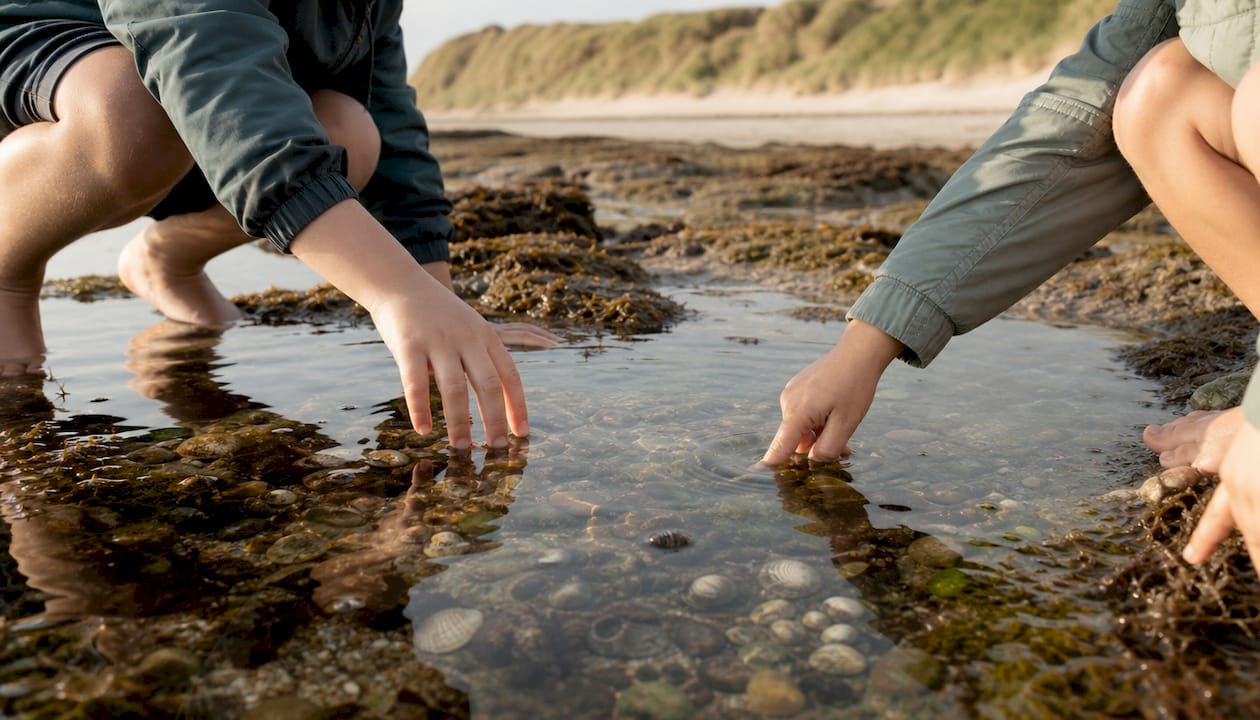
- Tide pool walks, where the seabed becomes a landscape in itself
- Kayaking or sailing in protected coastal waters
- Cycling trips along coastal trail routes
The Wadden Sea coast is a good example of how much a coastal destination can offer beyond the beach. She creates The tide at Mandø An experience where you can walk or drive to the island at low tide, while local nature foundations and the Wadden Sea National Park work together to restore the nature around it.
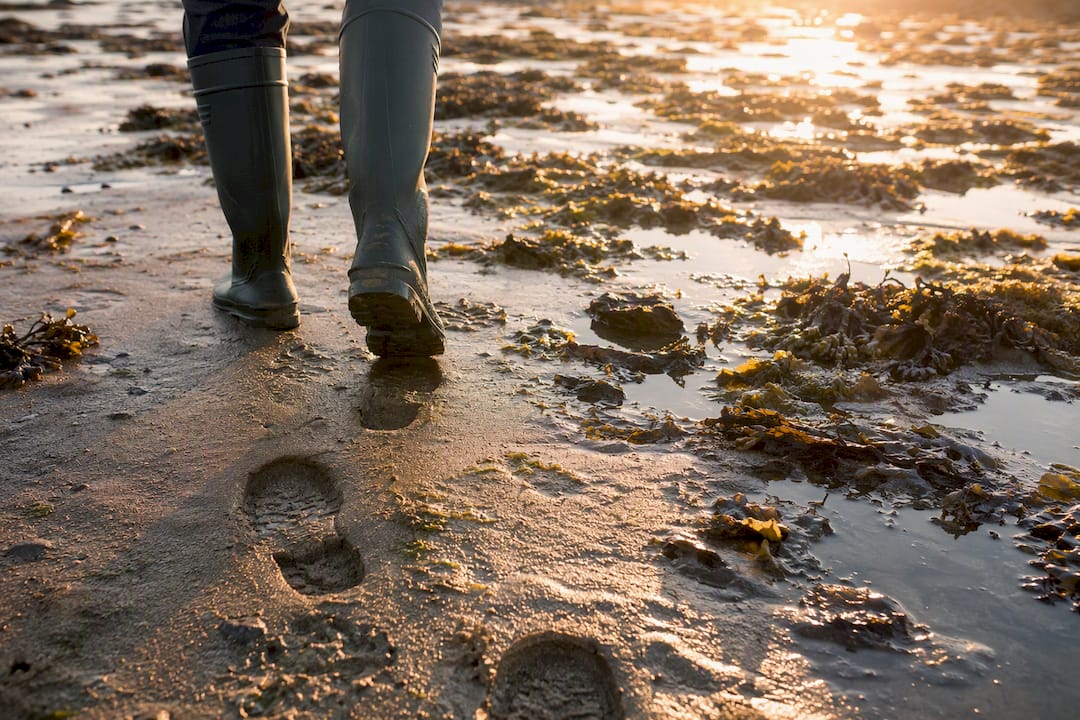
Professional tip: Plan tidewater trips according to the tables, not by the clock. A time shift can mean that you are either standing with dry boots on the seabed or watching the waves roll in over the parking lot. Always bring rubber boots and a waterproof jacket, regardless of the season.
Sustainability and environmental considerations: why it matters
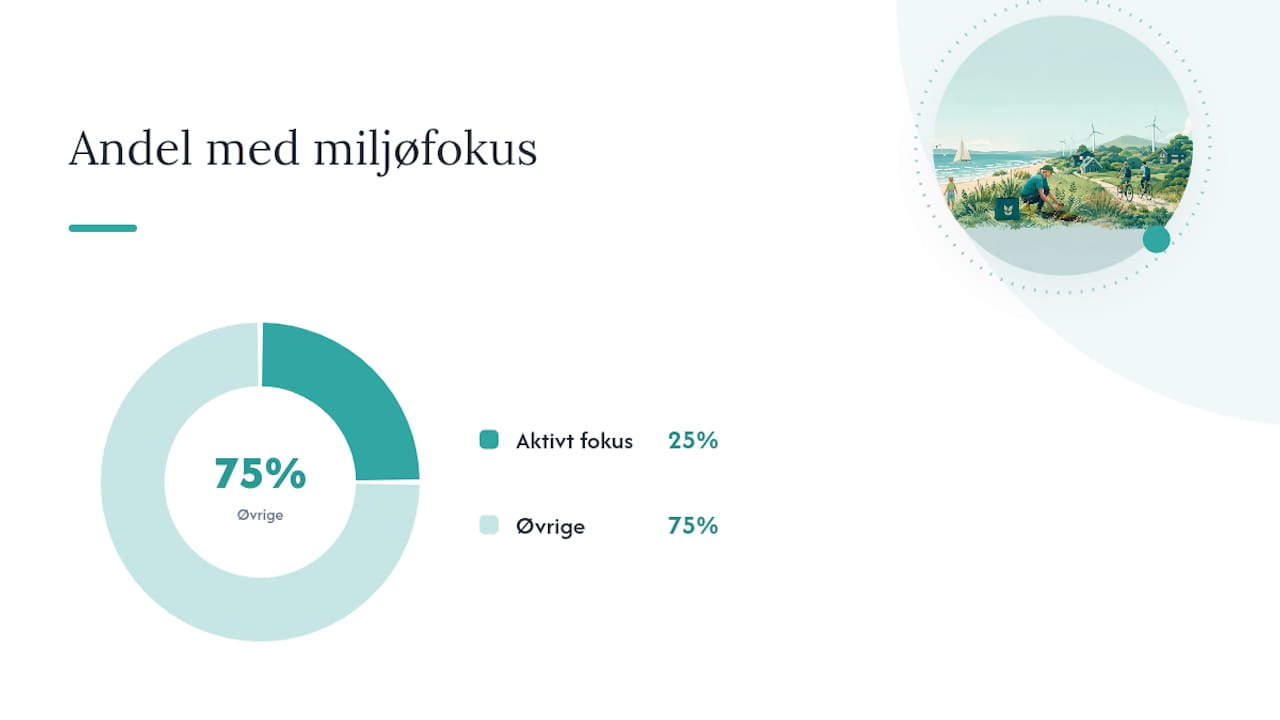
Environmental considerations are no longer a side issue when Danes plan holidays. Some Danes indicate that environmental considerations will influence their upcoming holiday choices, according to Nature MagazineA quarter of travelers actively consider the state of nature when choosing a destination, and coastal destinations are central to this development because they are closest to the nature that guests want to protect.
These concepts are worth knowing if you want to understand where coastal tourism is headed. Nature-based tourism is about experiences built directly on the qualities of nature, while regenerative tourism takes a step further: here, tourism must actively restore nature and biodiversity, not just protect it. Danish Coastal and Nature Tourism emphasizes that future tourism should be actively nature-restoring, not just damage-limiting. It takes more than good intentions. Regenerative tourism only works when the income from guests is actually channeled into local nature projects, according to analyses of nature-based tourism and nature restoration.
As a guest, you can make a difference yourself:
- Choose accommodations with visible environmental certifications or local energy supply
- Participate in local nature projects wherever they are found, from beach cleanups to dune restoration.
- Prioritize transportation modes with a low impact on the last kilometer, such as cycling or walking.
Local cultural values and economic impact for coastal communities
A seaside holiday is also an economic decision, whether you think about it or not. Each overnight stay, each meal, and each museum visit funds jobs and facilities that the local community uses themselves outside the high season. Restaurants that rely on summer guests often stay open year-round because tourism provides the financial foundation that makes it possible.
The most authentic experiences rarely come from the major attractions. They come from:
- Local fishmongers and farm shops where the raw materials have a short distance from sea or land to table
- Harbor festivals and seasonal markets where tourists and residents meet on equal terms
- Smaller museums and cultural centers that tell the local history instead of the national
However, there is a warning that is worth taking seriously. The action plan for coastal and nature tourism points to an investment backlog in accommodation capacity and recreational infrastructure. Without continuous investment, popular coastal areas risk being worn down by the same success that makes them attractive. That's why it doesn't matter which accommodations and experiences you choose, because your crown is actually going somewhere.
Practical considerations: season, accommodation, and transportation
Timing changes the entire experience of a coastal holiday. The shoulder season, from May to June and September, attracts fewer people to the beach, offers lower prices, and has a milder climate than the dry midsummer peak. Several coastal destinations are also actively working with year-round tourism, so that the raw power of winter storms or the quiet beaches of autumn become an attraction in themselves, not a period of absence.
When choosing accommodation and transportation, there are four things that are most important:
- Accommodation type: A holiday house offers privacy and a kitchen, camping provides freedom and a lower price, while small local accommodations often support the local community directly.
- Sustainable choices Look for energy labels or local certifications when booking
- Transport: Use interactive maps and filters to plan routes that avoid unnecessary driving between scattered attractions.
- Budget The largest expenses are accommodation and transportation, while food and activities can most often be kept down by shopping locally and choosing free nature experiences such as hiking and beach visits.
If the weather were to change along the way, it's a good idea to have a Plan B with indoor entertainment Sure, so a rainy day doesn't ruin the entire holiday.
This is how Rejs i Danmark helps you plan your coastal holiday
Finding the right coastal experience requires an overview, and that's exactly where digital planning tools make a difference. The demand for nature-based experiences places demands on infrastructure and digital solutions, which Danish Coastal and Nature Tourism highlights in the project The Great Nearby, where accessibility and sustainability go hand in hand with technology.
Rejsidanmark's platform is built precisely for that need. The interactive map shows experiences geographically, the filters sort by season, price, and participant age, and each attraction has a price estimate per. Person, so you can plan the budget before you set off.
Imagine that you have two days off and want to find a nature experience near a coastal town you have never visited. Instead of searching through twenty different websites, you filter by region and season, view the price estimate, and have a checklist ready in under five minutes.
It is the practical value that an experience portal should deliver: less research, more hours on the beach.
- Interactive map to find experiences by geography
- Filter by season, price, and age group
- Price estimate per person for better budget planning
Coastal holiday versus city holiday, urban holiday, and inland holiday
Byferier provides culture, restaurants, and shopping, condensed into a few square kilometers. It is intensive and social, but it rarely provides the same physical detachment from everyday life as a seaside holiday. City vacations abroad also add travel time, language barriers, and a greater environmental impact on top of the holiday itself, something a Danish seaside holiday completely avoids.
Inland trips, in the forest or by the lake, share the focus on nature and tranquility of the coastal holiday, but lack the openness and the vastness that the sea provides. Many find that the unpredictability of the sea, waves, tides, and changing weather provides an experience that feels more alive than the stillness of a forest lake.
The big difference lies in the tempo. A city holiday is planned from morning to evening with attractions and schedules. A seaside holiday can easily be the same, but it also works without a single plan: a day with just the beach, wind, and a book can be enough. It makes the coastal holiday the most flexible type of vacation of the three, because it works just as well as an active experiential holiday and as pure relaxation.
Coastal holiday for families, couples, seniors, and active travelers
A seaside holiday suits almost every traveler because the coast itself offers so many different paces. Children's families typically find the most value in shallow bathing beaches, tide pool walks, and short hikes where children can explore without getting tired. Calm coastal stretches with good facilities make the practice easier, and More family-friendly coastal experiences in Denmark It is built precisely for those kinds of days.
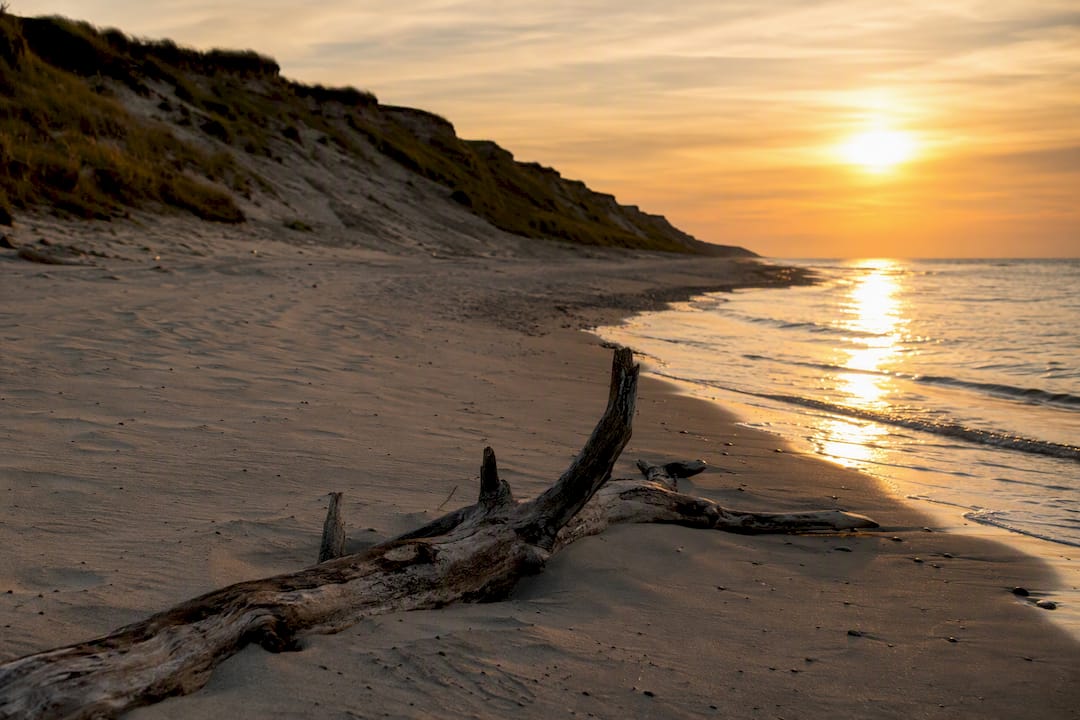
People seeking a romantic seaside vacation often choose less known coastlines where sunsets and silence weigh more than amenities. An evening walk along the dunes or a dinner with locally caught fish does more for the atmosphere than a crowded beach.
Seniors typically prioritize accessibility and a slow pace, and many coastal destinations now have better trail routes and shorter walks to viewpoints than before. Active travelers, on the other hand, seek the opposite of tranquility: accommodation close to kayak spots, cycling routes, or water sports centers, where the coastline itself becomes a playground rather than a backdrop.
With perspective: use the coast, but use it with care
The biggest misconception about coastal holidays is that nature is just there, regardless of how many visitors pass by. It is not. The investment backlog, as warned by the action plan, is a symptom of exactly that: success without maintenance wears down what made the place attractive in the first place.
Therefore, choose the coast, but choose it with respect for what makes it worth visiting. Support the accommodations and experiences that genuinely invest in the nature around them, and use digital guides to find these places instead of guessing your way around. It is the simplest form of responsible tourism there is.
— Tommy
Plan your coastal holiday with the right tools
Rejsidanmark is the alternative to searching through a jumble of travel blogs and booking sites to find out where the coast truly fits your plans. Instead of guessing prices and distances, you get an overall overview with price estimates per. Person and filters for season and age that match what the article has just described.
If you want to have the overview set up in practice, then Checklist for Denmark trip: plan your perfect adventure The obvious next step. The checklist gathers the practical items, accommodation, transportation, budget, activities, so you can go from idea to booked days on the same evening. Do you want the full overview of the entire trip, not just the coast, then start instead with How to plan your trip to Denmark: your complete guide And build your coastal holiday from the ground up.
Sources
- Action plan for coastal and nature tourism in Denmark (Jan 2025)
- Nature – and increasingly the environment – has become important for Danes' holiday choices – Nature Magazine
- Holiday at the Wadden Sea Coast (folder)
Recommendation
- Coastal holidays in Denmark offer unforgettable family experiences – Travel in Denmark
- How to experience the best Danish coastal towns – Travel in Denmark
- Why a family holiday in Denmark is the best solution – Travel in Denmark
- Beach holiday in Denmark: Everything You Need to Know – Travel in Denmark