This is Rejs i Danmarks practical guide to summer vacation in Denmark: suggestions, checklists, and routes you can use today. We cover coast, island, city, and wilderness, as well as family activities for all ages. You will receive a quick shortlist, a budget template, concrete route suggestions like the West Coast Trail, and weather advice, so you can plan flexibly regardless of what summer has in store.
What type of vacation suits you and your family?
The choice of vacation type determines everything from the budget to the packing list. Here are six categories that cover most needs in a Danish summer holiday:
- Coastal holidays and beachesIdeal for families with children who want to switch between sand, water, and ice without long transportation times.
- Ø-vacation, like a trip to Bornholm: combines nature, culture, and cycling at a relaxed pace, suitable for couples and families with older children.
- Wilderness hiking, for example, langs West Coast TrailIt is aimed at active travelers who want to sleep under the open sky and walk for several days in a row.
- Holiday with culture, like Roskilde or Aarhus: suits you who want to combine museums, architecture, and café life with a single day in nature.
- Family-friendly experience centers and parksProvides predictable days with activities targeted at children's ages, regardless of the weather.
- Slow travel and nature retreatsfor those who need a break from screens and schedules, often in the form of a peaceful summer house stay near the forest or the beach.
Most families mix two or three of these categories during a week. A classic combination is three days by the coast followed by a city trip with museum visits, or an island holiday that ends with a single hiking day. If you choose wilderness as your main trail, you should set realistic expectations for children's endurance and plan short stages for the first days. See you later Guide to Danish coastal towns for specific suggestions for accommodation and dining along the route.
How to plan your vacation step by step
A good summer vacation is based on few but important decisions made in the right order:
- Choose holiday type and duration Based on who is traveling with you, and consider the children's ages when choosing activities.
- Set a budget estimate for transportation, accommodation, food and entrance fees, and expect a buffer of about 15 percent for unforeseen expenses.
- Choose mode of transportationTrain and ferry work well for island and city vacations, while a car offers the most flexibility for wilderness routes and coastal trips with lots of luggage.
- Book accommodation well in advance to summer houses and hotels in July, while shelters and primitive sites can most often be used without prior booking, except for larger groups.
- Check security and permissions Before nature trips: know the rules for camping, fire pits, and access to private lands.
Professional tip: Book transportation and accommodation within fixed arrangements first, and keep the activity plan flexible so you can easily swap a day at the beach for a visit to a museum if the weather changes.
The budget sketch doesn't have to be complicated. Set a daily limit per person for food and entrance fees, add transportation and accommodation as fixed items on top, and adjust along the way. Use our Checklist for Denmark trip Basically, if you want a more detailed template to work from.
Concrete suggestions for coast, island, city, and wilderness
Here are ready mini-itineraries that you can use directly or customize for your own trip.
- The West Coast (Thy, Klitmøller)Use 1 to 3 days for surfing, beach walks, and a short hike along the coast. Klitmøller is known for its waves, while the surrounding dune landscapes offer peaceful walks. Read more in our Guide to the West Coast.
- BornholmAllow 3 to 5 days for a mix of cycling, swimming, and a visit to Hammershus. Feel free to combine a shorter section of Højlyngsstien with a coastal trail for a longer continuous route.
- Roskilde and ZealandA single cultural day in Roskilde, with a visit to the cathedral, can easily be extended into a long weekend with stops at the shores or forests of Zealand along the way.
- Funen and JutlandSuitable for short stays with children, as the distances between family attractions and natural areas are often short, and you can experience several activities in one day.
- CombinationsOne week can easily be divided between the coast and the city, or between the island and the wilderness, if you want both relaxation and activity on the same holiday.
Jelling, with its runestones and burial mounds, as well as Roskilde Cathedral, are both listed as UNESCO World Heritage Sites and serve well as natural anchor points if you want to include a cultural day in an otherwise nature-heavy holiday. See you later List of historical sites in Denmark for several suggestions for cultural day trips, and Mappamundi's archive about Denmark from an outsider's perspective on the country's attractions.
West Coast Trail and Højlyng Trail: distance, accommodation, and preparation
If you are going on a multi-day route, there are two trails that stand out. The West Coast Path between Agger and Bulbjerg stretches over 80 to 100 kilometers and can be walked or cycled over several days. At Bornholm, Højlyngsstien offers a shorter but equally nature-rich experience, which can be extended by combining it with nearby coastal paths.
- Accommodation along both routes typically takes place in shelters or primitive sites, which can often be used for free in state natural areas.
- Pack layer on layer, sturdy footwear, and enough food for stretches without towns, as the distance between shopping opportunities can be long on parts of the West Coast Trail.
- Use udinaturen.dk to find specific shelter spots, drinking water points, and toilet facilities along the way, so you don't end up without a plan late in the day.
Professional tip: Book shelter spots via udinaturen.dk if you are a larger group, although the spots are initially allocated on a first-come, first-served basis.
The weather often fails in summer, so plan accordingly.
Danish summer weather is rarely stable. DMI indicates that long-term forecasts often show low pressure and changeable weather., with frequent changes between sunshine, rain, and wind. Such uncertainty means that you should build flexibility into the plan from the start.
- Have at least one backup activity ready per day, such as a museum or experience center, in case it rains.
- Check the weather forecast the day before and adjust the order of activities so that the most weather-sensitive ones are first, while the weather looks stable.
- Various items for families and hikers: families need rain gear and change of clothes, while hikers should prioritize quick-drying layers and waterproof shoe soles.
The summer of 2026 was characterized by more sunshine hours than usual and some heatwaves., but with significant regional differences in precipitation and temperature, according to DMI's summer summary. Keep an eye on official weather warnings, especially during longer hikes along the coast.
Who is behind the recommendations in this guide?
The guide is written with a focus on practical and useful travel planning rather than superficial inspiration. On the page, you will find an interactive map, filters by season, price, and age group, as well as estimated costs per person for many experiences.
Our guides are continuously updated, but booking and price information can change quickly during the high season. Always check the official sources and booking sites before you commit to a reservation.
The biggest mistake in Danish summer holiday planning
The most common mistake is not choosing the wrong type of holiday, but planning too tightly. Mange creates a detailed day-to-day plan without room for weather changes or tired children's legs, and ends up pushing an unrealistic plan through instead of adjusting along the way.
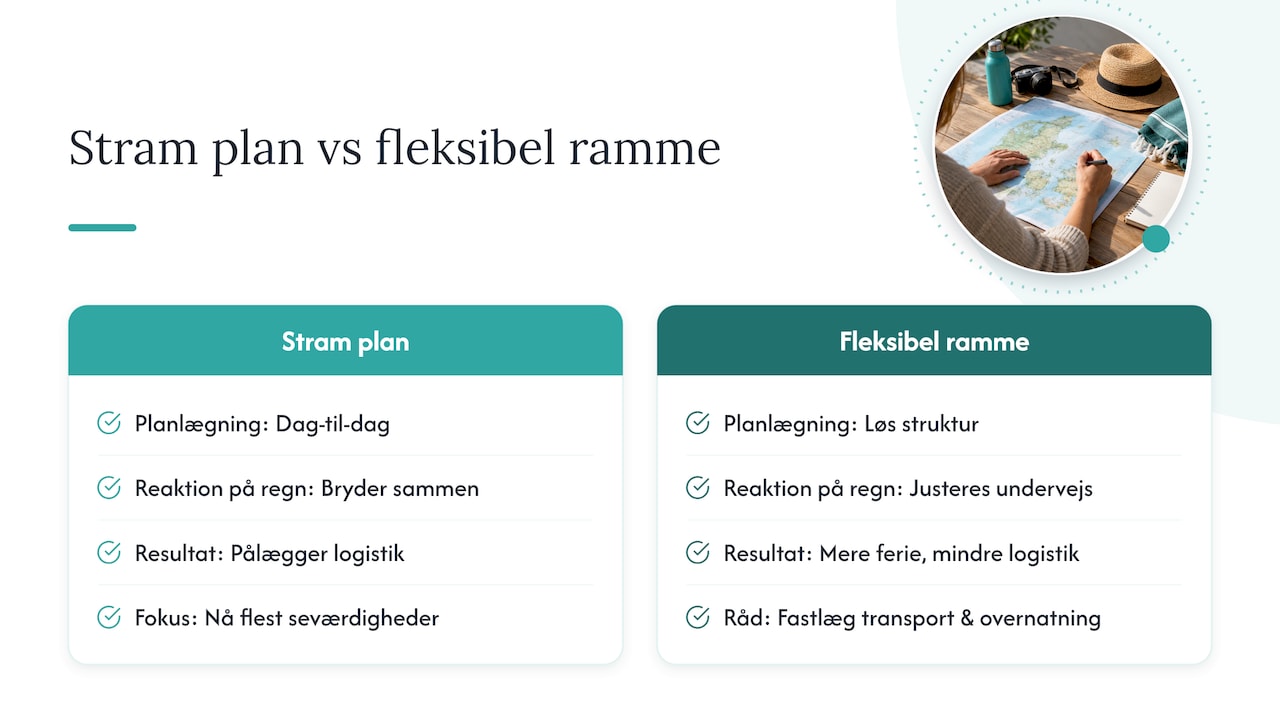
Conventional travel advice often focuses on listing as many attractions as possible. In a Danish summer, where the weather can change in a few hours, it is much more important to build a plan with room for flexibility than to visit as many stops as possible. The real choice rarely lies between Bornholm and the West Coast: it is between a strict plan that collapses at the first rain shower and a flexible framework that holds throughout the week.
Therefore, prioritize transportation and accommodation as the fixed framework, and leave the rest loosely defined. That approach offers more vacation and less logistics, whether you choose the coast, island, or wilderness.
— Tommy
Bridge Travel in Denmark to finalize the rest of the plan
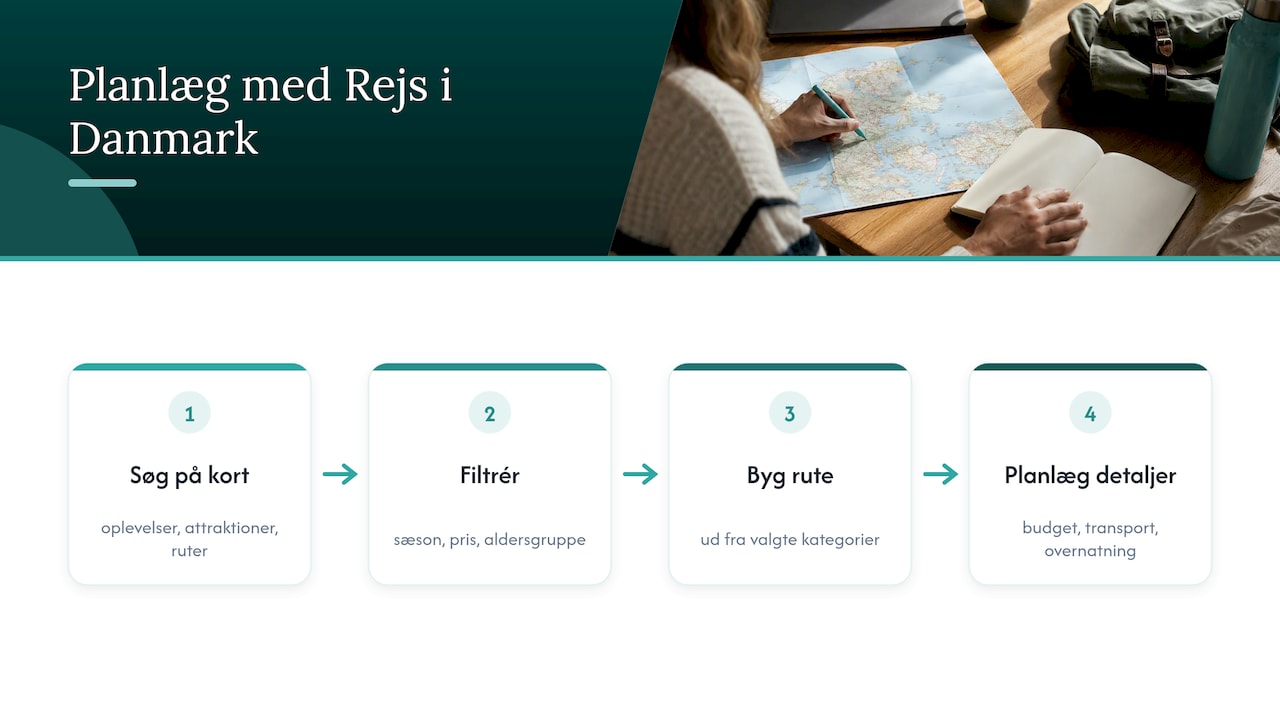
We gather experiences, attractions, and nature routes throughout Denmark on one map, with filters by season, price, and age group, so you can quickly find what suits your family. It saves you hours of searching across scattered pages and booking sites.
If you want a comprehensive plan for the entire trip, you can proceed to Our guide to planning a trip to Denmark, where you can find a more detailed template for budget, transportation, and accommodation. Use the filters to sort by season and age group, and build your own route based on the categories we have covered above.
Frequently Asked Questions
What is the best time to book a summer house or hotel?
Book accommodation for July as early as possible, preferably several months in advance, as popular areas like the West Coast and Bornholm fill up quickly. Shelters and primitive sites usually do not require prior booking, except for larger groups.
How long is the West Coast Trail, and can children walk it?
The West Coast Path between Agger and Bulbjerg is a long hiking trail of about 80 to 100 kilometers. Children familiar with the route can easily walk shorter sections over one or two days instead of the entire route at once.
Is it free to stay overnight in shelters in Denmark?
Shelters and primitive accommodation sites in state natural areas can often be used for free, according to the Danish Nature Agency. Always check local regulations, as the conditions may vary between areas.
How do I find family-friendly activities based on the children's ages?
Use the short function and age filters to sort experiences by the age group they are best suited for. It gives you a quick overview of relevant activities without having to read through all the content manually.
What should I do if the weather ruins my holiday plans?
Prepare at least one indoor backup activity per day, such as a museum or experience center. DMI's forecasts often show changeable summer weather, so a flexible plan is more sustainable than a strict day-to-day plan.
Sources
- DMI – new forecast for summer: outlook for somewhat cool and sometimes unstable weather
- Jelling Mounds, Runic Stones and Church – UNESCO World Heritage Centre