In short:
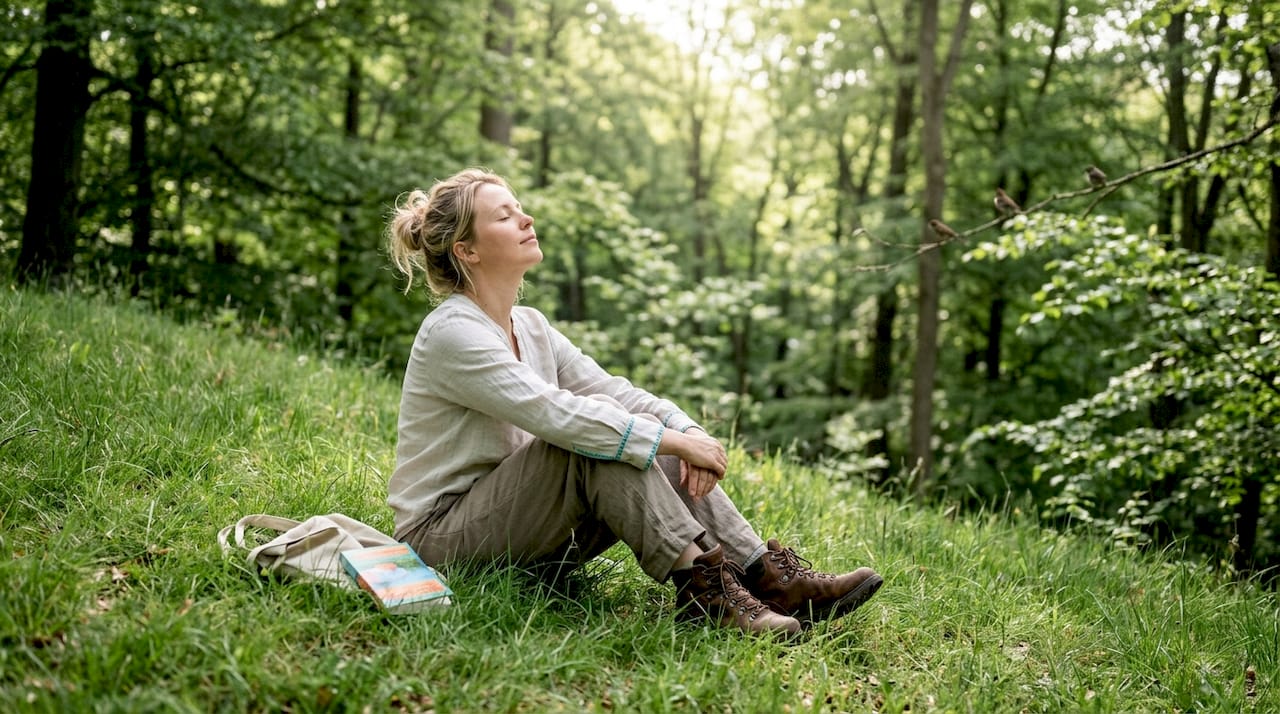
- Nature trips reduce stress and promote mental clarity through cortisol reduction and positive brain changes. Complex natural areas such as forests and coastal regions provide greater mental well-being than simple green spaces. A slow, aimless journey in nature creates greater restoration than crowded holiday plans.
Nature trips are the most effective form of vacation to reduce stress and restore mental clarity. Research shows that The cortisol level decreases by 33%. after just a 30-minute walk in nature It is a physiological change you feel in your body, not just a sensation. Ecotourism, which is the recognized technical term for nature-based and sustainable tourism, covers everything from hiking in national parks to camping under the open sky. Travelers considering nature trips will find here a research-based overview of what nature actually does to the body and mind, and how to plan a vacation that yields the greatest benefits.
Why choose nature trips for mental health?
Nature trips reduce stress faster than most other types of vacations. Already after 3 minutes In green surroundings, the brain registers measurable positive changes. It means that even a short break in a park or forest has a real biological effect, not just a psychological one.
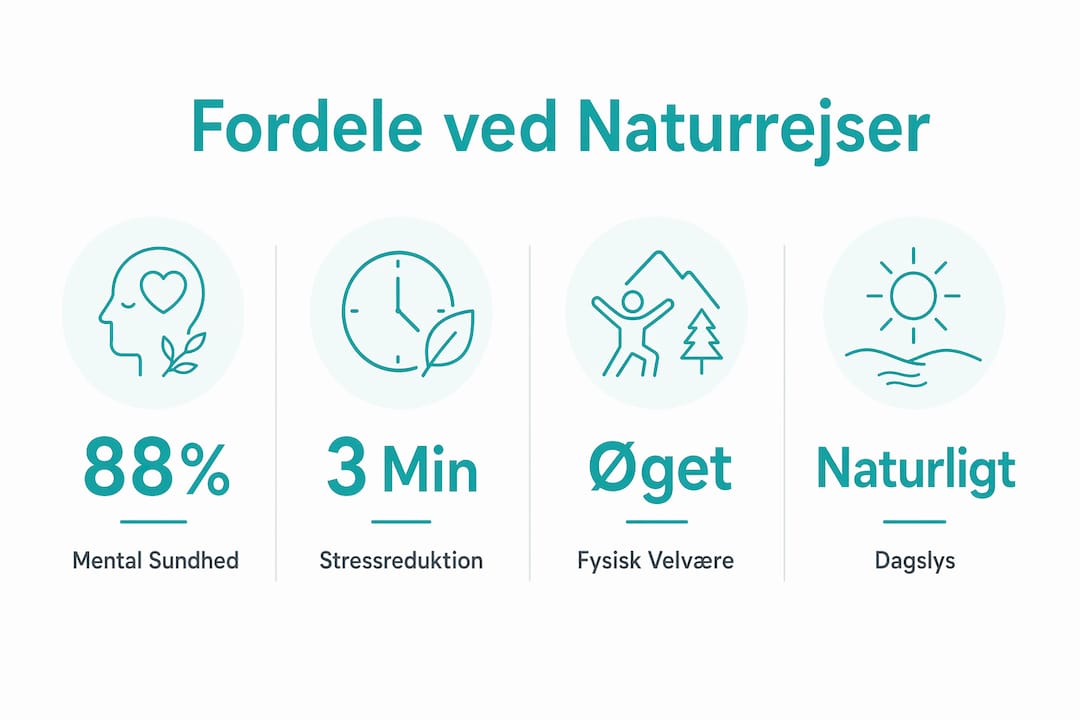
The primary mechanism is the body's stress response. When you are in nature, the production of cortisol, the hormone that drives chronic stress, decreases. A 33% decrease after a half-hour walk is not a marginal improvement. It corresponds to a significant change in the body's alarm readiness.
Research from Stockholm and Tübingen indicates that active attention to natural sounds further enhances the effect. Fuglesang increases well-being especially when you consciously focus your attention on the sounds rather than letting them pass in the background. It is a small behavior change with a big impact.
Here are the documented mental benefits of experiences in nature:
- Cortisol level: Physiological stress reduction already after 30 minutes in nature
- The peace of the brain Positive changes in brain activity after just 3 minutes in green environments
- Increased well-being Active listening to bird songs and natural sounds enhances well-being
- Better attention Nature allows the brain to switch from performance mode to recovery.
Authentic happiness during vacations is primarily mediated by a reduction in stress, and nature trips support this best through minimal external stimulation.
Professional tip: Let the phone stay in the pocket for the first 20 minutes of a walk in nature. Listen actively to the birds and the wind. Conscious awareness doubles the mental gain compared to passive presence.
What physical health benefits do nature trips provide?
Nature trips not only improve the mind. The body reacts just as concretely to nature contact. Natural daylight regulates the circadian rhythm and improves sleep quality, especially when you are exposed to light early in the day. That's why many people find they sleep significantly better on nature trips than at home.
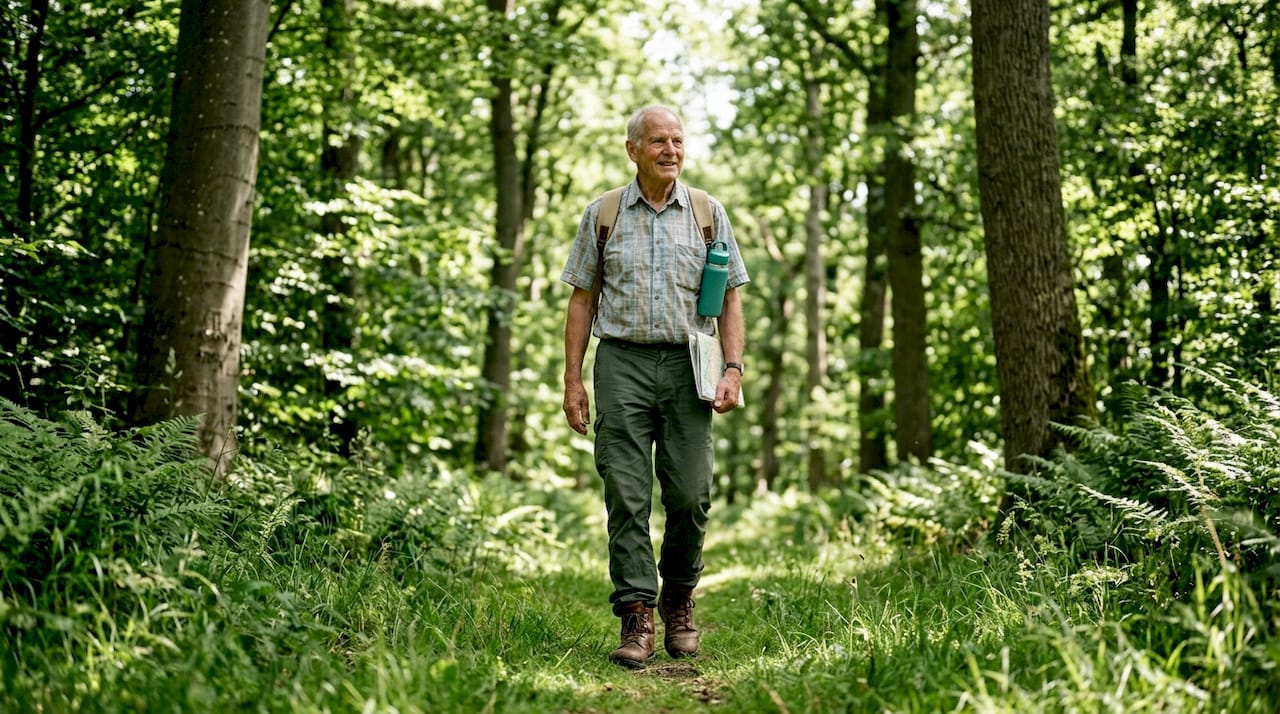
Movement in nature differs from training in a fitness center in one crucial aspect: there is no performance pressure. You walk because your surroundings invite you to, not because you need to reach a goal. Let movement in nature strengthen the immune system and improve mental clarity without activating the body's stress response.
The benefits of sleeping and moving in nature include:
- Better sleep Natural daylight synchronizes your biological clock and provides deeper sleep at night
- Reduced pain Outdoor activities are proven to reduce neck pain and muscle tension.
- Stronger immune system Regular nature contact increases the body's resistance
- Mental clarity Movement without time pressure frees up cognitive resources for reflection
Practical preparation for sleeping outdoors does not require much equipment. A good sleeping bag, a simple campsite, and access to unique accommodations in nature is enough to reap the benefits. It's about getting out, not about having the perfect gear.
Professional tip: Plan your first day in nature with a walk before noon. 10.00. The morning sun is most effective in resetting your circadian rhythm and preparing you for a good night's sleep.
Why does the complexity of nature matter for your recovery?
Not all green spaces are equally effective. Sunny, complex ecosystems Mature forests and diverse coastal areas provide greater psychological well-being than a manicured city park. It is a discovery that changes how you should think about choosing a destination.
Structural complexity in nature means variation in plants, sounds, light, and animals. A mature forest has a layer of vegetation, changing light conditions, and a rich soundscape. A simple lawn has none of these elements. The brain reacts differently to the two environments, and the effect on recovery is correspondingly different.
| Natural habitat | Structural complexity | Psychological effect |
|---|---|---|
| Modern forest | High | Significant stress reduction and well-being |
| Artistic coastline | High | Strong sensory stimulation and calm |
| Park with grass | Lav | Moderately positive effect |
| Intensively cultivated land | Very low | Minimal health benefit |
Pilot studies on Green Prescriptions, which are medical recommendations for nature contact as treatment, show that patients who are referred to ecologically rich areas achieve better results than those who are simply advised to have "more nature". The choice of a specific natural area is therefore not insignificant.
The biological effectiveness of nature contact depends on the structure and biodiversity of the ecosystem. Nature experiences in ecologically rich areas provide greater lasting health benefits than simple green spaces.
Biodiversity and dynamic environments provide long-term effects that simple green areas cannot match. When choosing a destination for a nature trip, you should prioritize national parks, coastal forests, and river valley landscapes over the city's green breathing spaces. Denmark's national parks, such as National Park Thy and National Park Mols Bjerge, offer exactly this type of complex nature experience. Travelers who wish to understand The role of nature in the holidayFind specific destination suggestions at Rejsidanmark.
How do you plan a nature trip for maximum recovery?
The biggest mistake on nature trips is filling the calendar. Recovery research shows, the quality of pauses is more important than the length. A week with few plans and lots of contact with nature provides more than two weeks with activities packed tightly.
Plan your nature trip according to these principles:
- Build white fields into the calendar. Stand at least half of the days without planned activities. The brain needs unstructured time to recover.
- Choose a screen-free zone. Agree with yourself to check the phone only once a day. Constant notifications disrupt the mental peace that nature otherwise builds.
- Prioritize complex natural areas. Choose destinations with rich nature such as coastal forests, river valley landscapes, or national parks instead of campsites by motorways.
- Move without a goal. Go, swim, or cycle without setting distance or speed goals. Performance pressure abolishes part of the body's stress-reducing effect.
- Plan breaks with intention. Sit down, close your eyes, and listen to the surroundings for 5–10 minutes at a time. Active awareness of natural sounds enhances recovery.
- Please sit down if possible. Even a single night under the open sky or in a tent gives your circadian rhythm a significant boost through natural daylight from the morning.
88% of European studies documents a positive correlation between nature-based solutions and improved mental health. It is not a random trend. There is a pattern across countries, climates, and age groups.
Overplanning is the most common mistake. Many travelers fill their holidays with sights, activities, and social commitments, returning home more tired than when they left. The slow holiday focused on peace and nature contact is not lazy. It is conscious. Sustainable travel is not just about the environment. It also concerns traveling in a way that is sustainable for your own body and mind. Hospitality providers working with sustainable practices, precisely this approach supports by creating frameworks that promote calm over consumption.
Professional tip: A notebook instead of an extra screen. Writing down what you see and hear in nature sharpens your awareness and extends the mental benefits far beyond the vacation itself.
My experience with the slow nature journey
I have tried both approaches. The busy holiday with activities from morning to evening and the slow week in nature with no plans and plenty of silence. The difference is unmistakable.
What surprised me the most was not that nature was working. I knew that. The surprising thing was, how fast It worked. Already after the first day without screens and with long walks in the forest, I felt a physical relief in my shoulders and a calmness in my mind that I rarely experience in everyday life.
The bird song is underrated. I usually walk with music in my ears, but when I consciously started to listen to my surroundings instead, something else happened. The thoughts slowed down. It's not mysticism. It is biology.
What I have learned is that the choice of habitat type matters more than the duration. A weekend in a modern forest gives more than a week at a campsite by a busy road. And a holiday without a plan offers more than a holiday with a tight schedule, no matter how beautiful the destinations are.
Travelers considering nature trips should start by asking themselves: what do I need to get away from? The answer points directly to the right destination and the right approach. Rejsidanmark collects concrete suggestions for The role of nature in everyday life And on vacation, so you don't have to guess.
— Tommy
Rejsidanmark helps you find your nature trip in Denmark
Rejsidanmark is your guide to nature experiences and sustainable holiday options in Denmark. The platform gathers destinations, types of accommodation, and practical tips so you can plan a holiday focused on tranquility, nature contact, and mental recovery. From national parks to coastal forests and unique outdoor accommodations, you will find specific suggestions tailored to your travel style and season.
Whether you are planning your first nature trip or looking for new destinations, it provides Rejsidanmark's guide to Denmark Get the overview you need. Use the short function to filter experiences by season, price, and number of participants, and find the nature trip that fits you perfectly.
Frequently Asked Questions
What are nature trips, and what is ecotourism?
Nature trips are holidays focused on stays and activities in natural surroundings. Ecotourism is the technical term for nature-based tourism that also considers the environment and the local community.
How quickly do you feel the effects of nature contact?
The brain registers positive changes after just 3 minutes in green environments. The cortisol level drops by up to 33% after a 30-minute walk in nature.
Does it make a difference what type of nature you choose?
Yes. Complex ecosystems such as mature forests and biodiverse coastal areas provide significantly greater psychological well-being than simple green spaces like city parks or mowed lawns.
What is the biggest mistake on nature trips?
Overplanning. Recovery research shows that the quality of breaks is more important than the number of activities. White spaces in the calendar and minimal screen time provide the best conditions for mental recovery.
What nature trips can you take in Denmark?
Denmark offers national parks such as National Park Thy and National Park Mols Bjerge, coastal forests, river valley landscapes, and outdoor accommodation. Rejsidanmark collects concrete suggestions for Nature experiences in Denmark with practical tips for planning.