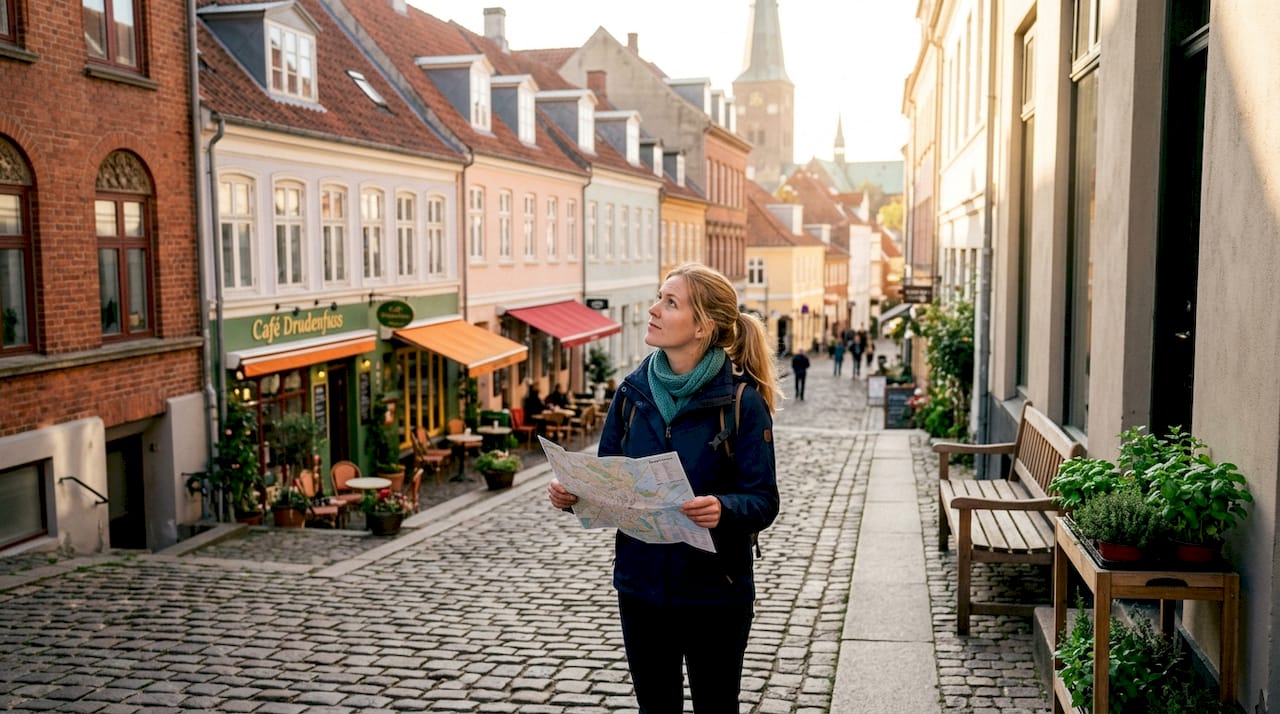
In short:
- Exploring Denmark requires good preparation, choosing transportation methods, and time to feel the rhythm of the cities.
- Cities like Copenhagen and Aarhus offer culture, food, and infrastructure, while small towns like Ribe and Ebeltoft provide tranquility and historical charm.
Urban exploration in Denmark is a sensory and cultural experience that combines transportation, activities, and encounters with the local population. How to best explore Denmark's cities: by preparing thoroughly, choosing the right transportation, and giving yourself time to feel the city's rhythm. Denmark offers everything from Copenhagen's vibrant street scene to quiet, historic small towns with cobbled streets and local bakeries. Rejsidanmark gathers experiences, attractions, and practical advice so you can plan your trip from start to finish without missing the best moments.
How to explore Denmark's cities: preparation and transportation
God preparation is the difference between a good and an excellent city experience. The choice of transportation sets the framework for what you can achieve and what it will cost you.
The most important modes of transportation
Denmark has a well-developed transportation system that makes it easy to move between and within the cities. Here are the most used options:
- Tog: DSB connects most major cities. DSB Orange Tickets You can save up to 60% compared to walk-up prices if you book 2–4 weeks in advance. It is the clearly cheapest way to travel far.
- Subway: Copenhagen's metro runs the M2 route from Kastrup Airport to the Inner City 13 minutesIt's faster than taxis and cheaper than Uber.
- Rejsekort: A Rejsekort provides access to buses, metro, and local trains nationwide with automatic discounts. It is the smartest choice for daily transportation in the cities.
- Bike: Cycling is popular in Denmark, but cycling in Copenhagen's city center requires traffic understanding and is not for beginners. Practice yourself first in quieter neighborhoods.
- Gang: Central Copenhagen can be explored on foot in under 30 minutes. Gang is the best way to discover details and atmosphere.
Accommodation and budget
| By | Price level | Advantages |
|---|---|---|
| Copenhagen | High | Central location, many opportunities |
| Aarhus | Middle | Relaxed tempo, good culture |
| Odense | Low | 20–30% cheaper than downtown Copenhagen |
| Ribe | Low | Historical charm, calm atmosphere |
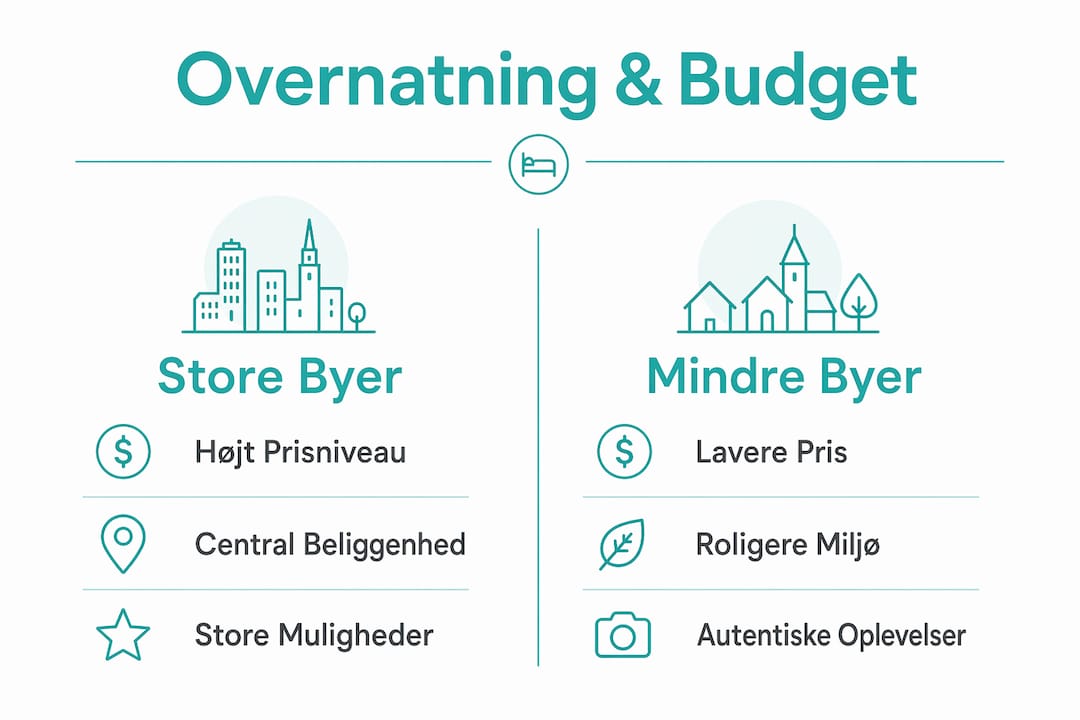
Odense and Ribe are good bases if you want to save on accommodation without compromising on experiences. Book accommodation early in the high season, as prices increase significantly from June to August.
Professional tip: Book DSB tickets at least two weeks in advance and choose Orange tickets. You save up to 60% and can spend the money on food and experiences instead.
How do you plan your day to make the most of the city?
The biggest mistake many travelers make is packing too many attractions into one day. Self-guided city walks combined with guided tours Gives the best balance between freedom and depth.
A good daily structure in five steps
- Choose 2–3 main activities. Do not plan more than three fixed points a day. It allows space for spontaneous discoveries, which are often the best.
- Start early at popular attractions. Museums and attractions are least crowded at. 9.00–10.30. You avoid queues and get peace to experience.
- Include breaks as part of the program. Slow city walks with breaks in cafes or bakeries are the key to understanding the city's rhythm. A cup of coffee at a local bakery is not wasted time. It is a cultural experience.
- Take the afternoon to walk. Let the city unfold at a calm pace. Look into yards, follow a street you don't know, and stop at what catches your attention.
- Plan the evening in quarters and food. Adventures in neighborhoods like Vesterbro and Nørrebro focusing on food and music provide a more authentic city experience than classic sightseeing.
Professional tip: Check the opening hours of museums and attractions the day before. In many places, the opening hours are shorter on Mondays or they are completely closed. That saves you from a disappointing trip.
Local events and workshops are underrated. Cooking classes, ceramic workshops, and sports events give you contact with Danes in a natural way. You don't need to speak the language fluently to participate.
Store towns and historic small towns: what is the difference?
Denmark offers two very different city experiences. Cities like Copenhagen and Aarhus offer vibrancy, culture, and infrastructure. Historic small towns like Ribe, Møgeltønder, and Ebeltoft offer tranquility, local history, and a completely different sense of time.
Storbyer: kultur, mad og transport
Copenhagen is Denmark's clearly largest city and a natural starting point for most travelers. The metro network, the many museums, and the international food scene make it easy to fill the days. Aarhus combines museums and experimental galleries, providing deep insight into the city's modern art sceneThe travel between the two cities takes about three hours and is manageable with early booking.
Big cities require more planning. Popular restaurants are fully booked days in advance, and the best museums have queues on weekends. Bridge Practical tips for experiences in Copenhagen to prioritize correctly and avoid the classic pitfalls.
Small towns: peace and hidden gems
Small towns in Denmark are underrated. Ribe is Denmark's oldest town and has preserved its medieval urban structure almost intact. Møgeltønder has one of the country's most beautiful lime tree alleys. Ebeltoft on Djursland combines a charming town center with proximity to nature.
- Go without a map for at least one hour. Intentionally get lost.
- Visit the local church or the local museum. They are almost always free or very cheap.
- Have breakfast at the café that looks the most used. Not the one with the most signs outside.
- Talk to the owner of the store you are entering. Danes in small towns are more open than in big cities.
Transport logistics to small towns require a bit more planning. Many places are only accessible by car or regional bus. Check local transport in Denmark to find the best routes and combinations.
The season means a lot to the experience. Summer brings festivals and open harbor baths. Autumn brings empty streets and cheaper prices. Winter in a Danish small town with lights on in the windows is a unique experience.
What cultural norms should you know in Danish cities?
Danish communication style is brief, direct, and characterized by respect for others' space. It may seem cold at first meeting, but it is not unfriendly. It's just Danish.
Danes sometimes seem reserved, but that reflects respect for others' space. Authentic social connections are best created through shared activities rather than direct small talk.
This insight changes the entire approach to social gatherings in Denmark. You don't need to start a conversation to make contact. You just need to participate in the same as the others.
Practical social tips
- Comment on the situation, not the person. A comment about the weather, the food, or the place naturally opens conversations. Direct questions to strangers seem intrusive.
- Participate in joint activities. Joint tasks such as cooking or sports Creates authentic encounters much more effectively than attempts at small talk.
- Respect the silence. In parks, on the beach, and on public transport, silence is the norm. It is not a sign that you are unwelcome.
- Bridge playgrounds and family-friendly events. Children are the best icebreakers. Family-friendly activities such as cultural events and food workshops significantly increase the chances of authentic encounters.
- Be punctual. Danes take time seriously. Arrive on time for appointments, and expect the same.
The local food culture is an experience in itself. To understand local gastronomy As part of city life, it gives you a completely different perspective on what is happening in the cafes and bakeries you pass. Mad is not just food in Denmark. It is a social institution.
A perspective on exploring Danish cities as a traveler
I have spent many years traveling around Denmark, and the most important lesson is simple: speed is the enemy. The best experiences happen when you slow down and let the city come to you instead of chasing it.
Most travelers spend too much time checking off attractions on a list. It is understandable, but it is the wrong approach. A quiet walk in Nørrebro tells more about Danish everyday life than three hours in a museum. It is not an argument against museums. There is an argument for mixing it all.
Preparation is not the opposite of spontaneity. Once you have booked the train and know where you are sleeping, you are free to follow what captures you. Without the fundamental structure, you spend energy on logistics instead of experiences.
Cycling in the city center is something I always recommend waiting to do until you know the traffic. I have seen many tourists have an unpleasant experience because they underestimated the pace of Copenhagen's bicycle traffic. Start in quiet neighborhoods and gradually build up confidence.
The best advice is to combine the big and the small. Spend two days in Copenhagen, take the train to Aarhus, and end with a night in a small town you've never heard of. The combination gives an image of Denmark that no guidebook can give you alone.
— Tommy
Plan your Denmark trip with Rejsidanmark
Rejsidanmark gathers the best experiences, sights, and practical advice for travelers in Denmark. Whether you are planning your first trip or looking for new places to visit, you will find concrete help with transportation, accommodation, and activities.
Start with The guide for first-time visitors to get a complete overview of what you need to know before you travel. Use The checklist for day trips to ensure that you don't forget anything important. Rejsidanmark continuously updates with current tips so you always have access to the latest information about Experiences in DenmarkBook transportation and attractions early to secure the best prices and avoid sold-out tickets during the high season.
Frequently Asked Questions
What is the cheapest way to travel between Danish cities?
DSB Orange tickets are the cheapest way to travel by train in Denmark. Book 2–4 weeks in advance to save up to 60% compared to the walk-up price.
Can you explore Copenhagen's city center on foot?
Yes. Central Copenhagen is walkable and can be explored on foot in under 30 minutes. Walking is the best way to discover the city's details and atmosphere.
What are the best historical small towns in Denmark?
Ribe is Denmark's oldest town and has preserved its medieval structure almost intact. Møgeltønder and Ebeltoft are other good examples of historic small towns with strong local character.
How do you meet Danes as a tourist?
Joint activities such as cooking workshops, sports, and cultural events are the most effective way to authentic encounters. Danes are reserved towards direct small talk, but open in common situations.
Is cycling safe for tourists in Copenhagen?
Cycling in the city center of Copenhagen requires traffic understanding and is challenging for the inexperienced. Start in quieter neighborhoods and learn the traffic rules before cycling in the busiest streets.