Nørre Borris Churchyard
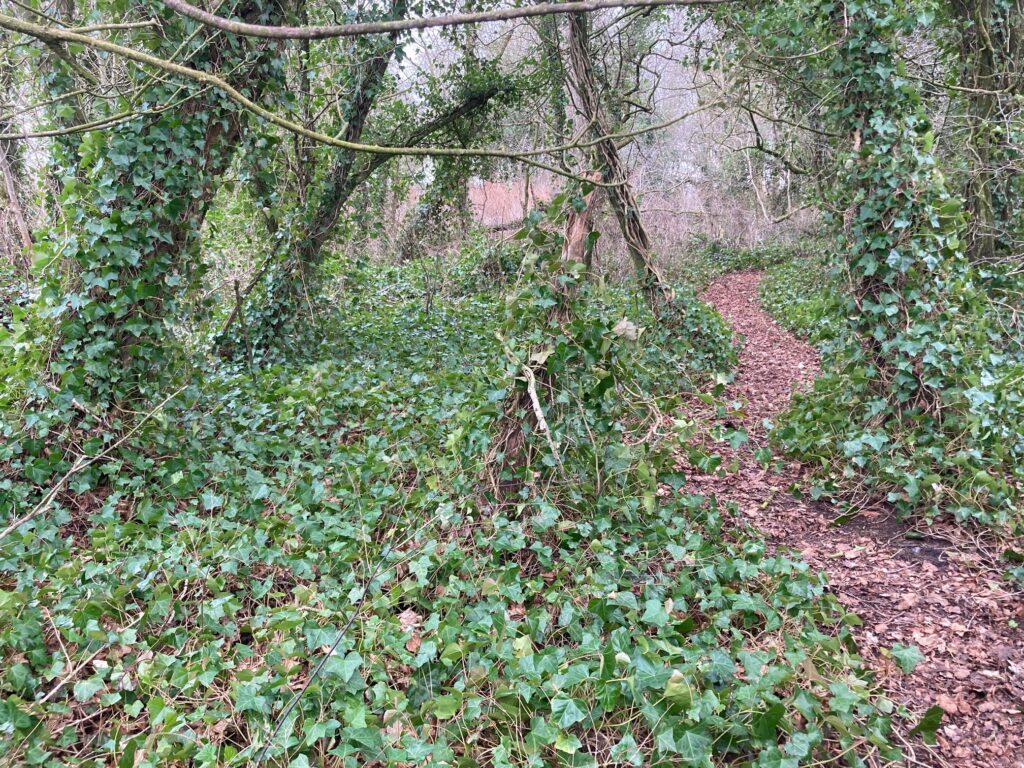
Nørre Borris Churchyard should be visited with a flashlight at dusk or after it has become dark for the truly unique experience.
The churchyard has remained almost untouched since 1905, when Nørre Borris Church was demolished. The church's previous location is marked with a row of stones. The churchyard remains, a few gravestones are visible, and a rusty metal fence remains. Otherwise, you will encounter a small overgrown oasis with plenty of climbing plants, which definitely also cover some of the gravestones.

There is a small parking lot at Nørre Borris Churchyard.
The church that kept on and on
The story of Nørre Borris Church is the story of a church that continued and continued. The church was built in the 14th century. There was space for 80 parishioners in the church. It was already decided in 1555 that the church should be demolished. This is officially due to the "parish's narrowness," but probably also because the priest left Ørum in Nordfjends to preach. It was a trip of "3 strong miles," or 21 km, which, with the transportation methods of the time and small paths and gravel roads, was a longer journey. But the parish's residents managed to hold on to the church by offering the changing priests a suitable payment.
Since then, the growth of the parish became the reason for the church being demolished. The station town Sparkær west of Nørre Borris Church was in strong growth. Nørre Borris Church became too small for its congregation, and a new church was needed. A church was built in Sparkær. In 1905, Nørre Borris Church was demolished. The inventory was moved to the church in Sparkær. It appears that the church was sold for demolition and the price was 350 kroner.
At that time, the cemetery was designated as a protected site for 100 years. The parish council in the church in Sparkær was obliged to maintain the paths and the churchyard until 2005. The site is still maintained with paths around the churchyard.
However, the site was used as an active cemetery a few years after the demolition. Among other things, a gravestone from 1910 can be found in the cemetery.

.



Bakkelyvej 8, Viborg, Denmark