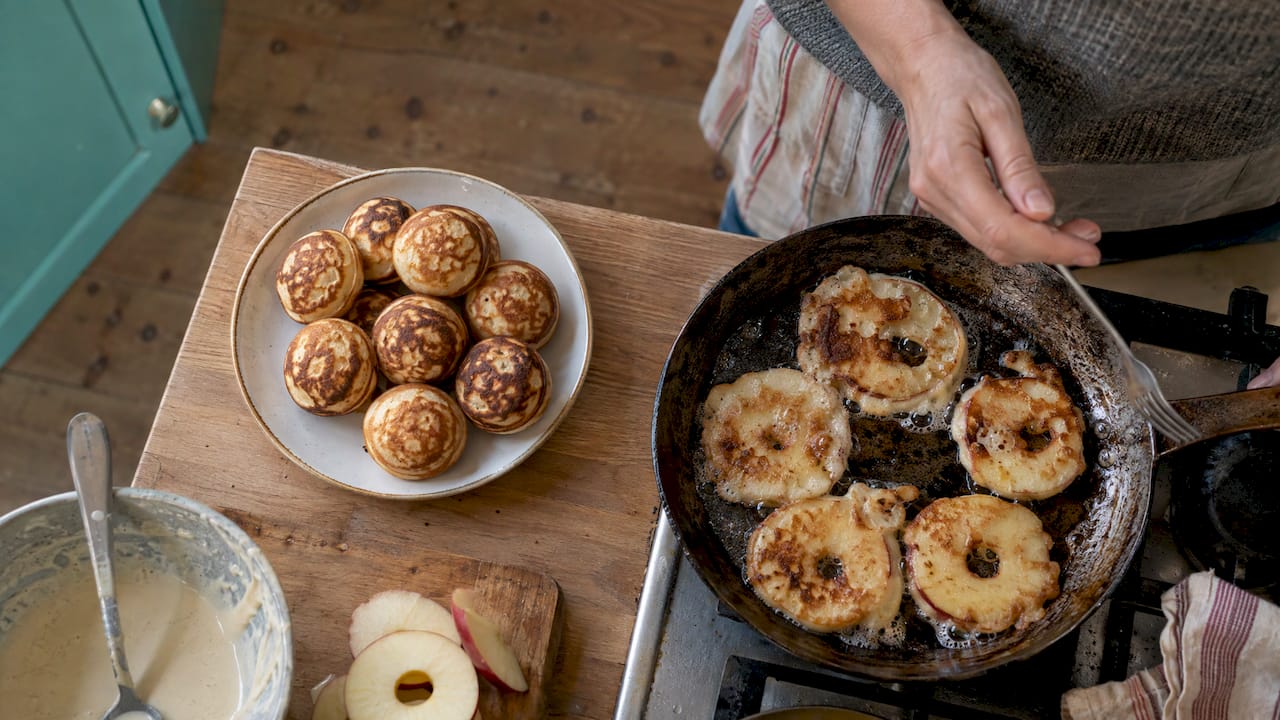
The "original" æbleskive was a slice of apple dipped in batter and fried in fat. The round, airy ball you know from the Advent season came later. Therefore, you get two recipes here. The first is the classic with buttermilk and cardamom, which most Danes today call the real one. The other one is the old one with apple slices in it. You also get the technique that makes them perfectly round, an overview of the regional dishes the æbleskive has become around the country, and where in Denmark you can experience the Christmas atmosphere surrounding them. We write about Danish food because it is part of the experience when traveling in the country. Æbleskiven is one of the best examples of how a tradition tastes different depending on where you are.
What is the original æbleskive?
The name says it all: there was apple in it. According to Lex's article about the æbleskive had the original version in the oldest Danish cookbooks "fried æbleskiver" or "liquid æbleskive". One peeled an apple, cut it into thin slices, dipped the slices in pancake batter, and boiled or fried them in fat. Often the apple slices had first been left for a day in a marinade of wine, lemon juice, and spices.
The name is old. The author of "Danish Regional Dishes," Stig Lou Mortensen, said in a DR article about the peak season of æbleskiver, that the word æbleskiver first appears in a Danish cookbook from 1616, where apple pieces dipped in egg and flour were fried in butter in a pan. Since then, they have been baked in a pan with hemispherical indentations, so the cakes become round when flipped.
Then the change happened. The earliest recipes for æbleskiver baked in an æbleskive pan date back to the early 1800s, and it was not until the mid-1800s that people stopped putting apples in, writes Lex. Arla's historical review describes how the æbleskive went from the Middle Ages' dough of rye flour cooked in lard to the 18th century's festive food with wheat flour and yeast, and by around 1900 had become a Christmas cake without apple.
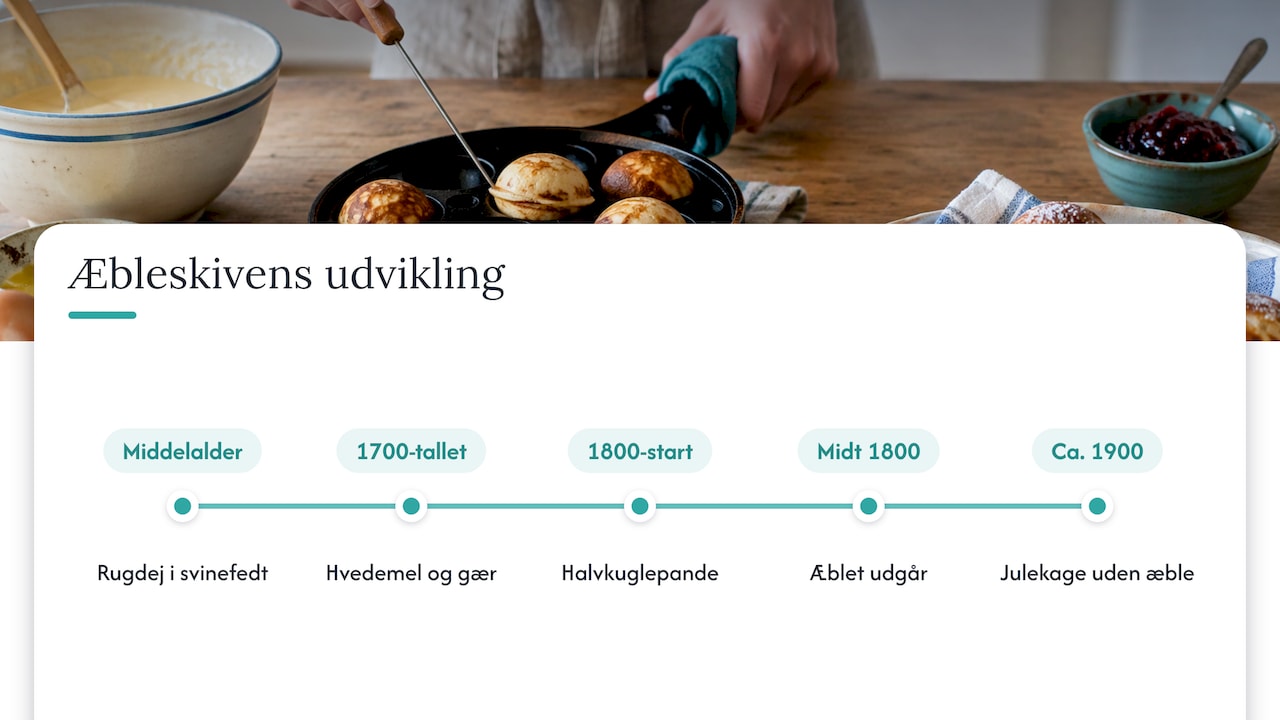
That also explains why the æbleskive is associated with Christmas today. According to Lex, it was served for centuries at the many celebrations of life and the seasons, and it is only within the last 100 years that it has become associated with Christmas sweet pastries.
The answer to "the original recipe" therefore depends on which original you mean. If you want to bake what a Danish family puts on the table in December, you need to use the classic buttermilk dough. If you want to taste history, you need to bring apples.
The classic recipe with buttermilk
The recipe that Denmark itself showcases to visitors is the one with buttermilk, cardamom, and lemon. The quantities below follow the official Danish recipe on denmark.dk and makes about 20 æbleskiver, enough for 3 people as an afternoon treat.
Ingredients for about 20 æbleskiver
| Ingredient | Quantity |
|---|---|
| Wheat flour | 250 g |
| Baking soda | 2 tsp. |
| Ground cardamom | 2½ tsp. |
| Sugar | 2 tbsp. |
| Salt | ½ tsp. |
| The wall must be made of unsprayed lemon. | ½ (can be omitted) |
| Egg | 2 |
| Buttermilk | 4 dl |
| Melted butter in the dough | 50 g |
| Butter for frying | as needed |
Buttermilk and baking soda go together. Eat Better explainsThat the siren in the buttermilk reacts better with baking soda than with baking powder, and that it is this reaction that causes the dough to rise and become airy. If you replace the buttermilk with regular milk, the baking soda lacks acid to react with, and then the dough tastes like soda.
Here's how you do it
- Melt the butter and let it cool down a bit, so it doesn't cook the eggs when it goes into the batter.
- Mix the dry ingredients: honey, baking soda, cardamom, sugar, salt, and lemon zest in a large bowl.
- Share the eggs. Stir the egg yolks together with the buttermilk and the melted butter, and beat the egg whites stiff separately. DR's guide to perfectly round æbleskiver uses whipped egg whites to give a light batter.
- Mix the wet into the dry into a smooth dough without lumps. Finally, gently fold in the egg whites so that the air remains in the batter.
- Let the dough rest in the refrigerator for about 20 minutes, as recommended by denmark.dk. Meanwhile, you can heat the pan.
- Heat the pan well, slightly above medium heat, and put a dollop of butter in each hole. The butter must sizzle before the dough goes in.
- Fill the holes about ¾ full., or about 0.5 cm below the edge.
- Turn and bake finished as described in the next section. The entire portion takes about 8 to 10 minutes each according to DR. full of idiomatic expressions.
The typical mistake is a pan that is not hot enough. Then the dough absorbs the butter, doesn't stick to the edges, and doesn't cling when you try to turn it. The second mistake is too much dough in the holes, causing it to overflow and the balls to merge together.
This is how the æbleskiver become perfectly round balls.
Roundness does not come by itself. It comes from the phrase. DR's editor-in-chief Lotte Jahnsen explains in the article about spherical æbleskiver, that it is about turning in two steps and adding a little dough along the way:
- First turn: When the batter has set on the sides and formed a crust, turn the æbleskive a quarter turn so that it stands on its edge. Use a knitting needle or a skewer.
- Refill: Add a small tablespoon of extra dough into the hole that forms. If it is to be filled, now is the time.
- Second turn: Turn the æbleskive all the way around, and keep turning it until it is golden all around.
I TV 2’s recipe by Jesper Vollmer Dose from a plastic bottle or piping bag, and the æbleskiver are refilled 4 to 5 times while being turned on their side. It produces extra large and very round balls. The bottle is also a good trick if the children are going to help: it spills less than a spoon.
Are they finished? Insert a skewer or a meat needle or a grill skewer into the middle and pull it out. If there is soft dough on it, they need a little more. If it comes out clean, they are baked through.
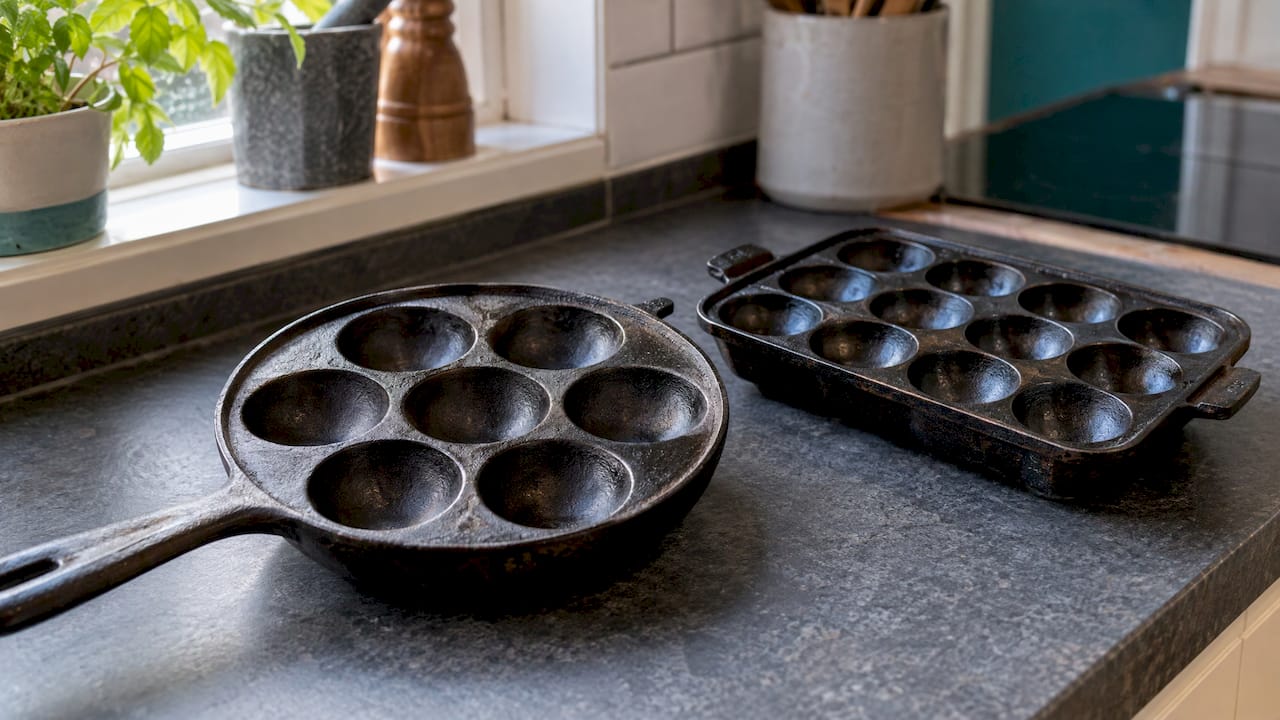
The building also matters. According to denmark.dk, an æbleskive pan has seven holes and is traditionally made of cast iron. In Denmark, it can be bought almost everywhere. If you are a tourist and want to bake at home abroad, the same page mentions that a Japanese takoyaki pan can be used instead.
The old recipe with apples in it
If you want to taste how æbleskiver were before they became balls, TV 2 has a recipe from the Danish Agricultural Museum. pancake puffs like in the old days from the year 1785For 4 people, use:
- 3 large apples cut into finger-thick slices
- 1 dl elderflower syrup
- 3 tbsp. sugar
- 150 g wheat flour
- 4 egg yolks
- 1 tsp. rose water
- 1 dl milk
- 2 whipped egg whites
- 25 g butter for frying
The apple slices soak in juice and sugar for 2 hours. Then they are turned in the batter and fried in butter in the pan. The result resembles more an apple fritter than a Christmas ornament, with tart fruit inside and a crispy, thin crust. Rosewater and elderflower were typical flavorings in finer kitchens at the time, and they give a scent that most have never encountered in an æbleskive.
Between 1785 and today's buttermilk dough lies the yeast dough. A widespread version is attributed to Louise Nimb's cookbook from 1888 and uses, as reproduced in A review of the history of the æbleskive, 500 g flour, 1 tsp. sugar, a little ground cardamom, ½ liter lukewarm milk, 3 eggs separated into yolks and whites, and 25 g yeast. The dough should rise before the egg whites are folded in, and the æbleskiver become a bit more bread-like and rich in flavor.
If you want to make a compromise, do as Miss Jensen does. According to Wikipedia's article about æbleskiver Her cookbook from 1901 suggests placing apple sauce, cooked apple, or rhubarb compote in each æbleskive before turning it. It fits perfectly into the refill from the technique above.
Æbleskiver from region to region
For those traveling around Denmark, the æbleskive is a little map reading. Lex writes, that they are both prepared and called differently from region to region:
| Own | Local name or characteristic |
|---|---|
| Møn | Fat number |
| Samsø | Bubble bread |
| Southern Jutland | Chickpeas, chickpeas or pomler, often with prunes |
| Lolland and Falster | Nuns or Nuner, and “Svupsakker” with brandy |
| Bornholm | Oppenholler or Fat Hole Cakes |
| Death | Baked with barley flour |
| Fine | Wheat flour and sugar, "apple slices with permission" |
The final details come from DR's article on the regional variations of æbleskiverIn Mors, they bake with barley flour, in Lolland and Falster they split them and add schnapps, and in Bornholm they are served with fruit compote or jam. In Southern Jutland and on Ærø, they are still filled with prune puree, writes Wikipedia.
That is why an æbleskive in Sønderborg can taste different than one in Nakskov. If you want to dive into the other local dishes, we have gathered regional specialties from all over Denmark, so you know what to taste on the trip.
How many per person, and what is served with it?
DR's easy recipe with buttermilk Expecting 28 æbleskiver for 4 people, that is 7 pieces each. person It goes well with afternoon coffee. If the æbleskiver are to be the whole evening's cozy treat with mulled wine, or if there are big teenagers present, you can safely expect to need a few more.
The classic serving is powdered sugar and jam, preferably raspberry, for dipping. DR also shows a savory version, where crispy fried bacon is added during cooking, and the æbleskiver are served with red onion compote made from 2 large red onions, olive oil, balsamic vinegar, sugar, and water, cooked for about. a quarter of an hour. It is good for a breakfast in December.
Æbleskiver are best freshly baked, but they can be made in advance. DR recommends heating them in the oven at about. 100 degrees for ten minutes, so they become warm without drying out. If you are baking a large batch for many guests, keep the finished balls warm in the oven while you bake the rest.
If you want to know what else is on the table in December, then see our guide to what people eat at Christmas in Denmark.
Experience the Christmas spirit throughout Denmark
Æbleskiver are homemade pastries, but they belong to an entire season, and that season is best experienced outdoors. On Travel in Denmark you will find experiences all over the country with map search and filters for season, price, and age, so you can find a Christmas outing that suits the whole family. Our overview of Christmas markets in Denmark gathers the big and the small.
Three good tips if you want to combine Christmas traditions with a trip:
- The Christmas market in The Old Town in Aarhus, where old houses and rooms give the story of Christmas baking a place to be.
- H.C. Andersen Christmas Market In Odense, on Funen, where "æbleskiver with law" are from.
- Christmas market in Aalborg, if you celebrate Christmas in North Jutland.
If you are new to Danish customs, our guide explains Christmas traditions in Denmark, where the apple slices fit in between mulled wine, rice pudding, and the Christmas tree.
Our view on the æbleskive
We see æbleskiver as one of the most travel-friendly dishes in Denmark. The same ball is called Kukker in Southern Jutland, Oppenholler on Bornholm, and Nonner on Lolland, and it is served with prunes, compote, or schnapps, depending on where you are. It is a tradition you can taste your way through on a tour.
Therefore, we believe that the best way to understand the æbleskive is to combine the two things: bake the classic buttermilk batter at home, and then go out and experience Christmas where the traditions live. A Christmas market in an old market town or an open-air museum gives the baking a context that a recipe alone cannot.
That is what we have built Rejs in Denmark for. With the map and filters, you can find experiences by season, price, and the children's age, and our guides cover both the well-known places and the hidden gems. Then December becomes more than just a pan on the stove.
Tommy
Frequently Asked Questions
Should there be apples in æbleskiver?
No, not today. The original æbleskive was a slice of apple in batter, but according to Lex, the tradition of apple in æbleskive ended in the mid-19th century. If you want to have fruit with you, you can add some apple sauce or prune puree when you refill.
Why are they called æbleskiver?
Because the first ones were exactly that: slices of apple dipped in batter and fried. The name is known from a cookbook from 1616 and remained when the cake became round and the apple disappeared.
How many æbleskiver should one count per person?
DR expects 28 æbleskiver for 4 people, that is 7 each. person It goes well with coffee or dessert. If the æbleskiver are the main attraction of the evening, then bake a few more.
Can you use baking powder instead of baking soda?
For the classic buttermilk batter, baking soda is the right choice because the acid in the buttermilk reacts best with baking soda and produces the airy æbleskiver. If you use regular milk or sparkling water, baking powder suits the dough better.
Can you still buy æbleskiver?
Yes. According to Arla, during the 20th century both ready-to-use powdered dough and frozen æbleskiver came onto the market, and frozen æbleskiver can now be found in most Danish supermarkets during the Christmas season. Homemade baked goods, however, taste of cardamom and lemon in a way that is hard to beat.
Sources
Lex: æbleskive, historie og navn denmark.dk: Æbleskiver, Danish Pancake Puffs DR: Sådan laver du kuglerunde æbleskiver DR: Æbleskiver, en nem opskrift med kærnemælk DR: Det er højsæson for æbleskiver TV 2: Æbleskiver like in the old days from the year 1785 TV 2: Danish Pancakes and Apple Butter Eat Better: Classic Apple Fritters with Buttermilk Arla: Æbleskivernes historie Æbleskiver: history and recipes, including Louise Nimb 1888 Wikipedia: Æbleskiver