You get the most out of the Danish islands if you choose the island based on what you want to experience, plan the ferry before anything else, and decide early whether to bring the car. On many islands, you can get around well by bike, on foot, or by bus. If you stay overnight, know the rules for shelters and tents, and behave considerately in nature. Below, we go step by step through the choice of island, transportation, accommodation, and seasons, with concrete examples from Samsø, Ærø, Anholt, Fanø, Fur, Livø, and Bornholm.
Choose the island based on what you want to experience
The Danish islands do not resemble each other. Some are large, with cities, museums, and a dense road network. Others are so small that you can walk around them in an afternoon. According to the Danish Nature Agency, the islands contain unique nature in a few square kilometers, and that is precisely why you can experience a lot in a short time if you have chosen correctly.
Start with the question: what should the trip give you? Peace and hiking, wildlife, geology, beach, cycling or culture and local eateries? When you know it, the list quickly becomes shorter.
Here are some examples of how the islands differ:
| Ø | It is the island known for | Good for |
|---|---|---|
| For | Grinders, fossils, and steep cliffs | Geology, fossil hunting, hiking |
| Livø | Almost all Danish natural habitats, fallow deer, and seals | Nature lovers, wildlife |
| Fanø | Dune heaths, beach meadows and a 16 km long beach, seal safari and birdwatching tours | Families, beach life, birds |
| Samsø | Many ways to get around, even without a car | Bike holiday, shorter stays |
| Ærø | Free buses all year round | Vacation without a car |
| Anholt | No car needed, bicycles and golf carts | Raw, nature, relaxation |
The information about Fur, Livø, and Fanø comes from The Nature Agency's Guide to Nature Experiences on the IslandsTransport facts for Samsø, Ærø, and Anholt can be found further down.
Large islands and islets
There is a big difference between going to Bornholm and to a small island with a handful of inhabitants. On the large islands, you will find more accommodations, more dining options, and more attractions, and you can easily spend a whole week. On the small islands, the pace is different: one shopkeeper, a couple of paths, the harbor, and the sea. That is where many find the peace they came for.
If you want to collect experiences from many islands, take a look at the Island Pass from the Association of Danish Small Islands. It covers 39 islands from Bornholm to Mandø and from Ærø to Læsø and collects information about ferries, accommodation, and maps. You can collect stamps as proof of your visits, which many children find to be a fun way to stay motivated.
If you are still unsure why an island vacation is worth choosing at all, we have gathered the arguments in our guide to vacation on the islands in Denmark.
Come over: the ferry is part of the plan
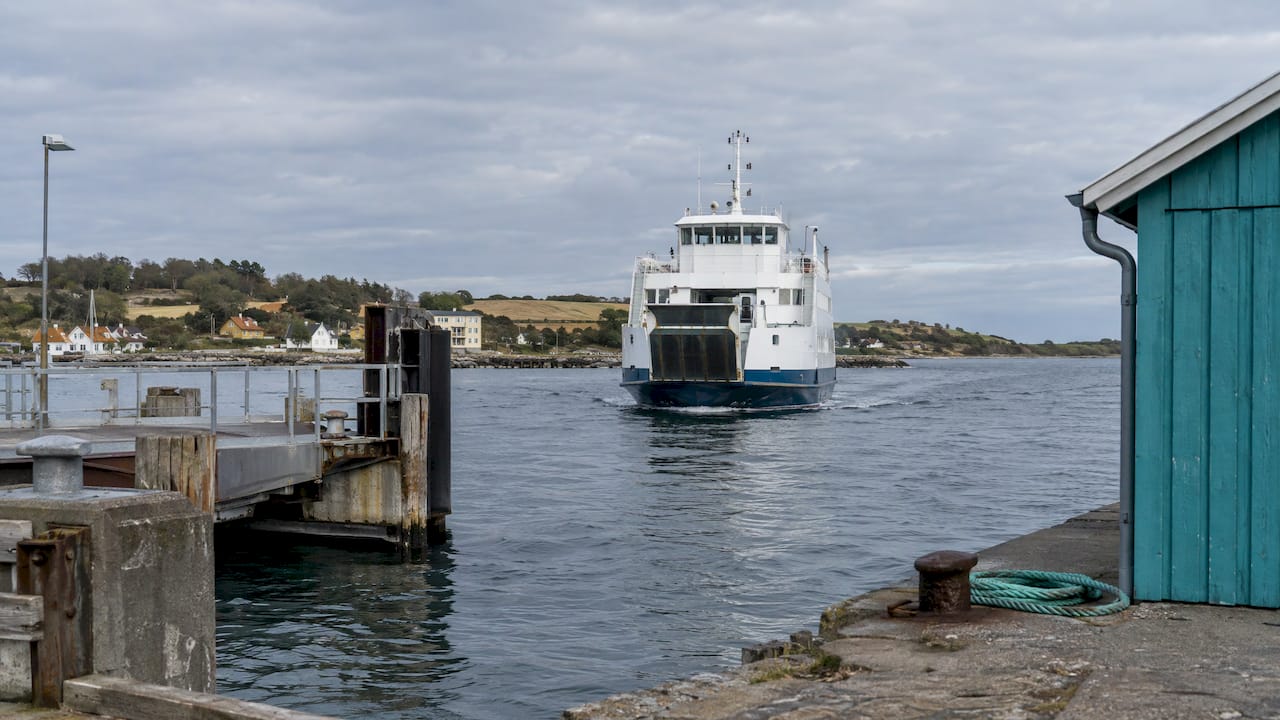
On an island trip, the ferry is not just transportation. It determines when you can come, how long you can stay, and whether the car can come along. Therefore, you plan the ferry first and the rest afterwards.
You should check that before departure.
- The sailing schedule. Find the current sailing schedule at the ferry company. Many routes have a different schedule outside of the high season, so check it for your specific dates.
- The port of departure. Some islands have more than one connection, and not all ferries carry the same things.
- Believe it or not. You can take to Samsø own car with the ferry from Hou, but not with the fast ferry from AarhusIf you choose the fast ferry, you will be traveling without a car.
- Can the parking space be booked? To Anholt, car space on the ferry cannot be booked, and the are often prioritized for supplies and other goodsTherefore, plan the trip without a car.
- Bicycle and luggage. If you are bringing bicycles, check the rules for bicycles on your specific ferry.
- Last departure home. On a day trip, the last ferry back is your most important time. Set an alarm half an hour before.
Day trip or several days?
Many small islands lie close to the mainland, so a day trip is realistic. With a short crossing and an early departure, you have a whole day to walk, cycle, and have lunch by the harbor. If the island is farther out, or the ferry sails infrequently, it makes more sense to stay at least one night. That way you don't have to keep your eyes on the clock all day.
Get around the island without stress
Once you are ashore, the question is how you move forward. The answer depends on the island, and on several islands the car is not necessary at all.
| Ø | Options for getting around | Is a car necessary? |
|---|---|---|
| Samsø | Bicycle, rental car, telebus, or taxi | No, but practical if you want to see the whole island quickly. |
| Ærø | Buses that are free all year round | No |
| Anholt | Taxi, luggage transport, bicycle rental, golf carts, sightseeing | No |
| Funen and the islands | Car, bus, bicycle, ferry, and on foot | Depends on the route |
Samsø: According to Samsø Ferry, you can get around on bicycle, with rental car, telebus or taxiIf you have a car, you can now reach the entire island in a short time and set the pace yourself. If you prefer to cycle, the island's size is well suited for a couple of days in the saddle.
Ærø Ærø Municipality states that The buses on Ærø are free all year round., and that you can get around the entire island without a car. That makes Ærø an obvious choice if you are traveling by public transport or if you want to avoid paying for the car on the ferry.
Anholt: Here you do not need a car. According to VisitAarhus, you will find taxis, luggage transport, bike rentals, golf carts, and sightseeing on the island. The luggage transport is worth knowing about if you have a tent or a lot of packing with you.
Funen and the South Funen Islands: VisitFyn describes that the area can be explored by car, bus, bicycle, ferry, and on foot, and that Funen has more than 1,200 km of marked cycling routesYou can thus combine a bike ride on Funen with ferry trips out to the smaller islands.
The bicycle is the islands' best means of transportation
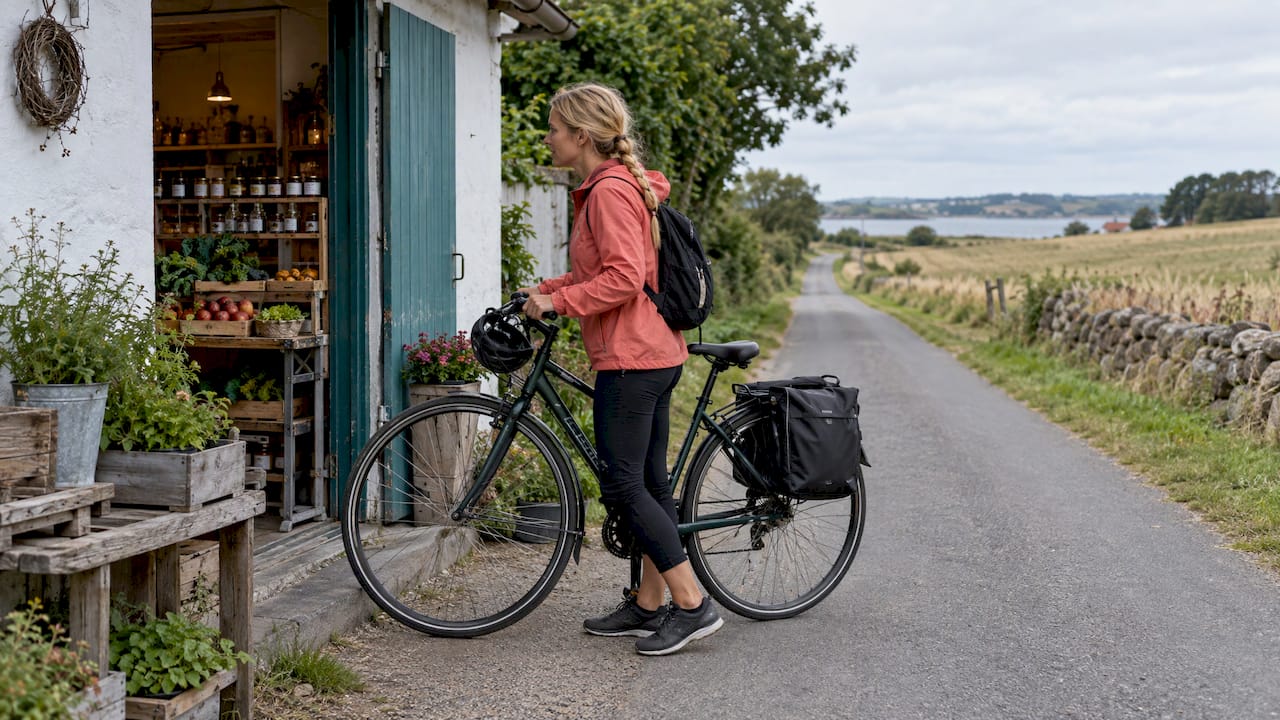
On most islands, the distances are short, and the bicycle gives you the freedom to stop at a farm shop, a beach, or a viewpoint. If you don't have your own, there are bike rentals on several islands, including Anholt. If you want to plan a longer trip with multiple islands, you can use our guide to planning a cycling holiday in Denmark, which takes you through the route, packing, and accommodation step by step.
Day trip or overnight stay: how to plan your stay
The Day Trip
A good day trip to an island doesn't require much, but it does require a bit more than a trip to the forest at home. Shops and eateries often have limited opening hours on the small islands, especially outside of the summer. Therefore pack:
- packed lunch and water for the whole day
- rainwear and an extra layer because the weather changes quickly on the coast
- sunscreen and hat in the summer
- A charged phone with the sailing schedule saved, so you have it without internet.
- cash or card for ferry and local stalls
We have compiled a more detailed list in our Checklist for Denmark trip, which also suits a longer island vacation well.
Accommodation
On the larger islands, you can choose between hotels, inns, holiday homes, and campsites. On the small islands, the selection is smaller, so book early if you are traveling in the high season. The island pass collects information about accommodation on the 39 islands, so you can see the possibilities before committing to an island.
If you want to sleep outside, shelters and campsites are a unique way to experience the islands. The Nature Agency informs that you at small shelters and overnight sites in the forest may stay overnight at the same place for a maximum of two nights, and that you must not pitch tents on public beaches. Therefore, plan your campsite before you are standing on the beach with your gear.
Move considerately in nature and among the residents
The islands' nature is vulnerable precisely because it is concentrated in a small area. At the same time, the islands are home to people who live their daily lives there. With a little thought, your visit becomes a benefit for both.
Know the rules for where you are allowed to go
The access rules depend on who owns the land. On Højlyngsstien on Bornholm, for example, you are allowed on public areas move around around the clock both on and off roads and paths, while on private property you may only travel on roads and paths from o'clock. 6 to sunset. Check the signage where you are walking, and read the brochure for the route you want to take.
Good habits on the islands
- Keep distance from the animals. Seals, fallow deer, and breeding birds need peace. Use binoculars instead of getting close.
- Take your trash with you. Waste management on a small island is expensive and difficult. What you take out, you also take back home.
- Stay on the paths in dunes and on coastal meadows, where the plants are easily trampled.
- Respect privacy. Many houses are located close to paths and harbors. Walk quietly by, and ask before you photograph people.
- Act locally. Farm shops, the grocer, and the harbor café keep the island community alive, and you get the best local produce.
If you want to dive deeper into nature, you can find inspiration in our Guide to nature experiences in Denmark.
When during the year should you go on an island vacation?
All seasons have something to offer, but the experience is different.
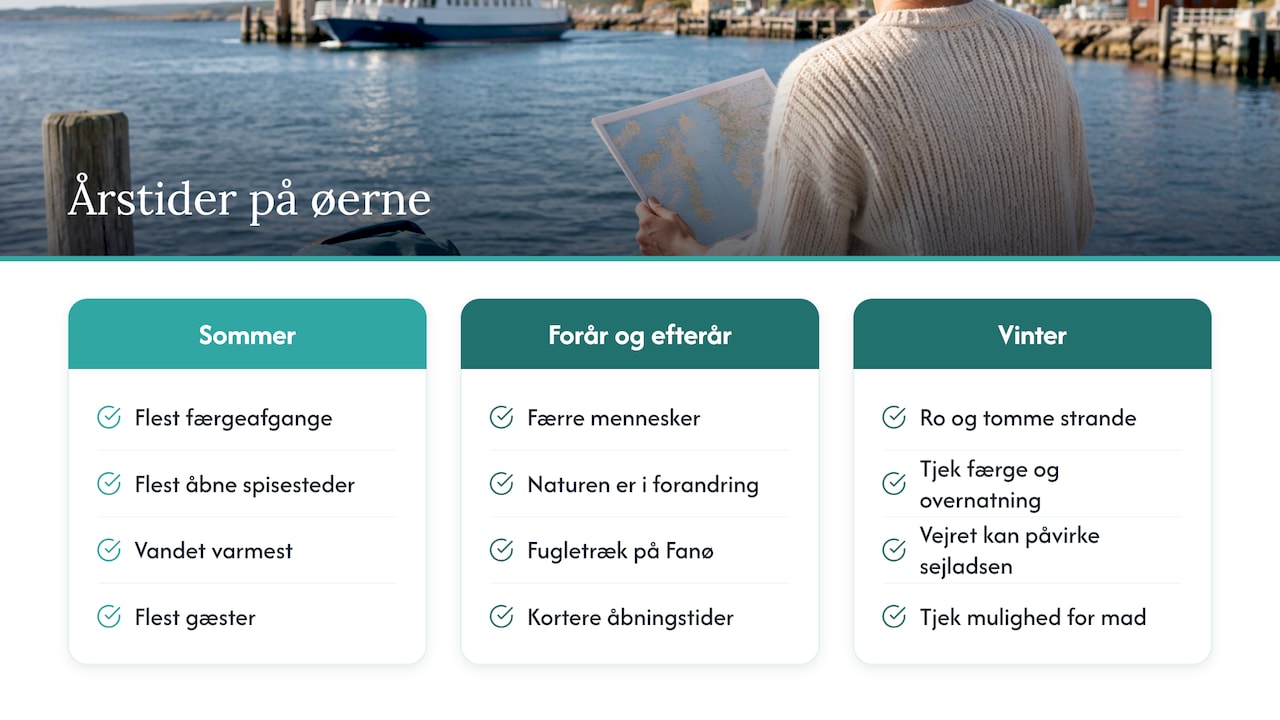
Summer It is peak season. There are the most ferry departures, most dining places and activities are open, and the water is warmest. On the other hand, there are more guests, and overnight stays and car space on the ferry get booked quickly. If you are traveling with children during the school summer holidays, book the ferry and accommodation well in advance.
Spring and Autumn is for many the best time. There are fewer people, nature is changing, and bird migration can make a trip to Fanø or the small islands extra exciting. Be prepared that some places have shorter opening hours, and check the sailing schedule, as it may be different from the summer.
Winter It is for those who seek peace, wind in their hair, and empty beaches. Here, planning is even more important: check both the ferry, accommodation, and the possibility of buying food before you set off. The weather can also affect the sailing, so keep an eye on the ferry company's operational information on the day of travel.
Regardless of the season, the same advice applies: check the official sailing schedule and opening hours for your specific dates, instead of assuming it will be the same as last time.
With children on the islands
The islands are one of the best places to vacation with children. The distances are short, the traffic is often calm, and there are beaches, crabs, fossils, and animals within reach. On Fur, children can search for fossils in the clay, and on Fanø, a long beach and seal safari await.
Some advice for the family:
- Plan short stages. A bike ride suitable for an adult can be long for small legs. Take breaks at the beach or playground.
- Make the ferry an experience. Many children think the crossing is the highlight of the trip. Go up on the deck and look for birds and seals.
- Be careful near the water. Hold breaks at the beach, always keep an eye on the little ones, and consider flotation aids for those who are not yet swimming confidently. There is arm floaties and life jackets for children in different sizes according to age and weight.
- Collect stamps. The island passport stamps make it fun for the children to arrive at a new island.
More ideas for the whole family can be found in our overview of family activities for all ages.
This is how we view the island vacation
We have worked with Danish travel destinations for many years, and the islands are where we most often see people get surprised. You think you have to go out and experience something distant, and then it's just a ferry ride away.
Our experience is that the best island trip is rarely about seeing as much as possible. It's about choosing the right island for the people who are going. A family with small children needs something different than a couple who want to hike, and a cyclist needs something different than someone who wants to sit at the harbor with a book.
Therefore, we structure our guides so that you can choose according to your own needs. On our interactive map and with filters for season, price, and age, you can find experiences that suit your trip, both the well-known attractions and the more hidden places. And because we provide a price estimate per. Person, can you plan the budget before you are at the ferry terminal.
Our advice is simple: choose the island based on the experience, plan the ferry first, and leave the car at home when the island allows it. That way, you get the peace that only an island can provide.
Tommy
Find your next island experience with Travel in Denmark
Hos Travel in Denmark we collect experiences, attractions, museums, and natural areas across the country on one interactive map. You can filter by season, price, and participants' age and see a price estimate per. person for each experience. If the trip is to be cheap, start with our overview of free experiences, where you find ideas suitable for a day trip or a weekend getaway.
Frequently Asked Questions
Should I bring a car to a Danish island?
On many islands, it is not necessary. On Ærø, buses are free all year round, and on Anholt, you get by with a bicycle, golf cart, or taxi. On Samsø, the car can be practical if you want to reach the entire island in a short time, but it can only be taken on the ferry from Hou.
What is the Island Pass?
The Island Pass is a guide from the Association of Danish Small Islands, covering 39 islands from Bornholm to Mandø and from Ærø to Læsø. It contains information about ferries, accommodation, and maps, and you can collect stamps from the islands you visit.
May I pitch a tent on the beach?
No, not on public beaches. If you want to sleep outdoors, you can use shelters and overnight sites, where you may stay for no more than two nights in the same place. Check the rules for the specific area before you leave.
Can you take a day trip to an island?
Yes, especially to islands with short crossings and frequent departures. Take an early ferry, pack food and water, and keep an eye on the last departure home. If the island is far out, or the ferry sails infrequently, you get more out of staying overnight.
Which island is best for nature experiences?
It depends on what you want to see. Fur is known for moler, fossils, and cliffs, Livø contains almost all Danish nature types with fallow deer and seals, and Fanø offers dune heaths, beach meadows, seal safaris, and birdwatching tours.
Sources
- Naturstyrelsen: Få store naturoplevelser på de danske øer
- The Association of Danish Small Islands: The Tourist and Island Pass
- Samsø Ferry: Transport on Samsø
- VisitAarhus: Planlæg ferien på Anholt
- Ærø Municipality: Buses
- VisitFyn: Sådan kommer du rundt på Fyn og øerne
- Naturstyrelsen: Højlyngsstien, Nordbornholm
- Naturstyrelsen: Hvor må jeg færdes på Naturstyrelsens arealer?