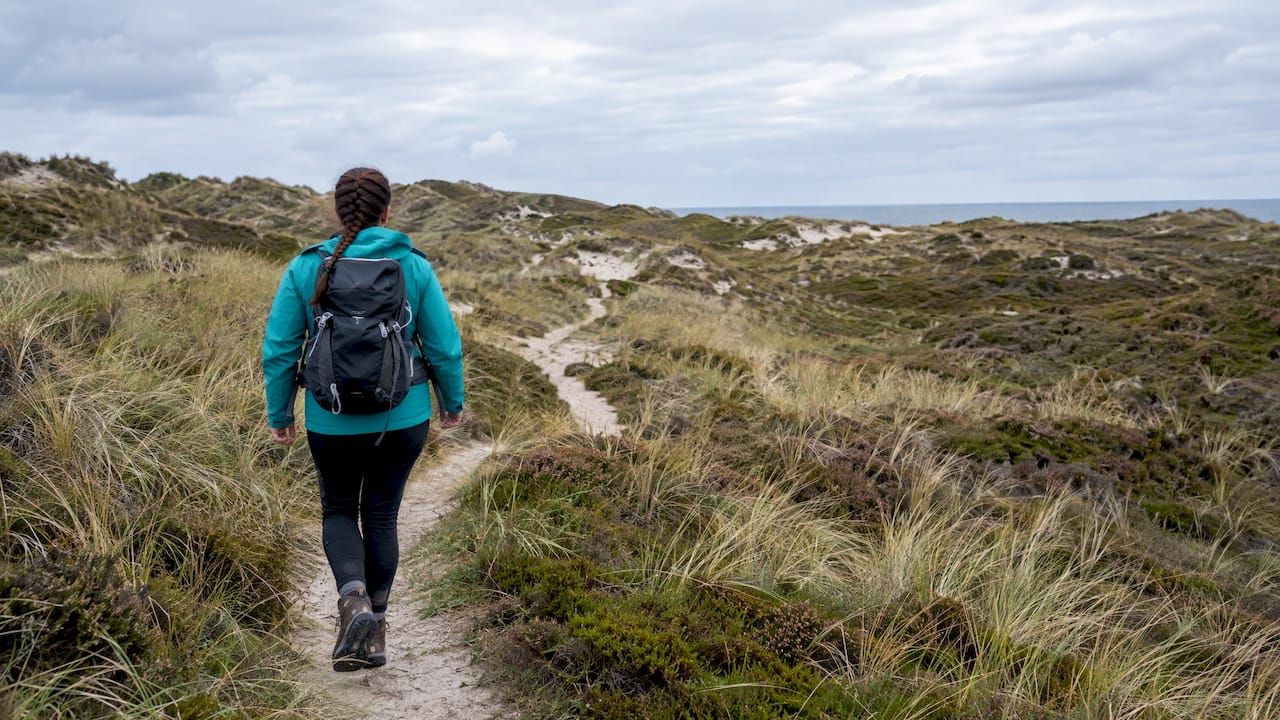
You visit a Danish national park by choosing one of the five parks, finding a specific starting point such as an information center, a parking lot, or a train station, and then walking, cycling, or riding out into the landscape according to the usual Danish access rules. There is no gate and no access pass like in the American national parks. A Danish national park does not own land themselves, so you move through forests, dunes, meadows, and towns owned by the state, municipalities, and private landowners. What you need to plan is therefore not the access, but the trip: where you start, how far you want to go, where you sleep, and what considerations you need to take along the way. Here you get it all, park by park.
What national parks are for
It helps to know the role of the national parks before you set off, as it explains why the parks look the way they do and why certain considerations apply.
According to the Ministry of the Environment, the national parks must ensure larger contiguous natural areas with significant natural and cultural values. They must preserve and strengthen the quality and diversity of nature, protect landscape and geological values, support research and education, promote outdoor activities, and contribute to development that benefits the local community and businesses.
In other words, a Danish national park is both a nature project and an invitation to you as a guest. It should protect nature while also making it easier to experience.
Who decides in a national park?
Each national park is managed according to the National Park Act by an independent state national park fund. A board decides how the park is developed, in collaboration with landowners and authorities, explains Denmark's National ParksBecause the park does not own the land itself, the rules for where you are allowed to walk change depending on whether you are in a state forest, on private land, or on a beach. More about it further down.
More than nature
The Danish national parks also contain cultural history. In National Park Skjoldungernes Land, for example, efforts are made to several connections between nature experiences and cultural traces, so you can move from forest to ancient monument to fjord on the same trip. If you want to dive deeper into why the parks mean so much, we have written about it. why national parks are important for nature and future.
Be careful not to confuse national parks with nature national parks. Nature national parks are another scheme where biodiversity has top priority, and where large grazing animals are meant to leave their mark on nature. This guide is about the five national parks.
The five national parks in Denmark
There is five national parks in Denmark, created between 2008 and 2018. They are very different, so choose based on what you want to experience.
| National Park | Created | landscape | Good first choice for you who want to |
|---|---|---|---|
| Your | 2008 | Large dune heath landscape by the North Sea | Take long walks in wild coastal nature and see red deer |
| Mols Hills | 2009 | Ice Age landscape and historical monuments in Syddjurs | Hiking in hills, cycling, or going on a beach trip |
| The North Sea | 2010 | Tidal landscape from the border to Blåvandshuk | Experience bird migration and marshland |
| The Land of the Skjoldungs | 2015 | Roskilde Fjord, forests, and the royal seat of the Viking Age | Combine nature, Viking history, and trains |
| The Royal North Zealand | 2018 | Large forests, lakes, and cultural monuments | Walk in the forest and by the lake near castles and towns |
Thy National Park
Thy is the oldest and one of the wildest. The park is large: 60 km from Agger Tange to Hanstholm, 59 hiking trails and 2,000 red deerThat is precisely why the national park itself recommends that you plan the trip from home. On the park's planning page, you will find maps, camping in tents and shelters, local guides, an app, and information about accessibility. Nationalpark Center Thy is located in Nørre Vorupør and is a good place to start if you are new to the area.
Mols Bjerge National Park
Mols Bjerge offers hills, forest, grassland, and coast in a relatively small area. The main attraction for hikers is The Mols Bjerge Trail at 80 km, divided into four daily stages: the Mountain stage, the Kalø stage, the Ebeltoft stage, and the Gåsehage stage. The trail is certified by the European Ramblers Association as Leading Quality Trails, Best of Europe. The park also has surfing, fishing, beaches, bike routes, mountain bike trails, birdwatching towers, a dog forest, riding trails, and access to enclosures.
Wadden Sea National Park
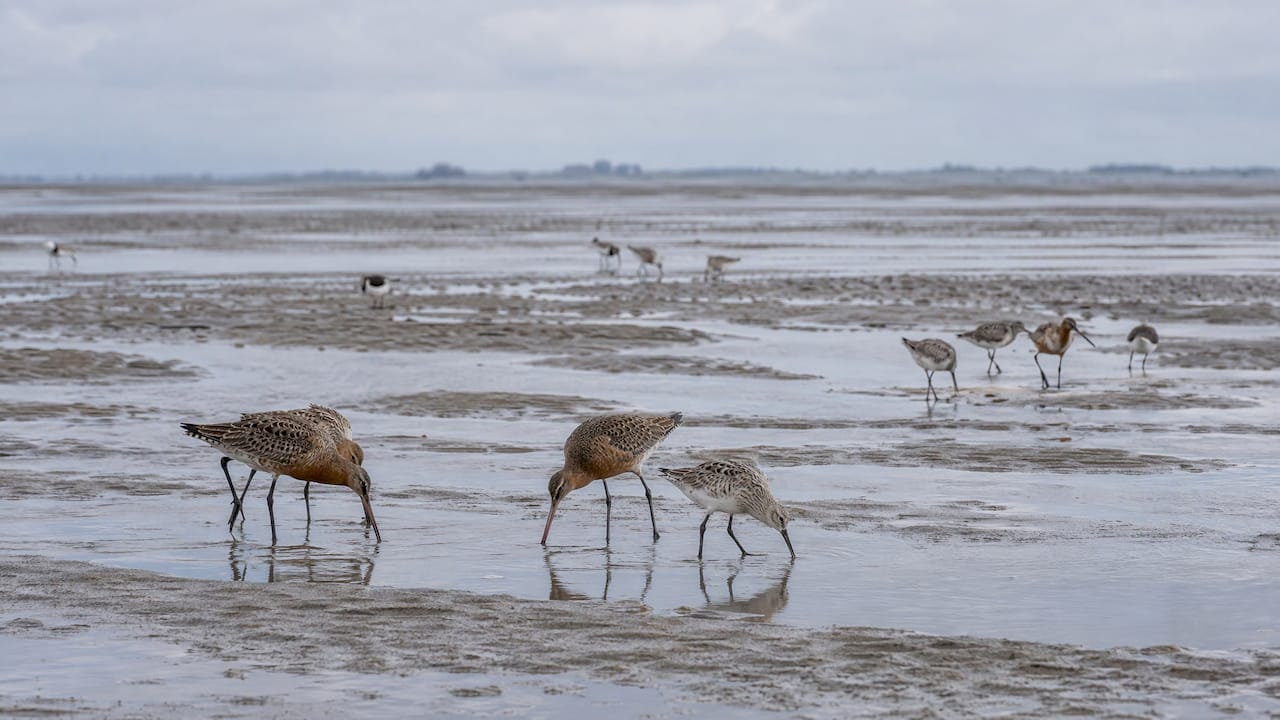
The Wadden Sea is Denmark's largest national park with 146,000 hectares, of which 30,000 hectares are on landThe park stretches from the Danish-German border to Blåvandshuk, and every year several million migratory birds pass through. Most of the park is sea and mudflats, so here you plan according to the tides, weather, and season. Spring and autumn are peak seasons for bird migration.
Skjoldungernes Land National Park
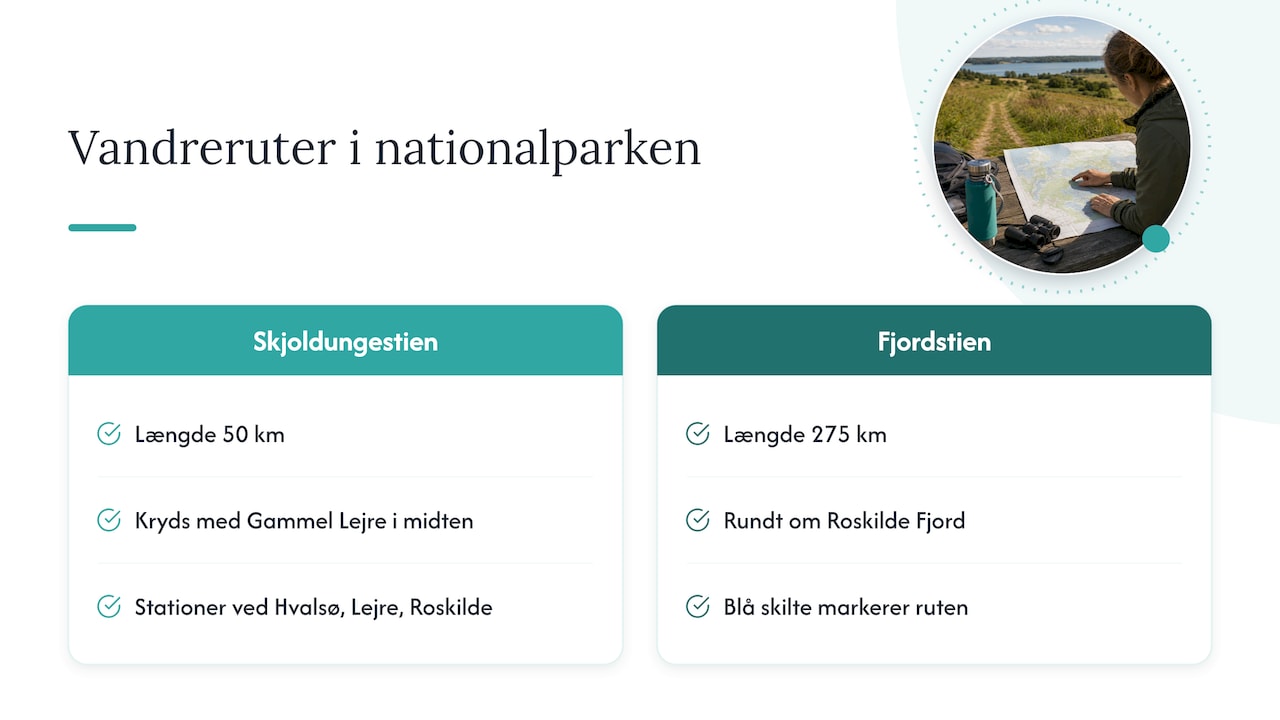
The Land of the Skjoldungs covers Roskilde Fjord and the area to the south, with stories about Viking kings. It is the easiest to visit without a car. The Skjoldunge Trail is 50 km. and shaped like a cross with Old Lejre in the middle. The route passes Hvalsø, Lejre, and Roskilde stations, so you can get on and off the train. If you want to go further, the Fjord Trail runs 275 km around the entire Roskilde Fjord, marked with small blue signs.
The Royal North Zealand National Park
The youngest park is a mosaic of forest, lake, and cultural heritage. With 263 km² is Denmark's second largest national park, and more than 70% of the area are Natura 2000 sites. Esrum, Frederiksværk, Hillerød, Helsingør, and Fredensborg are natural starting points. Here you can easily combine a picnic with a castle or a museum, and our guide to cultural experiences in North Zealand gives you ideas for the rest of the day.
How to plan the trip step by step
A good trip in a national park doesn't require much, but it does require that you have made a few decisions before you get in the car or train.
- Choose a park based on experience, not distance alone. If you want wild and remote, choose Thy or the Wadden Sea. If you want culture and easy transportation, choose the Land of the Skjoldungs or the Kings' North Zealand. If you want hills and variety, choose Mols Bjerge.
- Find a concrete starting point. A location, a station, or a named parking lot. The national parks are large, and "Thy" or "Wadden Sea" is not an address.
- Choose a route that suits the group. A day stage on a long trail is for the experienced. Families with children enjoy a short round trip with a destination along the way, for example a birdwatching tower, a beach, or an ancient monument.
- Check the park's own page for current conditions. Each national park has its own website with maps, routes, and events. Here you will also find information about reroutes, guided tours, and events that change from season to season.
- Consider a local guide. Several parks offer guided tours. In Thy, you can book a local guide via the national park's planning page.
- Pack according to Danish weather. Wind, rain, and changing temperatures are common, especially at the North Sea and the Wadden Sea. Good footwear, windproof jacket, water, and packed lunch are basics.
- Plan accommodation if you stay more than one day. Shelters and campsites are popular during the summer holidays and weekends.
If you need a complete plan for the entire vacation, we have a guide for you. how to plan a trip to Denmark, and our Checklist for the Denmark trip helps you with the packing. If you are new to hiking in Denmark, you can start with ours hiking guide to Denmark.
How to get there
Transportation is what most often determines how good the day will be. Here are a couple of specific possibilities that the parks themselves mention.
By public transport
The Land of the Skjoldungs is built for trains. Because the Skjoldungestien passes by the stations in Hvalsø, Lejre, and Roskilde, you can walk a section and take the train home again without having to return to a car.
Driving in Mols Mountains bus 123 from Aarhus via Rønde to Ebeltoft and back. The bus runs through Femmøller and stops, among other places, at the parking lot opposite Femmøller Efterskole and at Kalø Castle Ruin, two good starting points for trips in the park. The combination of bus and trail makes it possible to walk a stage of the Mols Bjerge trail as a one-way trip.
In the Kings' North Zealand, several of the starting points, such as Hillerød, Helsingør, and Fredensborg, are located in towns with train connections.
In car
In Thy and the Wadden Sea, by car is often the easiest solution because the distances are large. In Mols Bjerge, there is parking at, among other places, Strandkær Beach, Femmøller Efterskole, Knebel Plantation, Agri Bavnehøj, Trehøje, Toggerbo, and Skovbjerg. Park only in designated spaces so you do not block field roads and emergency vehicles.
Accommodation in and near the national parks
Sleeping outdoors is one of the best ways to experience a national park. The Danish Nature Agency has several ways to stay overnight in nature On state-owned land: you can sleep on the forest floor, use primitive campsites with or without shelters, or rent campsites for larger groups. In selected state forests, camping is allowed.
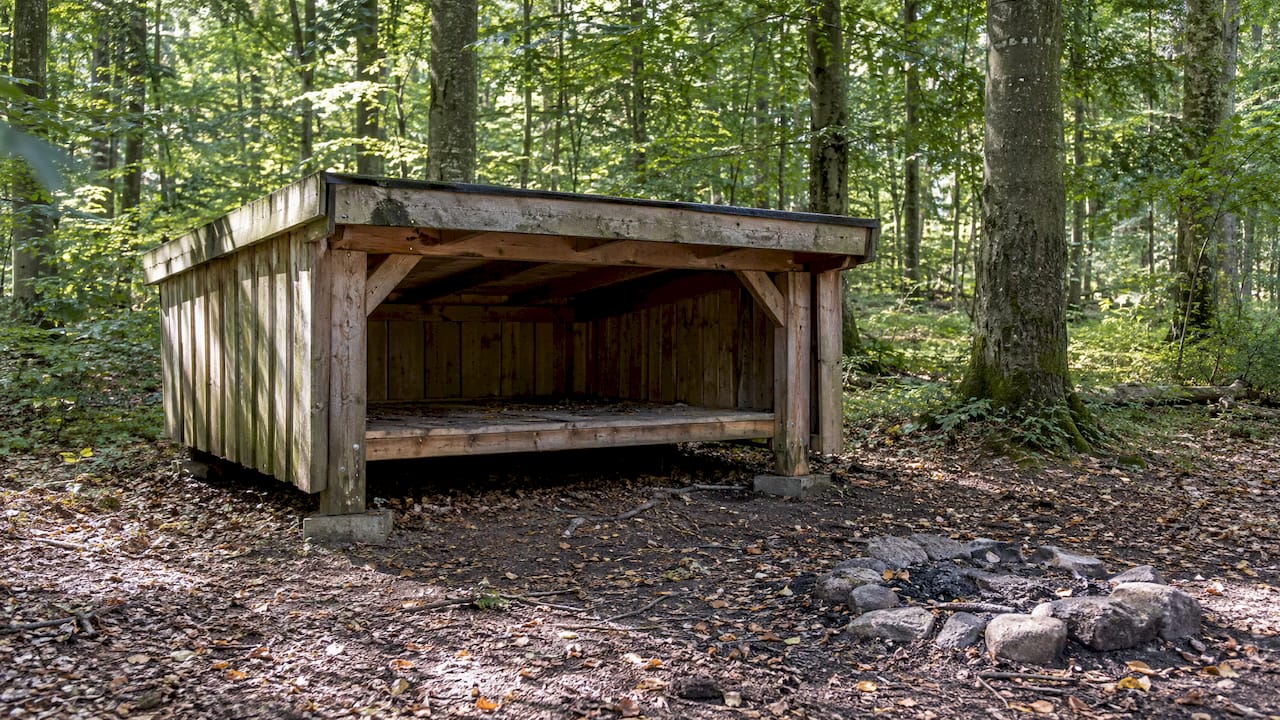
Thy National Park gathers its options for camping in tents and shelters on the park's planning page. If you prefer a bed, there are towns, summer house areas, and holiday resorts close to all five parks. Our overview of holiday parks in Denmark can be a good place to start if the family wants a permanent base with room for both nature and coziness.
A good tip: shelters are often first come, first served, and some can be booked. Check the rules for the specific site before carrying out your sleeping bag and stove.
Rules and considerations in nature
The Danish rules for traffic in nature also apply in the national parks, and they depends on the type of nature, and whether the area is public or privateThe most important thing to remember:
- Public forests: You have to walk on the forest floor all day.
- Private forests: You only have access from 6 in the morning until sunset, and only on roads and paths.
- The open country: Stick to road and path.
- Dogs: Keep the dog on a leash. Mols Bjerge has a dog forest where the dog can run free.
- Waste: Take everything home again.
- Meeting with others: Greet those you meet. It sounds like a small thing, but it is part of the Danish nature culture.
Beware of the wildlife
The national parks must accommodate both visitors and animals. The Land of the Skjoldungs describes it itself as a challenge to balance public access and the consideration for wildlifebecause the park is located close to the capital and receives many visitors. Therefore, there may be areas that are closed during the breeding season, or paths that are routed around vulnerable nature. Follow the signs, keep your distance from the animals, and do not feed them. In enclosures with grazing animals, such as those you find in Mols Bjerge, you must follow the rules posted at the entrance.
National parks for families and visitors with special needs
The national parks are an obvious destination for families because they offer both short trips and things to discover along the way: beaches, birdwatching towers, red deer, burial mounds, and Viking stories. The parks also work purposefully with children and young people. The Land of the Skjoldungs has had 200 school classes on Become Skjoldunge expeditions, and 451 students from 7th grade. until 9. The class has been with the park's biologists on the educational boat Kutlingen on the fjord.
Thy National Park has a special section about children in nature and about accessibility on its planning page. The National Park Center Thy in Nørre Vorupør is designed so that wheelchair users can get around, and here you can inquire about accessible nature experiences in the park.
Tips for the family trip:
- Choose a route of a few kilometers with a clear goal, so the children know what they are aiming for.
- Bring binoculars to the bird tower and a small bag for finds from the beach.
- Plan breaks at benches, shelters, or tables, and have extra clothes in the bag.
We have gathered several ideas in the article about Danish national parks as family experiences and in our guide to why nature parks benefit families.
This is how we view the national parks
We spend a lot of time mapping experiences throughout Denmark, and the national parks are some of the places we most often recommend. Not because they are the most famous, but because they bring together so much in one place: nature, history, and space to be outside all day without paying an entrance fee.
The biggest mistake we see is treating a national park as a single attraction. It is not. Thy is 60 kilometers long, the Wadden Sea is mostly sea, and the Kings' North Zealand is a mosaic of forests, lakes, and towns. The good trip therefore starts with a specific place and a route that suits those you are traveling with.
Therefore, we build our guides around maps, seasons, and age. When you can see what is close to each other and what suits your family, it becomes easier to combine a trip in the dunes with a museum, a beach, or an overnight stay nearby. These are the kinds of days you remember.
Tommy
Find more nature experiences at Travel in Denmark
Once you have chosen a national park, the next step is to fill out the rest of the trip. On Travel in Denmark You can search on our interactive map and filter experiences by season, price, and age, so you quickly see what is close to the park you are going to visit. If you are looking for something that costs nothing, we have compiled an overview of free experiences in DenmarkAnd if you want to see more places in nature, you can read our Great guide to nature experiences in Denmark.
Frequently Asked Questions
Does it cost money to visit a Danish national park?
No, there is no entrance to the national park itself. You follow the general access rules for Danish nature. However, there may be charges for certain things, such as guided tours, some campsites, parking in certain places, or attractions located inside the park.
Which national park is best for families with children?
It depends on what the children like. The Land of the Shieldings and the Kings' North Zealand are easy to reach by train and combine nature with history. Mols Bjerge has beaches, birdwatching towers, and short trails, while Thy has a special focus on children in nature and a welcome center in Nørre Vorupør.
May I bring the dog into the national park?
Yes, but the dog must be kept on a leash. It protects the wildlife and takes into account other guests and animals in enclosures. In Mols Bjerge there is a dog forest where dogs can run freely according to the forest's rules.
Am I allowed to pitch a tent in a national park?
You must stay overnight at the Nature Agency's primitive campsites, in shelters, and at campgrounds, and in selected state forests, camping is free. You must not just pitch tents on private property. Check the rules for the specific site on the park's or the Nature Agency's page.
What is the difference between a national park and a nature national park?
A national park has several purposes: nature, cultural history, outdoor activities, research, and local development. In a national nature park, nature and biodiversity have top priority, and large grazing animals are meant to help create wilder nature. Both can be visited, but they are two different arrangements.
Sources
Ministry of the Environment: National Parks Denmark's National Parks: What is a national park? Skjoldungernes Land National Park: What the national park is working for Thy National Park: Plan Your Visit Mols Bjerge National Park: Activities National Park Mols Bjerge: Plan your trip National Park Skjoldungernes Land: Hiking Tours Skjoldungernes Land National Park: Plan 2024-2029 Naturstyrelsen: Esrum Kloster & Møllegård Naturstyrelsen: Naturen må gerne betrædes