
If you want to plan a road trip in Denmark with many stops, several driving days, and overnight stays in different places, RoadTripDesk is a good place to gather it all. The tool is designed to plan the entire trip, not just the route from A to B. You get the best plan when you first find the experiences and then build the route around them. Therefore, we will go through, step by step, how to use RoadTripDesk for a Danish car trip, and how you can use the map search and filters at Rejs i Danmark to find the stops that make the trip worth driving.
What RoadTripDesk is, and why it suits Denmark
RoadTripDesk is a web-based road trip planner, which you use in the browser. It is designed to plan the entire trip both before and during the journey: where you are going, which places you stop at, how much you drive each day, and where you sleep.
It suits Denmark well for one simple reason. The distances are short, but the experiences are close together, and the country is divided by water. A typical Danish road trip is therefore not one long stretch, but many small trips between coasts, forests, castles, museums, and amusement parks, connected by bridges and ferries. It is exactly the kind of trip where a regular navigation map falls short because it only thinks about the next destination.
At RoadTripDesk, you can among other things:
- collect the entire route and the list of stops in one trip
- divide a long journey into realistic driving days
- mark planned overnight stays and stays over multiple nights
- save notes and planned stop time at each stop
- find hotel options near your accommodations
- share the trip or invite others to plan together
- create a day-by-day itinerary and a roadbook
- export the route as GPX, KML, or CSV
We have also written a shorter introduction on how you planning your road trip with RoadTripDesk, if you want the overview first.
How to plan the trip step by step
Here is the order we recommend. It saves you from moving stops at the last minute, and it clearly shows where the trip is too tight.
1. Determine length, starting point, and tempo
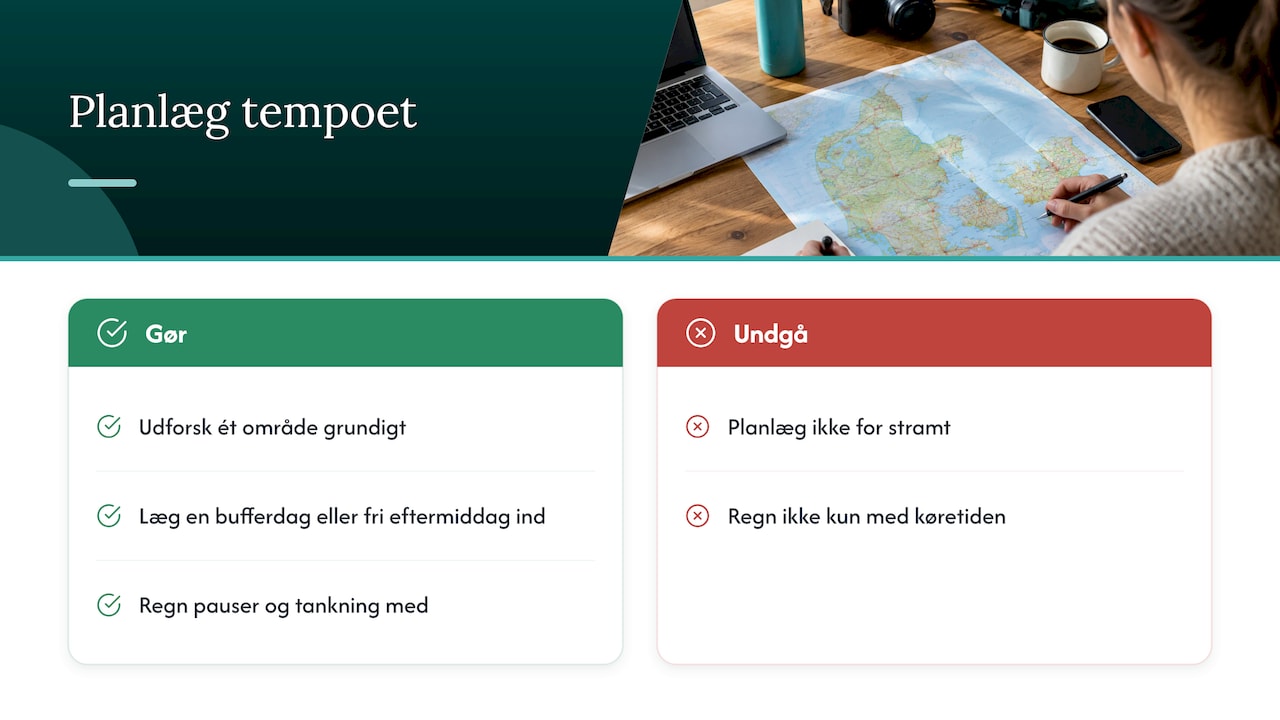
First decide how many days you have, where you start, and how many nights you want to sleep outdoors. Then think about the pace. Do you want to see a lot and move around often, or would you rather stay two or three nights in the same place and take day trips from there?
The most common mistake is planning too tightly. Many overestimate how far they can drive in a day, especially with children in the back seat. A good rule of thumb is to think in travel seasons: explore one area thoroughly before moving on, instead of crossing the entire country every day. Also include a buffer day or an unplanned afternoon. It is often there that the best memories arise.
Where does it go wrong? When you only count the driving time and forget breaks, refueling, lunch, and the time it takes to get in and out of an attraction.
2. Find the experiences before you draw the route.
This is where most road trips become good or mediocre. The route is only the framework. The content is the places you stop at.
At Travel in Denmark, you can search on an interactive map and filter experiences by season, price, and participants' age. Each experience has a description and a price estimate per. person, so you can see what a stop costs for the whole family before you enter it. It makes it easy to find both the well-known attractions and the smaller places you would otherwise drive past. Our guide to stepwise brief search for experiences shows how to use the map and filters.
Write down your favorites area by area. Then you have the raw material for the next step.
3. Insert stop and set a pause time
Now you move the stops over to RoadTripDesk. At each stop, you can save notes and a planned stop duration. Use the notes for practical information: opening hours, whether you need to book in advance, where you park, and the price per. person from the experience side.
The length of stay is more important than it appears. A museum easily takes two to three hours, an amusement park a whole day, and a short walk along a cliff maybe an hour. When the dwell time is shown at each stop, you can see if the day actually fits together.
4. Divide the trip into driving days
RoadTripDesk is designed to break a long trip into realistic driving days. Do it, and look at each day individually: How long is the driving time? How many hours do you spend on stops? Is there time to eat and relax?
If a day is too full, move one stop to the next day or remove it. Better a shorter route you enjoy than a long one that becomes a struggle. If you are planning according to one of the classic tourist routes, then remember, for example The Marguerite Route according to the Nature Agency is not the fastest way from A to B, but a route to experience Denmark at a leisurely pace.
5. Plan the overnight stays
Mark where you are sleeping, and whether it is one night or several. RoadTripDesk can find hotel options around your overnight stops, so you see them in context with the route. It is a great advantage because the best accommodation is often located a bit away from the attraction itself, and you can quickly see what that means for the next day's drive.
In the high season, especially during the summer holidays and around public holidays, it is wise to book accommodation early in the most popular coastal areas.
6. Check bridges, ferries, and parking
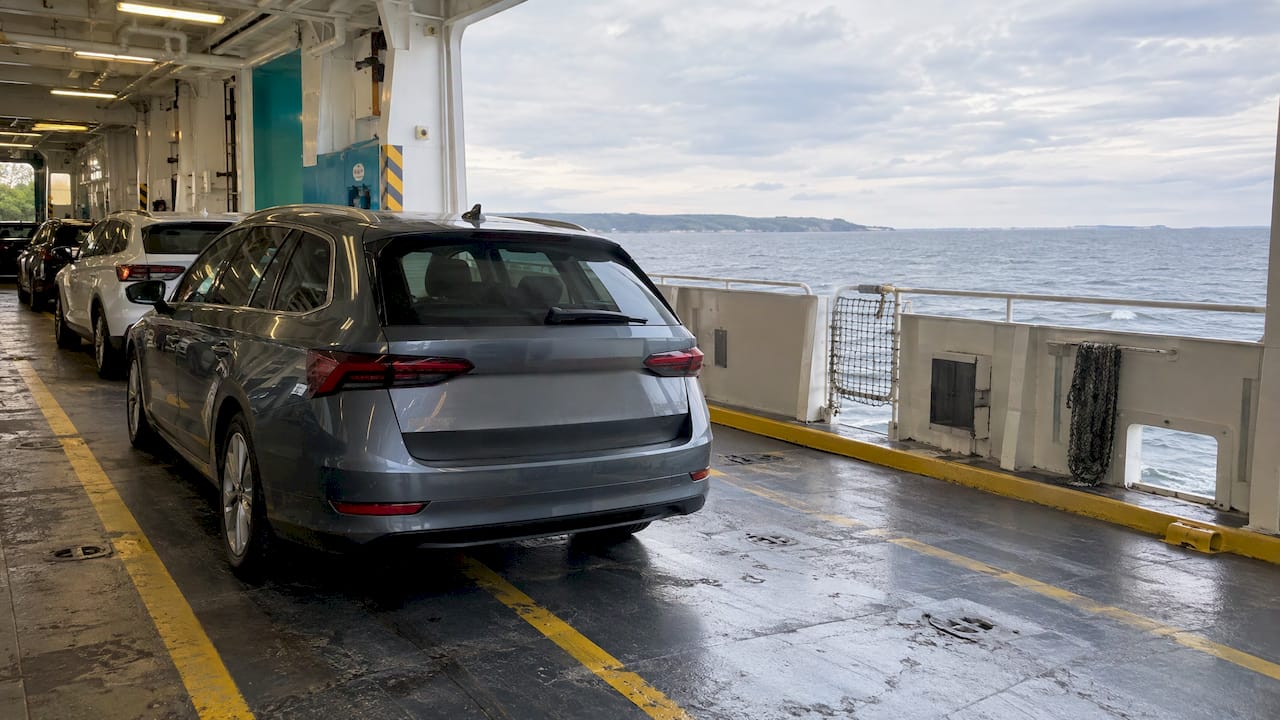
Denmark is an island country, so bridges and ferries are a fixed part of the budget. According to Molslinjen's price calculator the lowest price over the Great Belt Bridge was 205 DKK. for a passenger car with license plate recognition per. 1. January 2026, while the ferry's low-price tickets between Jutland and Zealand started from 249 DKK. up to 599 DKK. The same source mentions paid parking at the ports in Aarhus, Odden, and Ebeltoft. Prices are adjusted regularly, so check the current rates when you book.
Write the prices in the notes at the relevant stops in RoadTripDesk. This way, you have the entire transport budget gathered in one place, and you can compare whether a ferry with a break on board or a bridge with a shorter driving time fits best into the day.
7. Share, export, and take the roadbook with you
Once the plan is set, you can share the trip with the rest of the travel group or invite them to edit it. It is practical when several adults need to agree on the route, or when the teenagers themselves want to choose a couple of stops.
Finally, create the daily itinerary and roadbook, and export the route as GPX, KML, or CSV if you want to use it in another app or in the car's navigation system. This way you have both the overview and the daily plan with you on the trip.
Before a longer trip, it is also worth preparing the car: check tire pressure and fluids, and clean windows and lights so visibility is good in the dark and rain. If you want help with the last part, a professional can car care and glass polishing make a noticeable difference over long distances. The rest of the preparation can be found in our Checklist for road trip in Denmark.
Eksempel: en uge rundt i det sydlige Danmark
To make it concrete, we have outlined what a week can look like in RoadTripDesk. The route uses the regions that the Nature Agency describes along the Marguerite Route, featuring coastlines, forests, fjords, and cultural sites as consistent experiences. The Marguerite Route is a total of 4,218 km long, so no one completes it all in one trip. Select a section.
| Day | Area | Ideas for stops | Accommodation |
|---|---|---|---|
| 1 | Copenhagen and surrounding areas | City walk, museum or castle | Copenhagen |
| 2 | South Zealand and Møn | Møns Klint and coastal nature | Møn |
| 3 | Møn | Bufferdag: strand, skov eller vandretur | Møn |
| 4 | Lolland and Falster | Coastal towns and family attractions | Lolland-Falster |
| 5 | Fine | Odense and Funen villages | Fine |
| 6 | Langeland | Nature and activities such as Segway Langeland | Langeland |
| 7 | Journey home | One last stop along the way | Home |
Notice two things. Day 3 is a buffer day, which can be used if the weather is troublesome. And no day has more than two or three major stops. If you want more ideas for routes, we have gathered 7 inspiring experience routes in Denmark.
Stops suitable for children, culture, and adventure
The same route can become very different trips, depending on who is sitting in the car. How to adjust the stops.
Family with children
With children, travel time controls everything. Plan short stages, include a stop with a playground or beach approximately every other hour, and let each day have one experience that the children look forward to. Use the age filter with us, so you only see experiences that match the children's age, and the price estimate, so you know the cost for the whole family. A place like Velling Koller’s Fairy Tale Garden is an example of a stop that can last an entire morning. You can find more ideas in our guide to child-friendly attractions in Denmark.
Cultural enthusiasts
Culture lovers get the most out of staying several nights in the same place and taking day trips. Museums, castles, and old market towns require time, and you spend less of it on parking and check-in. Write opening hours in the notes in RoadTripDesk, as many museums are closed one day a week. If you are going to East Jutland, our guide to Top attractions in Aarhus A good starting point.
Adventurous
If you want speed and nature, then build the trip around activities: hiking, cycling, kayaking, or segway. Here the weather matters more, so have a plan B for each day, and schedule activities in the morning when you have the most energy. Our guide to activity holiday in Denmark provides inspiration for what you can include on the route.
The season changes the trip
A road trip in July is a different trip than one in October. In the summer, there are long bright evenings and most attractions are open, while autumn and spring offer tranquility and lower prices, but shorter opening hours. Use the season filter when looking for experiences, so you don't plan a stop that is closed for the season.
This is how we see it.
We see the road trip as Denmark's most underrated form of vacation. The country is small enough for you to achieve a lot, and large enough that you never finish. But it requires proper planning.
Our experience is that the good trips start with the experiences and not with the map. Therefore, we have built Travel in Denmark with map search, filters for season, price and age, and price estimates per. person: så du hurtigt kan finde de steder, der passer til netop jeres rejseselskab, både de kendte og de skjulte.
Once the stops are found, it makes good sense to gather them in a tool like RoadTripDesk, which considers driving days, overnight stays, and stopover time. Together, the two give you what you need: something to look forward to, and a plan that works.
Tommy
Find the stops for your route at Rejs i Danmark
Before you open RoadTripDesk, start with us. At the overview of experiences in Denmark can you search on the map, filter by season, price, and participants' age, and see a price estimate per. person for each experience. You will find museums, natural areas, amusement parks, historical sites, and family activities throughout the country, with booking references when you are ready. Then you have a list of stops worth driving to in just a few minutes.
Also when the trip goes beyond Denmark's borders
RoadTripDesk is not limited to Denmark. The tool can display local arrival and departure times when a trip crosses time zones, and it is designed for trips with many stops over many days. This makes it suitable for the long trip through Europe or a road trip in the USA, where time zones and long distances make planning more difficult.
If you have previously planned trips in Microsoft Streets & Trips, RoadTripDesk can import waypoints from compatible files.is a file, so old routes can be reused. The format changed between versions, so not all old files can be fully restored.
No matter where you drive, the same recipe applies as at home: find the experiences first, set realistic driving days, and build flexibility into the plan. If you want to see the entire itinerary for a Danish trip collected, we have a guide to plan a road trip in Denmark step by step.
Frequently Asked Questions
What can RoadTripDesk do that a regular navigation map cannot?
And a navigation map finds the way to the next destination. RoadTripDesk plans the entire trip: many stops, driving days, overnight stays, duration of stay, and notes in one trip. You can also create a day-by-day roadbook and share the trip with others.
How many kilometers should we drive per day in Denmark?
It depends more on the stops than on the kilometers. With children or many experiences, two to three hours of driving per day is often enough, so there is time for the stops themselves. Use the stopover time at each stop in RoadTripDesk to see if the day fits together.
How much does it cost to cross the Great Belt by car?
According to Molslinjen's price calculator, the lowest price over the Great Belt Bridge was 205 DKK. for a passenger car with license plate recognition per. 1. January 2026. The ferry between Jutland and Zealand had low-price tickets from 249 DKK. up to 599 DKK. Check the current prices before you drive.
Can I use the route from RoadTripDesk in the car's navigation?
Yes, you can export the route as GPX, KML, or CSV and use the file in other apps and navigation solutions that support the formats. The roadbook also gives you a daily schedule to follow.
How do I find experiences for the route?
Use the card search at Travel in Denmark, and filter by season, price, and age. Each experience has a price estimate per. person, so you can enter the budget along with the stop in RoadTripDesk.
Sources
- RoadTripDesk: web-based road trip planner
- The Marguerite Route, The Nature Agency
- Molslinjen's price calculator