Sustainable accommodation means that the place where you sleep actively works to use less energy and water, create less waste and spoilage, and take into account the people and nature it is part of. The word is used broadly, so the safest sign is an environmental label such as Green Key, the Swan label, or the EU Flower, where an independent scheme has set requirements and monitored them. But the bed is only part of the equation. How green your stay becomes also depends on how you get there, what you eat, and which experiences you choose nearby. Therefore, it makes sense to plan accommodation and experiences at the same time, and that is exactly what we have built Rejs i Danmark for: an interactive map with experiences, attractions, and holiday stays across the country, filters for season, price, and age, and price estimates per. person Here you get the definition, the brands explained, a checklist to see through green promises, and concrete advice for hotels, B&Bs, camping, and tents.
It covers the concept
Many think about the sign in the bathroom that asks you to hang the towel back up. That is part of it, but a sustainable accommodation works with the entire operation. The Swan Label criteria for hotels and other accommodations describe it as a holistic approach to energy, water, food, waste, biodiversity, chemicals, and procurementThe place must, among other things, limit energy consumption, use water efficiently, reduce the amount of residual waste, sort waste for recycling, and have fixed routines to prevent food waste.
In practice, it may look like this for you as a guest:
- Energy: Light and heat that turn off or dim in empty rooms, and electricity from renewable sources.
- Water: Showers and toilets that use less water without you noticing any difference in comfort.
- Waste: clear sorting in the room or in common areas and fewer disposable products.
- Angry Breakfast with local and organic ingredients and kitchen planning that reduces waste.
- Chemicals: environmentally labeled cleaning, dishwashing, and laundry detergents.
- Nature Outdoor areas that provide space for animals and plants rather than short-cut grass and pesticides.
Sustainability is also about people. A place that hires locally, buys from local producers, and tells the area's history contributes to a vibrant local community. That is why the word covers more than "environmentally friendly."
In Denmark, political development is moving quickly. A national strategy for Danish tourism from 2022 has according to a report from Aalborg University on green transition with a target of 70 percent. All Danish accommodations must have a green certification by 2030. And the development is already underway: the number of Green Key hotels in Denmark increased from 33 to 171 over 15 years up to 2023.
Environment, people, and economy
Within tourism research, sustainability is typically divided into three pillars: environmental, social, and economic. The same AAU report describes that sustainable efforts in tourism can therefore range from biodiversity and climate to social diversity, equality, and cultural heritage. For you as a guest, the three pillars can be translated into something you can see and inquire about:
| Column | What it means | You can see that as a guest |
|---|---|---|
| Environment | Less consumption of energy and water, less waste, consideration for nature and climate | Environmental label, waste sorting, local and organic ingredients, bicycles for loan |
| Social | Proper working conditions, respect for the local community and cultural heritage | Local staff, stories about the area, collaboration with local associations and guides |
| Economy | The money stays in the area and creates jobs year-round. | Shopping from local producers, open outside the high season, tips for local shops and eateries |
The economic pillar is often overlooked, but it is crucial in a country like Denmark, where many accommodations are located outside the major cities. When you live and spend money in a smaller community, you help keep shops, eateries, and attractions alive. Read more about why The rural areas matter for tourism, and about The benefits of local tourism.
The environmental labels that make the word measurable
An environmental label means that the place has committed to a fixed list of requirements, and that a scheme outside the company monitors whether they are being complied with. It is the easiest shortcut when you want to know if "green" is more than just a word on the website. The three brands you most often encounter in Denmark resemble each other but are structured differently.
| Brand | What it is | What is required | Applies to |
|---|---|---|---|
| Green Key | International third-party certification of tourism businesses | Requirements within seven areas: environmental management, guest information and involvement, water, energy and CO2, waste, procurement, and surroundings | Hotels and other tourism and hospitality businesses |
| The Swan Label | The Nordic Ecolabel | Requirements for energy, water, food, waste, chemicals, and procurement, including environmentally labeled cleaning products | Hotels and other accommodations in the Nordic countries |
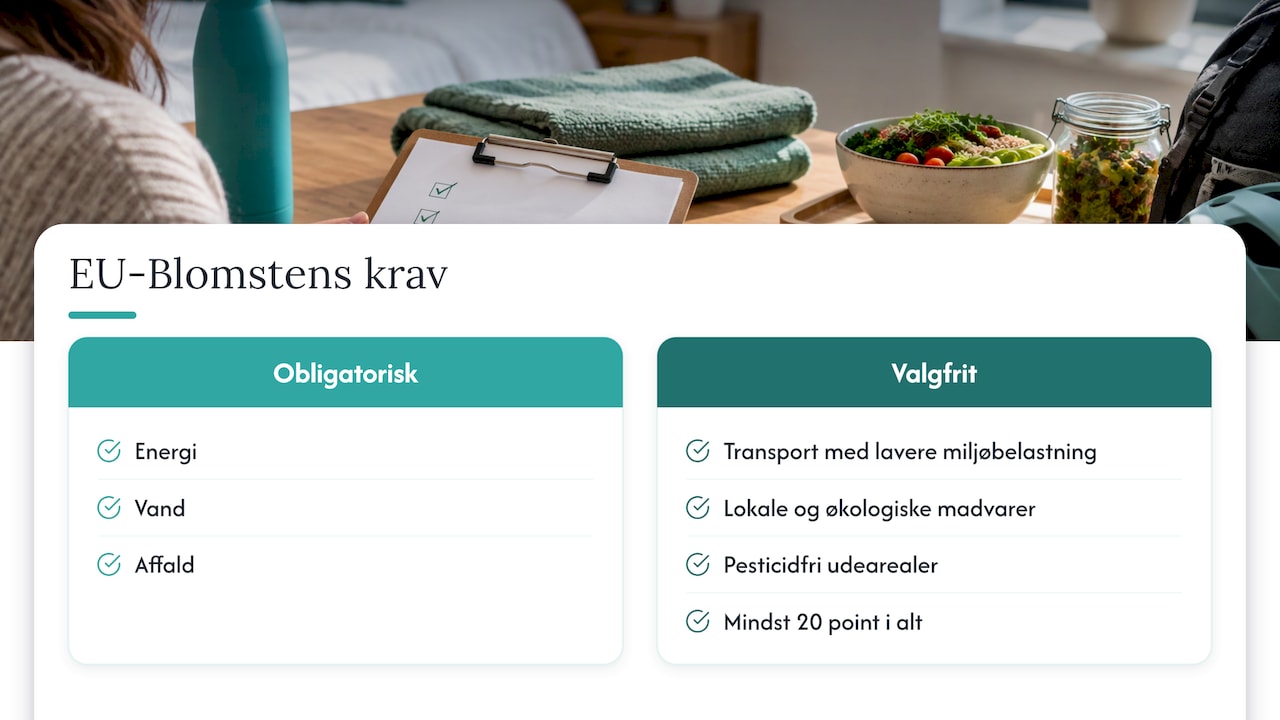
| The EU Flower (EU Ecolabel) | EU’s official environmental label | All mandatory requirements must be met, plus enough optional requirements to reach at least 20 points. | Accommodations and campsites |
Green Key
Green Key is a independent third-party certification program with criteria distributed across seven areas. The current criteria apply from the 1st. October 2026 until the end of 2031. One of the areas is directly about you: the guests must be informed and involved, so you know what the place is doing and how you can contribute.
The Swan Label
The Nordic Swan Ecolabel sets requirements that can be measured, for example, on energy consumption and water consumption, and requires environmentally labeled chemicals for cleaning, dishwashing, and laundry. The label describes Swan-labeled hotels themselves as places that meets a wide range of strict environmental requirements, and you find them throughout the Nordic countries. The applicable criteria for hotels run until the 31st. October 2028.
The EU Flower
The EU Flower is regulated in European Commission Decision 2017/175An accommodation must meet all the mandatory requirements and accumulate enough points among the optional ones to reach at least 20 points. According to the Danish page about The EU Flower for accommodations They cover the mandatory requirements including energy, water, and waste, while the optional areas can be less environmentally harmful transport, local and organic food products, and no pesticides in outdoor areas. The label also applies to campsites, which makes it particularly relevant if you are a family with a tent, caravan, or cabin.
How to see through a place's green promises
Not all places have a label, and not all green descriptions are equally concrete. With these five steps, you will quickly make good progress:
- Look for the label first. If it says Green Key, the Swan label, or the EU Flower, you know that the place meets a fixed set of requirements. If you are unsure whether the label is still valid, you can look up the place on the label scheme's own website.
- Read for numbers and concrete measures. "We use 100 percent green electricity" or "we sort into ten fractions" says more than "we love nature." Vague words without actions behind them are a signal to inquire further.
- Ask about the food. Where do the raw materials come from, and what does the kitchen do with surplus food? Both the Nordic Swan Ecolabel and the EU Ecolabel set requirements in the food sector.
- Check the transportation. Can you get there by train, bus, or bike, and does the place lend out bicycles? Transportation is part of your overall footprint, which the place cannot control alone.
- Give the small places a chance. The AAU report describes that the green transition in larger accommodation establishments is often maintained through certification, while in smaller businesses it is often driven by the owner's own commitment. A small unbranded B&B can therefore do a lot, so ask the host what they do.
Hotel, B&B, camping or tent
Sustainable accommodation looks different depending on how you want to stay.
Hotel
At the hotel, the eco-label is your best guide. The Nordic Swan Ecolabel emphasizes that Swan-labeled hotels must meet strict requirements for energy, water, food, waste, chemicals, and procurement to reduce the overall environmental and climate impact. A city hotel close to the station and public transport also gives you the opportunity to leave the car behind.
B&B and holiday homes
Here it is often the owner who sets the direction. Ask about heating, waste sorting, and the breakfast ingredients, and see if the host recommends local eateries, farm shops, and natural areas. You can ask the same questions when you travel further in the Nordic countries: for example, if you are looking for a place by the water in Norway, it is also about location, transportation, and consideration for nature when you choose. accommodation by the sea in Bømlo.
campground
The EU Flower includes campsites, and the Nordic Swan Ecolabel indicates that a campsite with the EU Flower meets strict environmental requirements. Camping is in itself a simple way to stay close to nature, and many sites are located so that you can walk or cycle to the beach, forest, and attractions. If you want to live a little differently, you will find inspiration in our examples of unique accommodations in Denmark.
Tent in nature
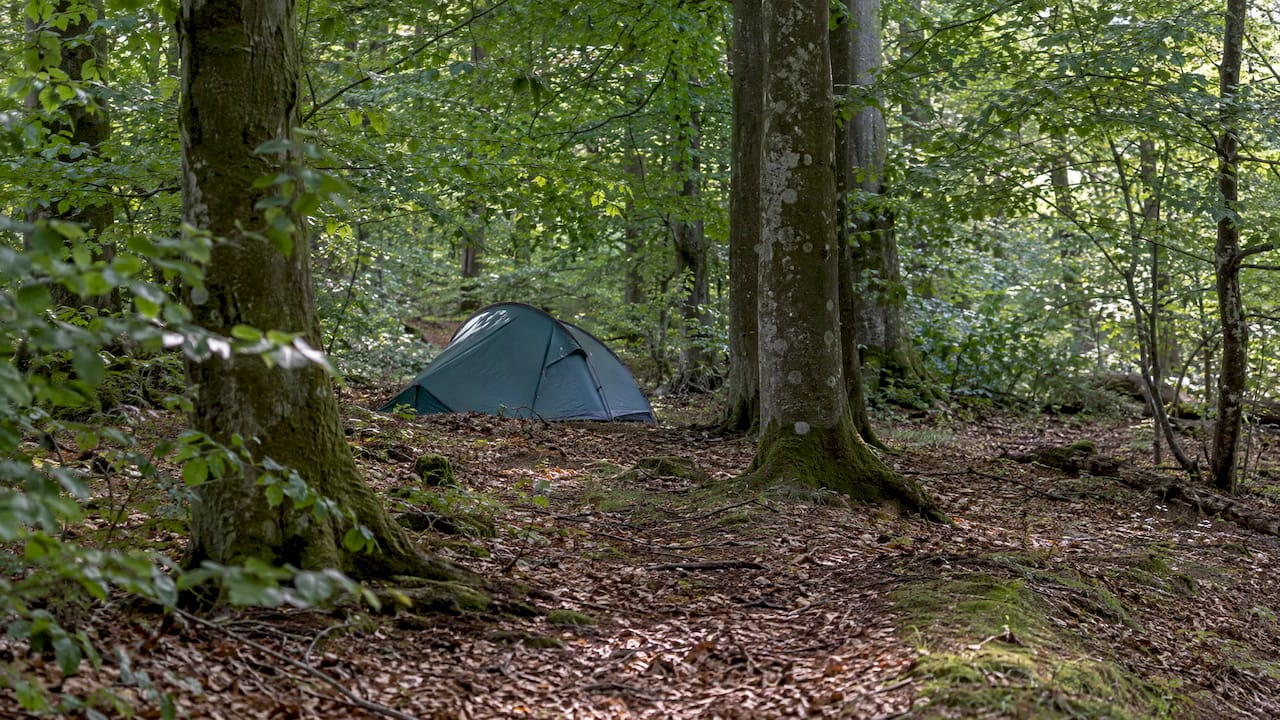
If you want to sleep out in nature, the Nature Agency has clear rules for it. free camping on the forest areas where it is permitted. The rule is called 1-2-3: only one overnight stay in the same place, at most two tents of the type for three people, and the tents must be placed under trees and must not be a nuisance to others. The tent must not be visible to others moving in the forest, or from buildings such as campsites, and you must not pitch the tent on beaches or in dunes. Take all your trash home, keep your distance from the animals, and leave the place as you found it. If you want to know more about what a nature holiday in Denmark can offer, then read our guide to Danish nature tourism.
You can do that yourself during the stay.
A sign on the door does a lot, but your own choices also count. The Nordic Swan Ecolabel reminds that holiday activities greatly affect the environment and climate, so it is a good idea to bring the green habits on vacation. Here are the tips that work best:
- Reuse towels and bed linen instead of having them changed every day.
- Turn off lights, TV, and air conditioning, when you leave the room, and close the window when the heating is on.
- Sort your waste according to the site's system, even when it requires an extra step.
- Only take what you eat at the buffet. Many kitchens work purposefully to reduce waste, and you can read more about how this is done in practice in a guide to sustainability in food service.
- Eat and shop locally. Farm shops, harbor kiosks, and local cafés keep the money in the area.
- Leave the car standing, and use a bike, walk, or public transport for the day's experiences.
- Choose experiences nearby, preferably in nature or with local operators.
The last point is the one many forget. A green overnight stay becomes less green if each day starts with a long drive to the next attraction. If you plan instead so that accommodation and experiences are close together, you will have both a smaller footprint and more time for the actual vacation. Find more ideas in our guide to practice sustainable vacation in Denmark and in the article about sustainable experiences in Denmark.
Find accommodation and experiences together
At Rejs i Danmark, you can see accommodation and experiences on the same interactive map, so you can choose a place to stay and at the same time see what is within cycling or walking distance. The filters allow you to sort by season, price, and participants' age, and each experience has a price estimate per. person, so the budget is in place before you leave. Start with our page about accommodation in Denmark, and then find Nature experiences in Denmark close to where you will live.
Our view on green accommodation
We believe that the most sustainable vacation is one where accommodation and experiences are connected. An environmental label on the hotel is a good starting point, but it is only when you also know what is nearby that you can truly cut down on driving and give the money to the area you are visiting.
Therefore, we have gathered experiences, attractions, natural and cultural sites, and holiday stays all over Denmark on one map. We show both the well-known places and the more hidden gems, so you can build a trip where the days are spent on experiences and not in the car.
For families, it means something very concrete: filters for age and price make it easy to find what suits you, and the price estimate per. The person ensures that you can plan the vacation before you book. A green overnight stay is best when the rest of the trip is planned with the same care.
Tommy
Frequently Asked Questions
What is the difference between Green Key and the Nordic Swan Ecolabel?
Both are environmental labels that set requirements for energy, water, waste, and procurement. Green Key is an international certification for tourism businesses with criteria distributed across seven areas, including information for guests. The Swan label is the Nordic environmental label and sets, among other things, measurable requirements for consumption and for environmentally labeled cleaning products.
Can a campsite be sustainable?
Yes. The EU Ecolabel includes both accommodations and campsites, and the requirements cover, among other things, energy, water, and waste. Optional requirements can concern local and organic food products and avoiding pesticides in outdoor areas.
Is it allowed to pitch a tent anywhere in Denmark?
No. Free camping is only allowed in the areas designated by the Nature Agency, and according to the 1-2-3 rule: one night in the same place, at most two tents for three people, under trees and without causing inconvenience to others. You must not pitch tents on beaches or in dunes.
Is a place without an environmental label therefore not sustainable?
Not necessarily. Smaller places like B&Bs often work sustainably because the owner is passionate about it, even without certification. Ask the host specifically about energy, waste, and raw materials, and you will quickly get a picture.
Sources
- The Nordic Swan Ecolabel: Hotels and other accommodation, criteria document
- The Nordic Swan Ecolabel: Choose a Nordic Swan Ecolabel hotel
- The Swan Label: Take the green habits with you on vacation
- Green Key Criteria and Explanatory Notes 2026-2031
- EUR-Lex: Afgørelse 2017/175 om EU-miljømærket for turistovernatning
- EU Ecolabel Denmark: Accommodation establishments
- Aalborg University: Towards a greener future
- Naturstyrelsen: Fri teltning