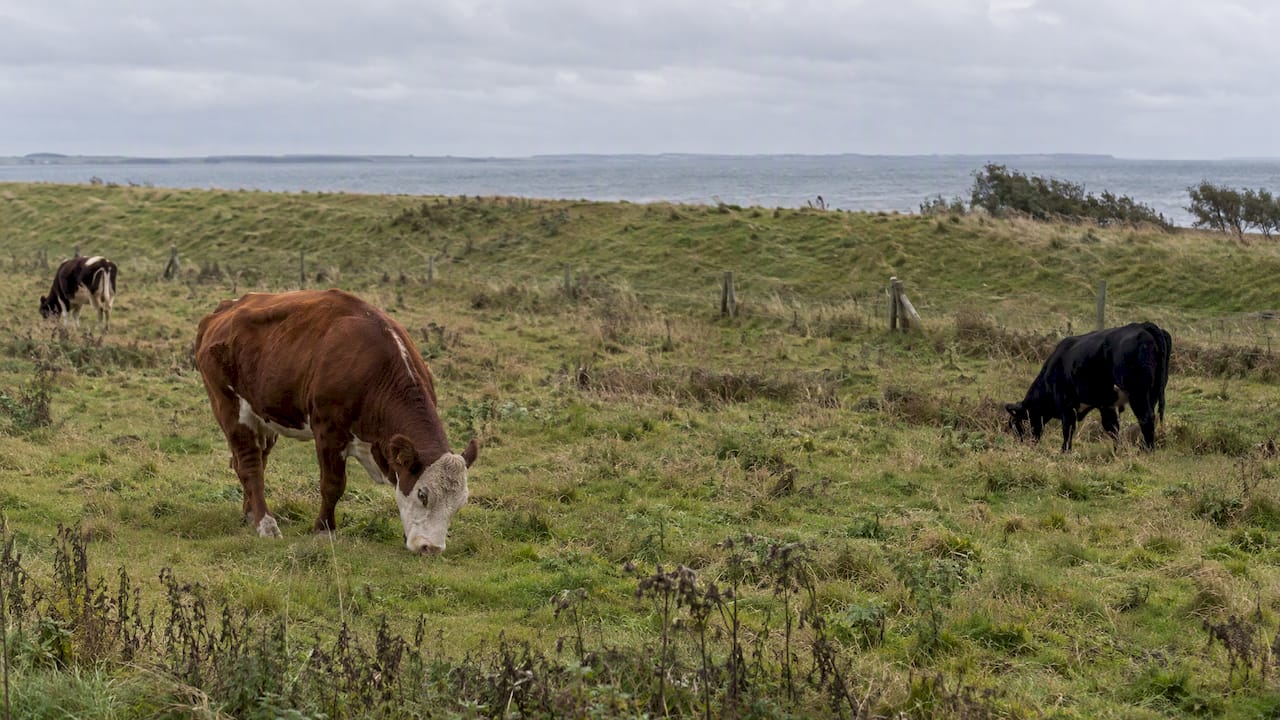
Cultural nature is nature that humans have helped to shape. It concerns the meadow, kept open by grazing cows, the forest with burial mounds between the trees, the stone fence along the field, and the heath that would grow over if no one took care of it. The word combines two things that we often keep separate: culture, that is what humans create, and nature, what grows and lives on its own. The point is that the two in Denmark can almost never be separated. Here you are explained what the concept covers, where it comes from, how it differs from related words like cultural landscape and cultural environment, and how you can use it the next time you go for a walk.
In short: nature with human fingerprints
In general language use, we distinguish between nature as the original and culture as what humans have cultivated and built. The word culture comes precisely from the Latin word for cultivating the land. Cultural nature is the large middle ground where the two meet: places that appear natural but have been created through human work, use, and decisions.
Three examples make it concrete:
- In the river at the island It looks wild and blooming, but it is often open because animals have grazed it or because someone has mowed hay on it.
- A beech forest It may appear untouched, but the trees may have been planted, and beneath the forest floor, there may be traces of old fields, roads, and ditches.
- A constant It is built by humans, but today it is a habitat for mosses, lizards, and small animals.
Cultural nature is therefore not a special place you can look up on a map. It's a way of looking at the landscape that reminds you that what you see has a history.
Where does the word come from?
The word is used in several contexts: in professional debates about nature management, in education, and in projects that connect culture and outdoor activities. The most prominent contribution is the book Cultural Nature Landscape Architect MDL, Ph.D. Thomas Juel Clemmensen, former lecturer at the Aarhus School of Architecture. The book came out in 2018 and raises the question of, how we take into account the cultural history of the landscape when restoring natureIt focuses on the cultural aspect of nature restoration and what landscape architects can contribute.
The concept is closely linked to what UNESCO calls a cultural landscape. In the World Heritage Convention, cultural landscapes are described as "the common works of nature and mankind", and UNESCO divides them into three main types:
| Type | What it means | This is what it can look like |
|---|---|---|
| Designed landscape | Consciously designed by humans | Slotshaver, parks, manor estate |
| Organically developed landscape | Grown through long-term use, either still in use (living) or discontinued (fossil). | Agerland, floodplain, villages with fields |
| Associative cultural landscape | The value lies in stories, faith, or art connected to the place | Places with legends, sacred sites, motifs that painters have made famous |
The type classification is useful, even when you are not at a World Heritage site. It gives you three questions to ask about any landscape: Is it cultivated? Has it grown through use? Or is it the stories that make it special?
Cultural nature, cultural landscape, cultural environment, and natural heritage
Order flyers often stick together, but they are used differently. Here is the practical difference:
| Concept | What it covers | Where you encounter the word |
|---|---|---|
| Cultural Nature | Nature, shaped by humans, with an emphasis on the living: plants, animals, ecosystems | Debate on nature restoration and management |
| Cultural landscape | The entire landscape as a result of the interaction between nature and people | UNESCO, planning, geography |
| Cultural environment | A defined area where features such as buildings, ancient monuments, and roads form a whole | Municipal plans, conservation, management |
| Cultural Heritage | Traces of human activity, in the city and in the countryside | Museums, conservation, local plans |
| Natural Heritage | Valuable nature, geology, and species | Nature conservation, museums, world heritage |
The Danish Agency for Culture and Palaces describes cultural heritage as related to the traces of human activity in the cities and in the open landIn legislation, nature and culture are kept partially separate, but the Museum Act aims to Ensure both cultural heritage and natural heritage in DenmarkIt is quite precise that cultural nature is about: that the two sides belong together.
Copenhagen University's material for natural and forest managers uses the term cultural environment to refer to places where prehistoric monuments, cultural environments, and landscape values must be integrated into the daily care of nature. Managers therefore work with cultural nature in practice, even when they do not use the word.
Why most of Danish nature is cultural nature
Denmark is one of the countries where it is hardest to find completely untouched nature. Since the last ice age, over a period of about 12,000 years from the Stone Age to today, humans have according to Denmark's Environmental Surveys working with and utilizing nature according to their technical capabilities, and the landscape is an expression of the history.
That means many of the places we call "true nature" are the result of generations of use: forests that have been felled and replanted, meadows and heathlands kept open by livestock, and coasts where harbors, dikes, and summer house areas have left their mark. It does not make them less valuable. Many species are specifically associated with open, managed habitats, and they disappear if management ceases.
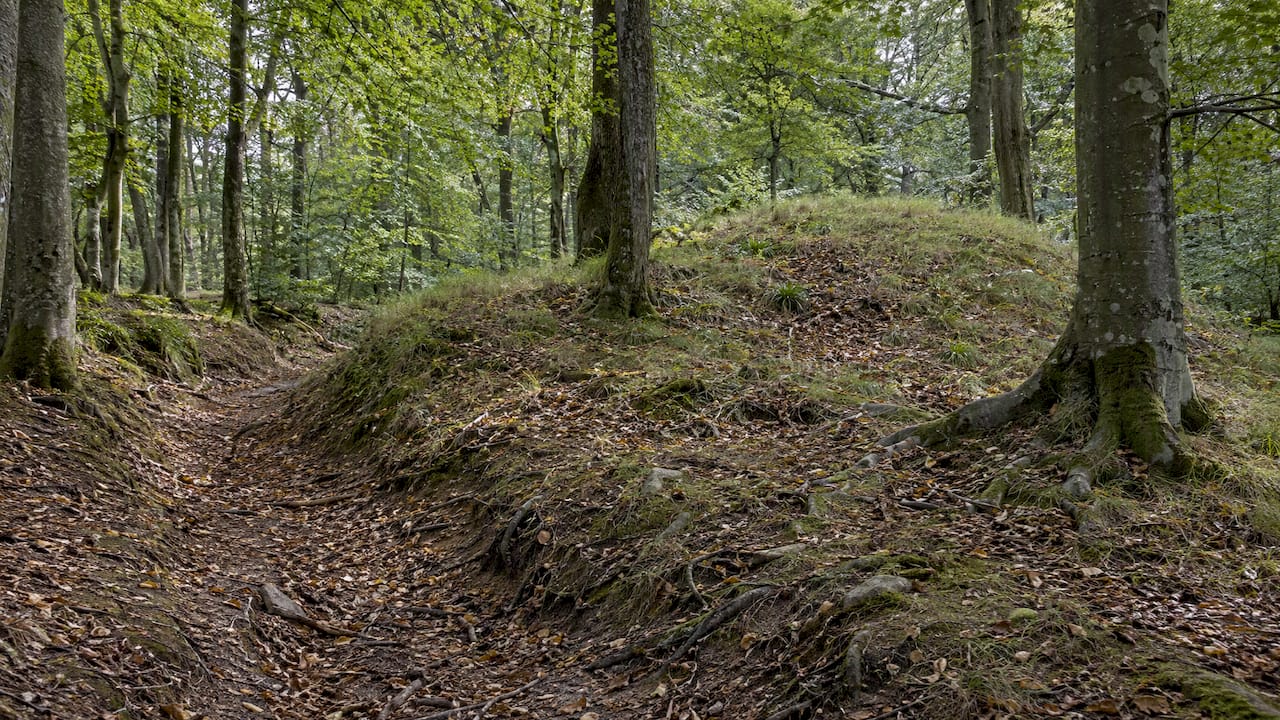
The forests hide something special. According to the University of Copenhagen's teaching module on cultural environments, it lies a large part of the protected ancient monuments in the forests, where they have been better protected from plowing and construction than out in the fields. So, when you walk in a Danish forest, you often walk among burial mounds, old hollow roads, and remnants of earlier fields, which you wouldn't notice if you didn't know what to look for.
How to read cultural nature on a trip: 7 signs to look for
When you understand the concept, you can read the landscape as a history book. Here are seven tracks you can practice on, whether you're walking in a forest in Zealand, along a stream in Jutland, or by the coast in Funen.
- Other fences and barriers. Earth and stone dikes mark old boundaries. Follow them with your eyes, and you'll see how the earth was once divided.
- Old, large trees alone in the landscape. A broad-crowned tree in an open meadow has grown freely, often because animals grazed around it. If it now stands inside a dense forest, the forest is younger than the tree.
- Elevations and elevations. A round mound in a field or in a wooded area can be a burial mound. Protected ancient monuments are often signposted.
- Straight lines in nature. Straight ditches, canals, and avenues are almost always man-made. Nature rarely makes straight lines.
- Hulveje. Deep, worn paths in the forest are often old routes worn down by wheels, hooves, and feet.
- Open areas that are not overgrown. Enclosures, overhangs, and hedges are often kept open by grazing or maintenance. If you see animals in a protected area, they are likely part of the management.
- Name on the card. Place names often reveal previous uses: mill, brick, lime, heath, pasture. The name can tell what the place was before it became what you see today.
Take one of the trails with you on each trip instead of trying to see everything at once. Children are often good at finding the straight lines and the strange hills, and that makes an ordinary walk a little adventure.
When nature restoration meets cultural history
The concept of cultural nature is not just a beautiful way to view the landscape. It is also an argument in a real debate. Clemmensen's point is that attempts to restore nature may end up delete cultural historical tracesWhen a cultivated field reverts to its natural state or when cultivated land becomes wild nature, ditches, dikes, and other traces of how people lived in the area disappear.
As a visitor, you can take that question out to a nature project: How have people shaped this place in the past, and what is lost when the traces are removed to create new nature? There is rarely a definitive answer, and that is precisely what is interesting.
Researchers at the University of Copenhagen describe in a publication on green cultural heritage that the value of an area is not fixed, but depends on the context and the interests being negotiated, for example between agriculture, nature conservation, and tourism. What one generation sees as a scar in the landscape, the next sees as cultural heritage to be preserved.
Cultural nature as a travel experience
For you as a traveler, cultural nature is an invitation to combine two things that many plan separately: nature experiences and cultural experiences. There is also a direction that Danish tourism is moving in. Danish Coastal and Nature Tourism has made a Action plan for the development of cultural tourism in coastal and nature tourism, which will connect cultural heritage and place-based experiences with the story of Denmark outside the big cities.
A good example of duality is Møns Klint. The chalk fragment is a piece of geology created over millions of years, but the experience of the place is shaped by paths, stairs, interpretation, and stories. The Ministry of Culture has announced that Møns Klint has been listed as a UNESCO World Heritage Site, and the place shows how nature and the way humans use and protect it are interconnected.
Here's how you can concretely build a trip around cultural nature:
- Combine a museum with a trip out into the countryside. Many local museums specifically convey the area they are located in. Read our guide to, Why museums are worth visiting, and then go outside and find the traces in reality.
- Choose green experiences with a story. We have gathered thoughts about, What green experiences mean for your journey in Denmark.
- Taste on the spot. Local food is also cultural nature: it is the landscape's raw materials, processed according to local traditions. Read more about local gastronomy as part of a place's culture.
- Think like a cultural traveler. Even if you don't have to go far, you can use the same principles as on an international trip. A good introduction to What cultural trips are really about Give ideas on how to get closer to the local culture.
- Spread the trips over the year. The same landscape tells something different in spring, summer, autumn, and winter. Get inspired by ours Tips for experiences all year round in Denmark.
Are you more into the cultural side, then see our list of Activities for culture enthusiasts in Denmark or the guide to how to get cultural experiences in Denmark.
Were you looking for Cultural Night?
People searching for cultural nature are actually looking for cultural night. It's a completely different thing: an evening when museums, churches, businesses, associations, and public institutions in a city open their doors and hold events at the same time. Several Danish towns hold their own Culture Night, often in the fall. Dates and programs change from year to year, so check your municipality's or city's own page for the current cultural night.
If you want to combine the two, it's actually a good idea: use Culture Night to see the city's museums and buildings from the inside, and the next day go out into the countryside around the city and find the traces the museums told about.
Our view: the landscape is the greatest attraction we have
When we gather experiences for Travel in Denmark, we see it again and again: the best trips are those where nature and culture are not two separate items on the agenda. A picnic becomes better when you know that the hill in front of you is a burial mound. A museum visit becomes better when you can go out afterwards and see what you just read about.
We would like to help you plan that way. Therefore, we showcase both the well-known attractions and the lesser-known places that are easily overlooked, and that's why you can filter by season, price, and age so that the trip suits your group perfectly. We don't believe you need to choose between a nature day and a culture day. In Denmark, you often get both things on the same walk if you know where to look.
Our advice is simple: choose a place close to you, find out what it has been used for, and go there with that knowledge in mind. You will see the landscape in a new way.
— Tommy
Find cultural nature near you
On Rejs i Danmark, you can search for experiences across the entire country on an interactive map and filter by season, price, and participants' age. Explore among Experiences in Denmark, or use ours Guide to planning your Denmark tripif you want to combine nature and culture into a complete holiday
Frequently Asked Questions
Is cultural nature the same as cultural landscape?
Almost, but the weight is different. Cultural landscape refers to the entire landscape as a result of the interaction between people and nature. Cultural nature emphasizes the nature in the landscape, that is, the plants, animals, and habitats that exist because humans have shaped the place.
Is there untouched nature in Denmark?
Very little. People have used and shaped the Danish landscape since the last Ice Age, so even places that seem wild often have a history of grazing, forest management, or cultivation. Some islands, cliffs, and wetlands are less affected than the rest, but even here, trails, interpretation, and protection have left their mark.
Is cultural nature less valuable than wild nature?
No. Many species are associated with the open, managed natural habitats such as meadows and grasslands, and these places also carry cultural history. The debate is more about how to balance the consideration for new nature against the consideration for historical traces when an area is to be managed.
How can children benefit from the concept?
Turn it into a treasure hunt. Let the children look for straight lines, stone walls, strange hills, and large solitary trees, and talk about who might have made them. Feel free to combine the trip with a local museum so they can see how people lived in the area.
Sources
Cultural Nature, Aarhus School of Architecture Cultural landscape, UNESCO World Heritage Centre What is cultural heritage?, Danish Agency for Culture and Palaces Museum Act Cultural environments and landscape values, University of Copenhagen The State of the Environment in Denmark 2001, Denmark's Environmental Surveys Module 7: Cultural Environment, University of Copenhagen The Green Cultural Heritage, University of Copenhagen Action plan for the development of cultural tourism in coastal and nature tourism, Danish Coastal and Nature Tourism Møns Klint is listed on UNESCO's World Heritage List, Ministry of Culture