In short:
- Danish craftsmanship is created as unique objects with artisanal technique and aesthetics. It is based on material knowledge and has deep historical traditions from the Middle Ages to today. The field combines function, beauty, and a high degree of independence in sustainable production design.
Danish craftsmanship is defined as the production of unique, handmade objects, where craftsmanship techniques and aesthetic design are inseparable. It differs from mass production in that each piece bears the craftsman's personal touch and is created with deep material knowledge. Craftsmanship is neither pure fine art nor industrial design. It is an independent field that combines function and beauty in objects such as ceramics, jewelry, textiles, and glass. The field requires decades of learning and is rooted in a Danish design tradition that stretches from the Middle Ages to today.
What is Danish craft, and what characterizes it?
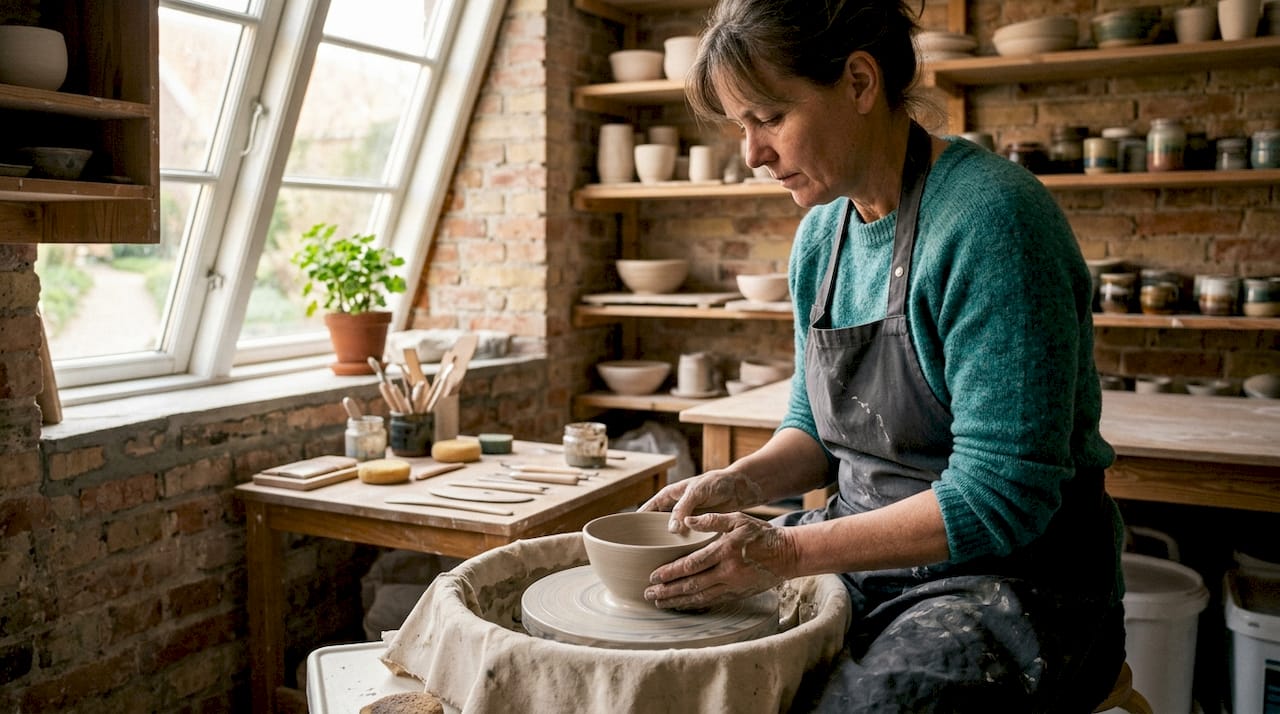
Danish craftsmanship is material-based art, where the craftsman's relationship to the raw material is central. A ceramicist does not work with clay just as a tool. The gesture is the very medium of expression, and the understanding of its properties shapes the final result. The same applies to glassblowers, textile artists, and jewelry makers. The material dictates the possibilities, and the craftsman interprets them.
Unique production is the core of Danish craftsmanship and art. Unlike industrially produced goods, each handcrafted piece is created once, for a single purpose, by a pair of hands. It gives the objects an authenticity that mass-produced products cannot match. This authenticity is exactly what makes Danish craftsmanship sought after both nationally and internationally.
Creativity and technical skill are two sides of the same coin in this field. An artisan must master their technique and have an artistic vision. Without technical skills, the visions remain unrealized. Without creativity, technology becomes just routine. It is the balance between the two that defines the masterpiece.
The history and traditions behind Danish craftsmanship
The history of Danish craftsmanship begins long ago in the Middle Ages. Blacksmithing, leatherwork, and weaving were not just crafts. They were survival strategies and cultural markers. Jewelry from the Viking Age demonstrates a technical precision that still impresses goldsmiths today. Leather goods traditions from the Danish estates and monasteries laid the foundation for the ceramic tradition we know today.
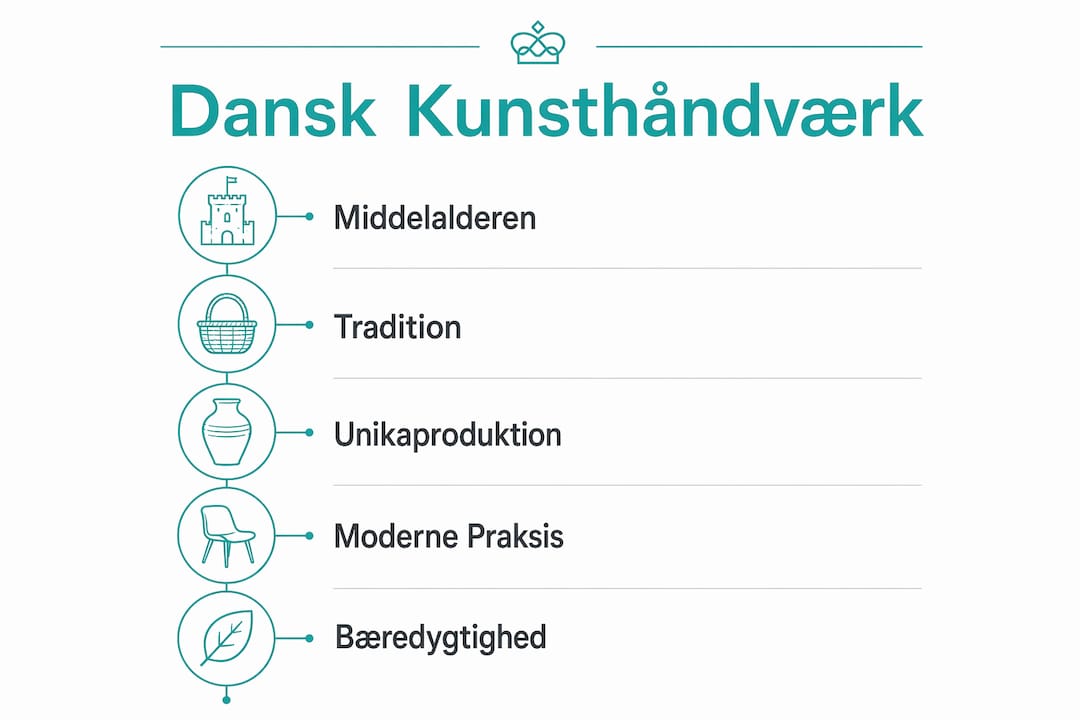
From the 19th century onwards, awareness of the artistic potential of craftsmanship grew. The Danish art industrial movement, inspired by the Arts and Crafts movement in England, focused on handcrafted work as a response to industrialization. This period laid the foundation for many of the disciplines and aesthetic principles that still influence Danish craftsmanship.
Central milestones in the history of Danish craftsmanship include:
- Medieval blacksmithing and pottery as a foundation for professional traditions
- 19th-century Arts and Crafts movement, elevating craftsmanship to an artistic status
- The establishment of Danish Craftsmen & Designers (DKOD), who collects and represents professionals
- Frue Square Market, which has been since 1983 Scandinavia's largest outdoor market for crafts with over 100 exhibitors
- Contemporary interdisciplinary collaborations between artists, designers, and craftsmen
The connection between historical craftsmanship and contemporary practice is not nostalgic. It is functional. Modern ceramists draw on techniques that are hundreds of years old but adapt them to contemporary aesthetic and functional needs. It is this continuity that gives Danish craftsmanship its depth and credibility.
What materials and techniques are used in Danish crafts?
The most used materials in Danish crafts are ceramics, glass, textiles, wood, and precious metals. Each material requires its own specialized knowledge and its own set of techniques. A glassblower works with temperatures over 1,000 degrees and has seconds to shape their material. A textile artist can spend months on a single piece of woven fabric.
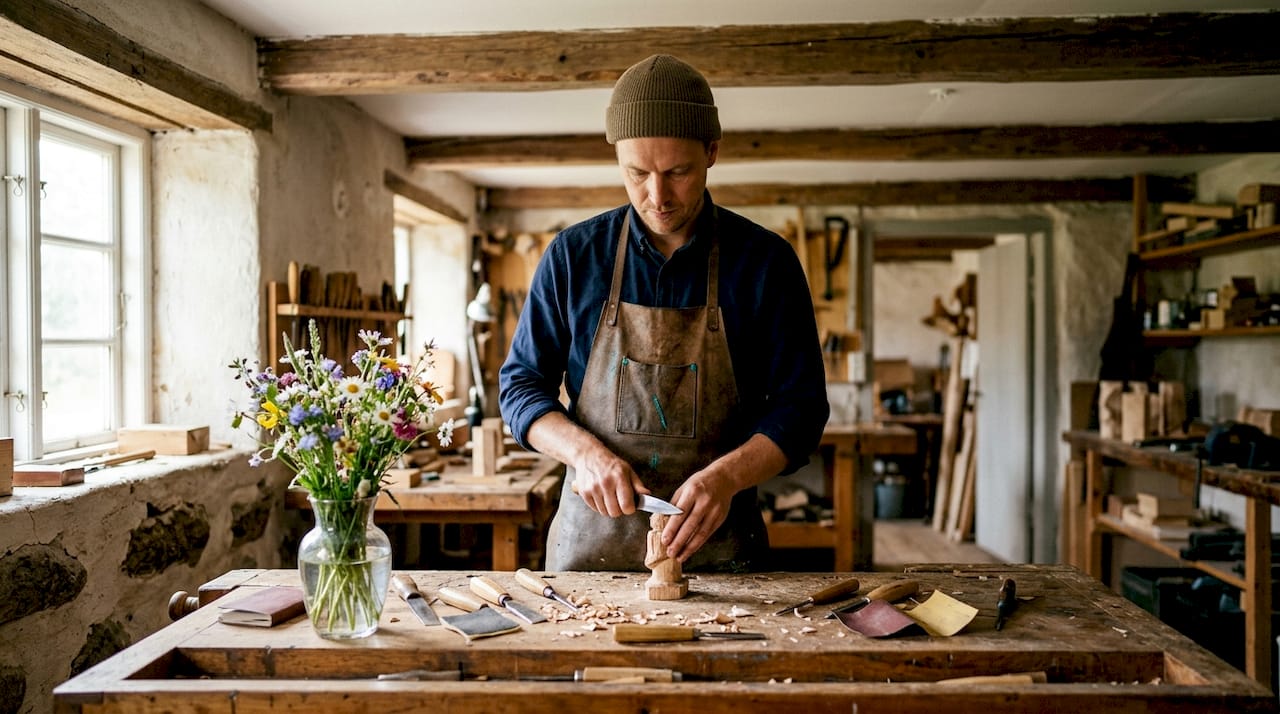
Master learning is still the dominant form of learning in the field. Craftsmanship often requires 10,000 hours of training to fully master the material and technique. It is equivalent to more than five years of full-time practice. This investment of time is the reason why true craftsmanship can never be replaced by a machine.
The most important techniques in Danish craftsmanship follow a natural progression:
- Basic understanding of materialsThe craftsman learns the physical properties, limits, and possibilities of the material.
- Technical proficiencyThrough repeated practice, control is achieved over tools and processes such as turning, casting, weaving, or forging.
- Aesthetic developmentThe craftsman finds his own language of form and begins to create objects with a personal expression.
- Experimentation and InnovationExperienced practitioners combine traditional techniques with new methods and materials.
- Unique ProductionThe final stage, where each piece is an independent work of art with its own identity.
Modern techniques include the use of digital design tools as a supplement to craftsmanship. A ceramicist can use 3D modeling to plan a mold, but the actual execution still happens with the hands. Technology does not replace craftsmanship. It expands the possibilities.
Professional tip: Visit a local potter's open studio to see material understanding in practice. Many artisans hold open days where you can see the entire process from raw material to finished product.
The relationship between the craftsman and the material is central in Danish craftsmanship and artThe practitioners describe themselves as material-based artists. It means that the material is not just a means to an end. It is a partner who sets the conditions for the final expression.
Danish craftsmanship today: sustainability and independence
The modern Danish craft field is characterized by two dominant trends: sustainability and artistic independence. These two trends reinforce each other. An independent artisan has full control over their material choices and can prioritize ethical and green solutions without having to negotiate with company management.
Over 90% of Danish artisans Works as a self-employed individual focusing on unique product creation. It is an unusually high proportion compared to other creative industries. It reflects the fundamental structure of the field, where personal expression and the direct relationship with the customer are core values.
| Aspect | Talk and facts |
|---|---|
| Independent artisans | Over 90% |
| Works with green sustainability | 90% consider it part of the practice |
| Active environmental work in daily practice | 64% |
| Production form | Primarily unique production |
64% of Danish artisans actively work with climate and environment in their daily work. It is not a marketing strategy. It is a natural consequence of the field's material-based approach, where the relationship to raw materials and resources is fundamental.
Sustainability in Danish craft art is about concrete choices. It can be the use of locally sourced clay, recycled glass, natural dyes in textile art, or FSC-certified wood in furniture carpentry. These choices create a local and ethical value chain that connects the craftsman directly with nature and the customer.
The barriers to sustainable transition are real. Economy is the biggest challenge. Sustainable materials often cost more than conventional alternatives. For an independent artisan with a small turnover, the extra expense can be decisive. Knowledge is another barrier. Not all craftsmen have access to updated information about sustainable alternatives within their specific materials.
The role and recognition of craftsmanship in Danish culture
Danish craftsmanship is described by professionals as a Danish superpower In combination with craftsmanship quality and innovative design. It's not empty self-praise. It is an accurate description of what Danish design tradition has contributed to the world in the form of furniture, ceramics, and jewelry that are recognized globally.
The position of craftsmanship in Danish culture is, however, not without challenges. The field is located in a tension between traditional craftsmanship and visual art. It gives it a unique strength, but also creates political and administrative problems. Who funds the craftwork? Ministry of Culture or Ministry of Business? The answer is not unambiguous, and it costs the field resources.
The central challenges for the recognition of Danish craftsmanship include:
- Special academic statusCraftsmanship has a special status that must be preserved separately from visual arts to ensure a professional and political foundation.
- The Danish Arts Foundation: Professional artisans desireAt the Danish Arts Foundation, the field's special status is recognized and concrete support is provided.
- Design PolicyA coherent Danish design policy still lacks full integration of craftsmanship.
- Business statusMany artisans struggle to be recognized as both artists and entrepreneurs.
Craftsmanship has historically been perceived as the younger sibling of the fine arts. It is a misjudgment. Craftsmanship can in fact be stronger and more relevant in a contemporary art perspective because it combines aesthetics with function and thus reaches a broader audience. A sculpture hangs on a museum wall. A ceramic coffee cup is used every morning and creates a daily aesthetic experience.
Professional tip: When you visit an arts and crafts market, always ask the craftsman about the material and the process behind the piece. Most are happy to share, and you gain a much deeper understanding of the value behind the price.
The role of cultural heritage is central to understanding the societal significance of craftsmanship. Cultural heritage sites in Denmark There are many examples of historical craftsmanship that tell about Danish identity and craft tradition. Visiting these places is to understand where modern practice originates from.
Craftsmanship is more than just a craft
I have followed Danish craftsmanship closely for many years, and what strikes me the most is not the technique. It is patience. A ceramicist who spends three months perfecting a glaze does not do it for the money. It is a form of respect for the material and for the person who will ultimately use the piece.
The debate happening about the political recognition of craftsmanship is important. But it risks overshadowing what truly matters: that the field produces objects with a quality and soul that no factory can replicate. I believe that we as a society underestimate what it costs to preserve this knowledge. When a master retires without passing on their technique, decades of experience disappear forever.
What I find most convincing about Danish craftsmanship is its ability to solve a paradox. It is both old and new. It draws on traditions from the Viking Age and uses them to create objects that are relevant in 2026. It's not nostalgia. It is a living practice that evolves without losing its core.
My appeal is simple: support the artisans you meet. Buy a piece of ceramics at a market. Visit an atelier. Still questions. Every purchase is an investment in a tradition that is slowly disappearing under the pressure of cheap mass production.
— Tommy
Experiences with Danish craftsmanship in Denmark
Frue Plads Market in Copenhagen is the best place to experience Danish craftsmanship live. With over 100 exhibitors and roots dating back to 1983, it is not just a market. It is an institution where you can speak directly with ceramicists, jewelry makers, and textile artists about their work. Many craftsmen are happy to share details about their workshop practices, and it provides an understanding of the value of craftsmanship that no store can offer. Would you like to plan a visit and combine it with others cultural experiences in DenmarkYou will find practical help at Rejsidanmark. The site collects All experiences in one placeso you can easily plan a trip that combines crafts with Denmark's other attractions. Bridge Rejsidanmarks Guide to local transportation to easily visit markets and ateliers.
Frequently Asked Questions
What is the definition of Danish craftmanship?
Danish craftsmanship is the production of unique, handmade objects, where craftsmanship techniques and aesthetic design are combined. It differs from mass production in that each piece is created individually with deep material knowledge.
What are examples of Danish crafts?
Classic examples of Danish craftsmanship are ceramics, glassblowing, jewelry art, textile weaving, and furniture carpentry. These disciplines have long traditions in Denmark and are still practiced today by independent artisans.
What is the difference between craftwork and visual art?
Craftsmanship combines function and aesthetics, while visual art is primarily expressive without requirements for practical use. Craftsmanship has a specialized professional status that must be preserved separately from visual arts to ensure a political and academic foundation.
Where can one experience Danish craftsmanship?
Frue Plads Market in Copenhagen is Scandinavia's largest outdoor market for crafts with over 100 exhibitors. Additionally, many artisans hold open studio days, and Danish art museums showcase historical and contemporary examples of craftsmanship.
How long does it take to become skilled in craftwork?
Craftsmanship typically requires 10,000 hours of training to master the material and technique fully. It corresponds to more than five years of intensive, daily practice under the guidance of experienced masters.
Recommendation
- What is Danish folklore: traditions and legends – Travel in Denmark
- Discover Danish traditions: your guide to culture and experiences – Travel in Denmark
- What is Danish culture: traditions, norms, and identity – Travel in Denmark
- Danish traditional food – regional specialties from all over Denmark – Travel in Denmark