
TL;DR:
- Effective planning of group activities requires a phased approach, working backward from the event date.
- This ensures that deadlines are met and that all important elements are in place, reducing stress on the day.
Planning group activities is the structured process where you coordinate participants, activities, logistics, and communication to create a successful shared experience. Whether you're organizing a team-building day for colleagues, a family gathering, or a friends' party, good preparation makes the difference between an event people remember positively and one that ends in confusion. Start the planning early Working step by step reduces stress and ensures that important details are not forgotten. This guide provides you with a concrete system for organizing group activities from idea to execution, with examples that work for both private and semi-professional organizers.
How to organize group activities from start to finish
Effective organization of group activities requires a phased approach, working backwards from the event date. Backward planning Ensures that deadlines are realistic and that important elements are not overlooked, which reduces stress close to the day.
Follow this order to keep track of the process:
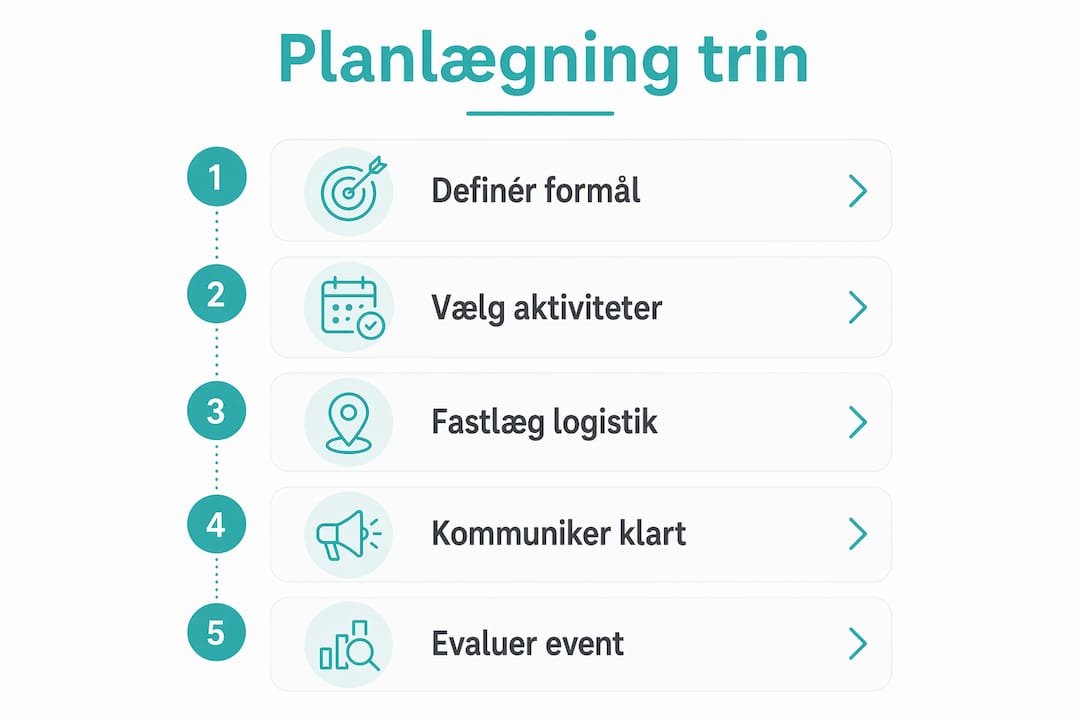
- Define purpose and target audience. Decide what the event should achieve and who it is for. A company party for 40 colleagues requires a different approach than a birthday trip for 10 friends. Clear goals give you a filter for all subsequent decisions.
- Set the date, place, and budget. Choose a date early and confirm the location before inviting anyone. The budget determines which activities and suppliers are realistic, and who pays what.
- Create a backward timeline. Event planning should follow a phased timeline from 6 to 12 months before the event to evaluation 1 to 7 days after. That means that at an event in three months, you should already have the location and program in place.
- Share responsibility. Designate a responsible person for each area: transportation, catering, activities, and communication. One person cannot keep track of everything, and unclear responsibilities are the most common cause of mistakes on the day.
- Book suppliers in good time. Plan the delivery from suppliers such as catering, technical services, and decoration 2 to 4 months before the event, and have a clear Plan B ready. Popular locations and transportation providers are often fully booked, especially on weekends and during the summer season.
- Close and evaluate. Carry out the event as planned, and set aside time for a brief evaluation afterward. Note what worked and what can be improved for next time.
Professional tip: Create a simple master plan in a shared document, e.g., Google Docs or Notion, instead of spreading information over emails and messages. A clear master plan helps everyone understand decisions, timings, and responsibilities without confusion.
A realistic timeline is not a sign of overplanning. It is the foundation that gives you peace of mind to handle the unexpected when it occurs.
What activities are suitable for your group?
The choice of activities is the point where most organizers either hit the mark or miss. The success of an event depends on clear goals and target audience to effectively tailor activities and communication. That means you need to know your group before choosing an activity.
Here are the most important factors to consider:
- Group size. Activities for 8 to 15 people work differently than for 40 to 80. Store groups require activities that can be divided into teams, e.g., escape rooms, quiz evenings, or relay races. Small groups can manage more intimate gatherings such as cooking classes or kayaking trips.
- Age and physical fitness. A family trip with children and grandparents requires activities that do not exclude anyone. Hiking in Thy National Park or visiting the Natural History Museum in Aarhus works across generations. Team-building activities for young colleagues can include more physically demanding elements such as climbing walls or paintball.
- Interest and energy level. Ask the participants in advance if you are in doubt. A quick poll via Google Forms or a message in a WhatsApp group gives you a quick idea of what people prefer.
- Indoor or outdoor. Outdoor activities such as orienteering, picnic competitions, or bike rides require a weather plan B. Indoor alternatives like bowling alleys, escape rooms, or cooking workshops are more predictable logistically.
- Purpose: social or professional. Friends and family typically seek coziness and shared experiences. Colleagues benefit from activities that strengthen collaboration and communication, such as group challenges and games with clear team tasks.
For store groups, quiz evenings with prizes Significantly increase participation and engagement. Rewards such as coupons, gift cards, or bonus days contribute to motivation and maintaining focus, and they rarely cost much compared to the effect they create.
Professional tip: Always make a list of two to three alternative activities before you decide. Compare them in terms of price, logistics, and availability for your specific group. It saves you from starting over if your first priority cannot be achieved.
Activities for family-friendly experiences in Denmark Covers a wide range from nature trips to cultural visits, and Rejsidanmark has gathered inspiration for groups of all sizes and interests.
How do you coordinate logistics and transportation for group activities?
Logistics is the area that is most often underestimated and most often causes problems on the day. When 20 people need to meet at the same place at the same time, coordination is not trivial.
| Logistic element | What you need to clarify | When |
|---|---|---|
| Transport | Shared or individual? Car, bus, train? | 4 to 8 weeks before |
| Meeting place and time | Exact address and pickup time | 2 weeks before, repeated the day before |
| Special needs | Luggage, strollers, wheelchairs, allergies | 4 to 6 weeks before |
| Backup plan | Alternative route or means of transportation | 2 to 4 weeks before |
| Contact persons | A responsible person per vehicle or transport group | 1 week before |
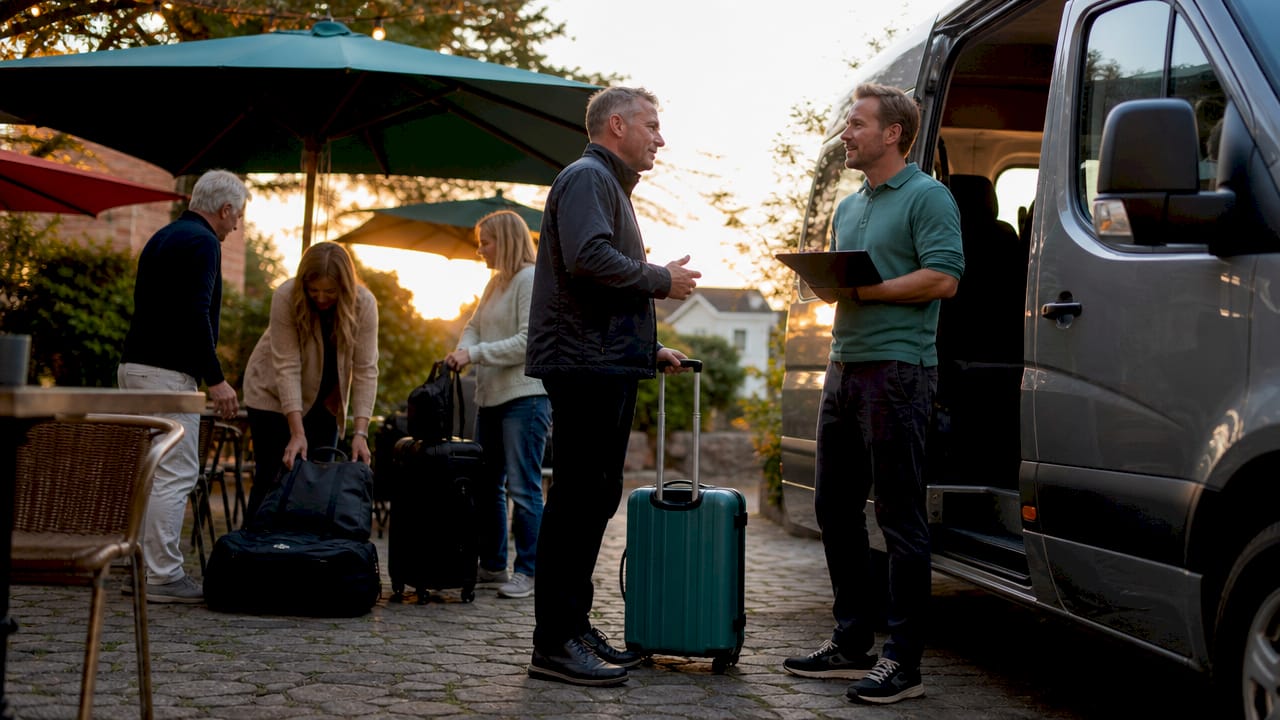
When transporting groups, you should identify the guests' special needs early. as luggage, strollers, or wheelchairs. This needs assessment directly affects which transportation methods you can use and how you plan routes and schedules.
Minibus rental with driver is a popular and efficient transportation solution for groups, as it facilitates coordination and timing. Advantages include combined transportation, flexible routing, and the possibility for everyone to arrive on time without anyone having to navigate or find parking. For groups of 10 to 20 people, this is often cheaper per person than individual transportation, especially for trips to places with limited parking.
Practical considerations for shared transportation
- Confirm the number of seats and luggage space well in advance, not the day before.
- Communicate the meeting place and pickup time in writing to all participants.
- Designate one contact person that the driver can call in case of delay.
- Have a list of all participants so you can quickly see if anyone is missing.
Rejsidanmark has a Guide to local transportation in Denmark, which provides practical advice on how groups can navigate around the country in an easy and efficient way.
How do you communicate clearly with the participants?
Communication is the glue that holds an event together. Poor communication is the reason why people show up at the wrong place, forget the event, or don't know what to bring.
A well-thought-out communication plan looks like this:
- The invitation. Send it early, preferably 4 to 8 weeks in advance for larger events. Include date, time, location, program in broad outline, and a registration deadline. Use a simple format, e.g., an email with a link to a registration form via Eventbrite, Google Forms, or Doodle.
- Confirmation and practical information. Send a confirmation to all registrants with detailed information about transportation, what to bring, and any preparations. Do this at least two weeks before.
- Reminders. Send a short reminder three to five days before and an update the day before with the meeting time and contact information. People are busy, and a single reminder is not enough.
- Communication during the day. Effective coordination of teams and venues on the event day creates a calm and professional experience for the participants. Designate a coordinator to send updates and handle questions so you don't have to respond to 15 messages at the same time.
- Evaluation and feedback. Send a short survey via Google Forms or SurveyMonkey within three days after the event. Ask what worked and what can be improved. This feedback is worth gold for next time.
Centralized systems and the use of event management software reduce errors and streamline coordination and communication. Collect all schedules, updates, and registrations in one system to avoid double bookings and information spread. Platforms like Notion, Trello, or Asana work well for this purpose, even for private events.
Professional tip: Create a dedicated WhatsApp or Signal group for the event, but designate one person as responsible for sending official updates. Groups with many participants can quickly become overwhelming if everyone sends messages at the same time.
Communication is not about sending the most messages. It's about sending the right information at the right time so that participants always know what to do.
I learned that after organizing dozens of group events.
I have organized everything from small friend parties with 8 people to corporate events with over 60 participants, and the most important lesson is this: most problems do not arise because something goes wrong. They arise because no one takes ownership of a specific task.
The second biggest mistake is underestimating how long logistics takes. I have seen organizers spend weeks finding the perfect activity and two days coordinating transportation. It should be the other way around. Transport and logistical arrangements require more time than the actual program selection because they involve coordination with external parties.
Digital tools like Notion and Google Workspace have made a significant difference in my planning. A shared checklist that all responsible parties can update in real time eliminates the classic situation where two people believe the other has booked the location. Rejsidanmark offers inspiration for active holiday experiences and group activities, which can give ideas about what you can build your event around.
What distinguishes good organizers from excellent ones is not creativity. It is a follow-up. Call the supplier two days before to confirm. Send the extra reminder. Make sure everyone knows where to meet. These small details are what the participants remember, even though they never know that you did it.
— Tommy
Plan your next group activity with Rejsidanmark
Rejsidanmark is your guide to experiences, activities, and transportation throughout Denmark. Whether you are planning a Weekend trip for a group or seeking inspiration for a larger event, you will find concrete suggestions tailored to all age groups and interests. The platform offers filtering by season, price, and number of participants, so you can quickly find what suits your group. Brug Rejsidanmarks step-by-step guide to local transportation to plan how your group gets around in the easiest and most efficient way. Visit Rejsidanmark to get started with your planning today.
FAQ
What is the first step in planning group activities?
The first step is to define the purpose and target audience. Decide what the event should achieve and who it is for, as this determines all subsequent choices regarding activities, budget, and communication.
When should one start organizing a group event?
For larger events, planning should start 6 to 12 months in advance. Even for smaller social events, it is recommended to start at least 4 to 8 weeks in advance to ensure that the location, transportation, and vendors are in place.
Which digital tools help with organizing social events?
Platforms like Google Forms for registrations, Notion or Trello for task management, and Eventbrite for invitations and tickets are effective choices. Centralized systems reduce errors and ensure that all responsible parties have access to the same information.
How do you handle transportation for large group activities?
Rental of a minibus with driver is an efficient solution for groups of 10 to 20 people, as it consolidates transportation and ensures that everyone arrives on time. Map the participants' special needs such as luggage and wheelchairs early in the process.
What makes team-building activities successful for adults?
Successful team-building activities for adults combine a clear purpose with activities that match the group's energy level and interests. Elementary competitions, quiz evenings with prizes, and group challenges increase engagement and create shared experiences that strengthen relationships.
Recommendation
- Activity planning for spring: How to get the family a perfect holiday – Travel in Denmark
- Checklist for active holidays: Plan perfect family experiences – Travel in Denmark
- How to find family-friendly activities in Denmark – Travel in Denmark
- Step-by-step guide to museum visits in Denmark – Travel in Denmark