TL;DR:
- Sustainable experiences minimize environmental impact and support local communities, ensuring resources for future generations.
- The choice of transportation, accommodation, and activities has the greatest impact on the carbon footprint and sustainability of the trip.
Sustainable experiences are defined as travel activities and choices that minimize negative environmental impact and actively support local communities and economies, so that future generations can enjoy the same resources. According to the World Sustainable Tourism Council Sustainability is the overarching framework, while responsible tourism is the attitude and actions of the individual traveler. It means that what sustainable experiences are is not just a matter of avoiding harm, but actively contributing to the environment, society, and the economy. For Danish travelers and visitors in Denmark, this provides a concrete opportunity to plan trips that are meaningful and responsible at the same time.
What are sustainable experiences, and how do you choose them?
Sustainable experiences with low environmental impact start with three concrete choices: transportation, accommodation, and activities. All three directly influence your overall carbon footprint and whether your money ends up with local or large international companies.
The choice of transport makes the biggest difference
Tog and bus are the most climate-friendly means of transportation pr. People, men's long-haul flights have a significantly larger climate footprint. It means that a train journey from Copenhagen to Aarhus is a much better choice than a domestic flight, even though the time difference is small. Electric cars can significantly reduce emissions on self-drive trips in Denmark, especially when charged with renewable energy. Rejsidanmark has collected a Guide to local transportation In Denmark, which provides an overview of the greenest options for tourists.
Certifications you need to know
Environmental certifications such as Green Key, the Swan Label, and the EU Ecolabel Stricter requirements for energy consumption, water usage, and waste management. Green Key is recognized in over 60 countries and is the most widespread certification for accommodation and attractions in Denmark. This means that as a traveler, you can use the Green Key label as a reliable filter when choosing a hotel, summer house, or activity provider. The Swan Label is the Nordic eco-label and sets similar requirements, but with particular emphasis on chemical use and waste management.
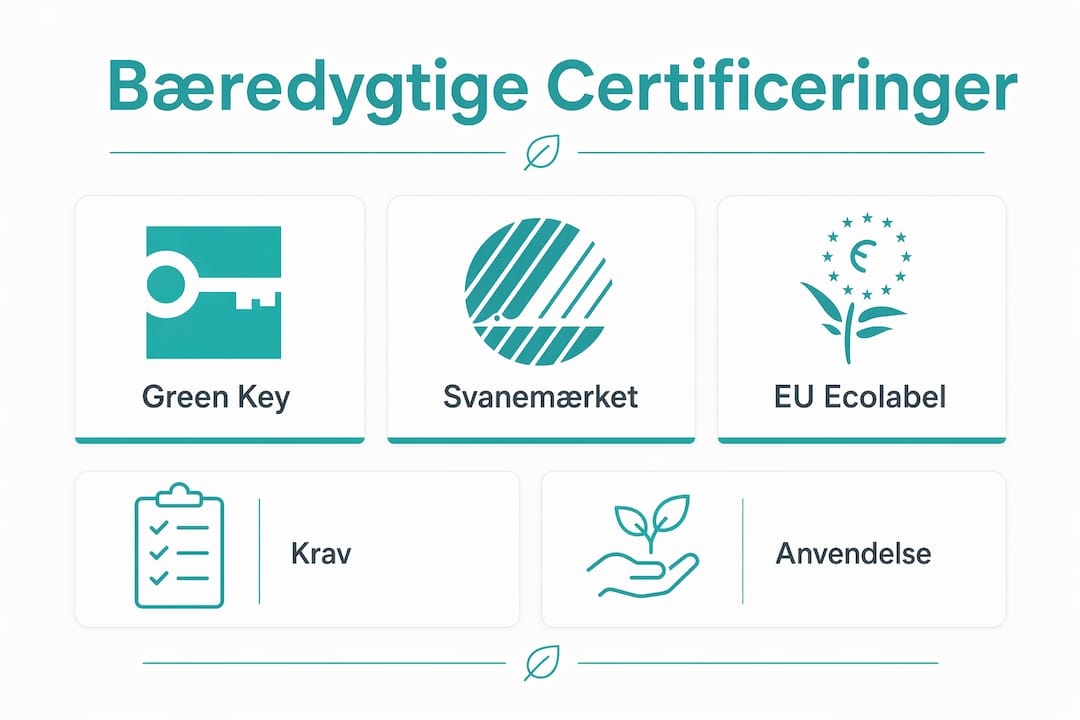
Here are the most important certifications and what they cover:
| Certification | Covers | Recognized in |
|---|---|---|
| Green Key | Energy, water, waste, nature | Over 60 countries |
| The Swan Label | Chemicals, waste, energy | North |
| EU Eco-label | Energy, water, cleaning | EU |
Green activities in Denmark
Green holiday activities in Denmark range from guided nature tours in Thy National Park and Mols Bjerge National Park to local ceramics workshops on Bornholm and sea kayaking along Limfjord. These experiences have a low environmental impact because they do not require motorized transportation, use local resources, and are typically operated by local entrepreneurs. Sustainable tourist attractions such as the Natural History Museum in Aarhus and The Blue Planet near Copenhagen actively work with green operational principles and promote understanding of nature to visitors.
Professional tip: Search specifically for Green Key-certified accommodations at your destination before booking. It takes two minutes and ensures that your stay meets documented environmental standards.
How do you support the local community with your travel choices?
Prioritize local eateries, markets, and shops ensures that the money stays in the local community and provides more authentic travel experiences. It is one of the most direct ways you as a traveler can contribute to social and economic sustainability. When you eat at a local restaurant in Ærøskøbing instead of a chain in Odense, you directly support a local family and preserve the local food culture.
By supporting local producers and small businesses, travelers contribute to a fairer economic distribution and enhance the authenticity of the experience. It applies not only to food but also to accommodation, transportation, and souvenirs. A handmade ceramic mug from a local artist in Bornholm tells a story and keeps the money local, unlike mass-produced souvenirs.
Concrete ways to support the community:
- Trust family-run restaurants and cafes over chains
- Buy raw materials and products at local farm markets and turf markets
- Book accommodation at local bed and breakfast places or farm stays
- Participate in local events, festivals, and workshops organized by locals
- Choose local guides instead of large international travel agencies
Slow travel and local anchoring are closely connected. When you stay in the same place for several days, you learn the rhythm of the local community, shop at the same stores as the residents, and contribute to more stable and long-term tourism. Small islands like Læsø, Samsø, and Ærø are good examples of destinations where your choice to buy locally makes a measurable difference to the island's economy.
Professional tip: Ask your host or the hotel which local producers and markets they recommend. Local guides always know where the best and most authentic places are, helping you avoid tourist traps.
You can find inspiration for local food experiences in Denmark at Rejsidanmark, which gathers recommendations from all over the country.
What is slow travel, and why does it provide better experiences?
Slow travel is about being a guest rather than a tourist, with a focus on immersion, respect, and reducing the burden on nature and local communities. According to the UN World Tourism Organization, this shift in mentality is central to responsible tourism. It's not a matter of traveling more slowly in a literal sense, but of traveling with more presence and intention.
Sustainable experiences are not about banning tourism, but about a long-term model where transportation, accommodation, and activities minimize negative impact. Slow travel is the most natural way to put this principle into practice. When you spend a week at Møns Klint instead of visiting five destinations in seven days, you reduce transportation emissions, support local businesses more, and experience the place more deeply.
How to embrace slow travel in Denmark:
- Choose one region and stay there for at least three to four days. It provides time to discover places that are not in the tourist guides and significantly reduces transportation.
- Bridge took or bus as the primary transportation. DSB and Flixbus cover large parts of Denmark, and the travel time allows for relaxation and preparation for the destination.
- Book accommodation with self-catering or kitchen. It provides the opportunity to shop locally and cook with local ingredients, which reduces food waste and supports local producers.
- Plan fewer activities per day. Quality over quantity provides more meaningful experiences and reduces the need for motorized transportation between attractions.
- Learn a few local words or phrases. It signals respect and opens doors to more authentic encounters with locals.
- Walk or cycle as much as possible. Denmark is one of the most bike-friendly countries in the world, and cycling is the most climate-neutral form of transportation for shorter distances.
Experts recommend the mindset shift from tourist to guest as the most effective tool for responsible tourism. It's about asking yourself: "What do I leave behind in this place?" rather than "What can I get out of this place?" There is a small but crucial difference in approach that changes the entire travel experience.
Practical tips for sustainable experiences with a low climate footprint
Practical tips such as packing reusable products, traveling in the shoulder season, and choosing eco-friendly transportation effectively reduce your carbon footprint. It doesn't require great sacrifices, but it does require conscious choices from the start. Here are the most concrete tips for planning green holiday activities in Denmark.
Packing list for sustainable travel:
- Refillable water bottle made of stainless steel or glass
- Reef-safe sunscreen that does not harm marine ecosystems
- Reusable shopping bags and lunch boxes
- Fast shampoo and soap that reduce plastic packaging
- Microfiber towel that dries quickly and takes up little space
- Portable lunchbox for outings, so you avoid disposable packaging
Professional tip: Use a red headlamp instead of white light when you're outdoors in nature at night. Red light does not disturb nocturnal animals like bats and owls, and it preserves your night vision better. It is a small choice with a big impact on the nature experience and wildlife.
The shoulder season, that is April to June and September to October, is the best time for sustainable travel in Denmark. Travelers can save money and reduce their carbon footprint by traveling during the shoulder season combined with slow travel. Fewer tourists mean less pressure on infrastructure, shorter queues at attractions, and more tranquility to experience nature and the local community on its own terms.
Effective booking strategies:
- Book sustainable accommodations and bike rentals several months in advance. Small-scale sustainable offerings have limited capacity and are quickly sold out during popular periods.
- Check if activity providers have a visible sustainability policy on their website. Serious providers actively communicate about their environmental practices.
- Choose accommodations with certification instead of those that simply use words like "green" or "eco" without documentation.
- Ask directly: "What are you doing to reduce your environmental impact?" A good answer is a good sign.
Behavior during the journey counts just as much as the planning. Sort waste correctly, stick to marked trails in nature, respect local rules for fires and camping, and avoid picking wild plants or disturbing wildlife. These habits cost nothing, but they protect the natural areas that make Denmark an attractive destination.
What I have learned about sustainable travel in Denmark
I have traveled around Denmark for many years, and the biggest change in my approach did not come from a guide or a certificate. It started with asking myself the question: "Am I a guest or a tourist here?" It sounds simple, but it actually changes the choices you make along the way.
The most surprising thing I have discovered is that the most sustainable experiences are often the most memorable. An evening of stargazing in Mørkemosen on Bornholm with a red headlamp, a visit to a local farm market on Samsø early in the morning, or a bike ride along the Hærvejen without a schedule. None of these experiences require flights, large hotels, or expensive attractions.
I see many travelers using the term "sustainable" as a marketing word rather than a genuine practice. It's easy to book a Green Key hotel and still eat at McDonald's and take taxis everywhere. Sustainable reel requires that all three elements, transportation, accommodation, and activities, are interconnected. It's not perfectionism, but it's also not enough to make one correct choice and call it green.
My best advice is to start with transportation because that is where the carbon footprint is the largest. Take the ferry to Jutland, ferry to the islands, bike at the destination. The rest falls into place more easily when you have already arrived in a responsible manner. And if you are in doubt about what is sustainable at your next destination, is Rejse Danmarks guide to sustainable holiday A good starting point.
— Tommy
Plan your sustainable journey with Rejsidanmark
Rejsidanmark is your guide to finding responsible and environmentally friendly experiences throughout Denmark. The platforms gather attractions, activities, and destinations with practical information about price, season, and suitability, so you can make informed and sustainable choices from the start. Whether you're planning a family weekend in Funen, a nature trip in North Jutland, or a cultural journey to Copenhagen, you'll find specific suggestions that match your travel pattern and values. Start your planning with Rejsidanmark's guide to Denmark, which provides an overall overview of responsible travel options for both new and experienced visitors in Denmark.
FAQ
What do sustainable experiences mean?
Sustainable experiences are travel activities and choices that minimize negative environmental impact and support local communities and economies. According to the World Sustainable Tourism Council, it is the individual traveler's attitude and actions that determine whether tourism is responsible.
Which certifications indicate that an experience is sustainable?
Green Key, the Svanemærket, and the EU Ecolabel are the most recognized certifications for accommodations and attractions in Denmark. Green Key is recognized in over 60 countries and sets documented requirements for energy, water, and waste management.
What is slow travel, and why is it sustainable?
Slow travel is a travel mentality that prioritizes immersion and respect over seeing as many places as possible in the shortest amount of time. It reduces transportation emissions, supports local businesses more, and provides deeper and more meaningful experiences.
When is the best time to travel sustainably in Denmark?
The shoulder season, from April to June and September to October, is the best time for sustainable travel in Denmark. Fewer tourists mean less pressure on nature and infrastructure, lower prices, and better access to small-scale sustainable offerings.
How do I find sustainable tourist attractions in Denmark?
Search for Green Key-certified places and use platforms like Rejsidanmark to find attractions with documented environmental practices. Ask the provider directly about their sustainability policy if their certification is not visible on their website.